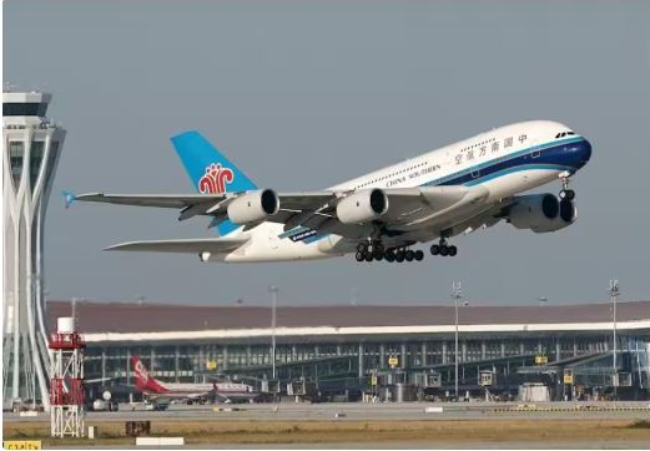
New Delhi. Ahead of Chinese President Xi Jinping's arrival in India, China Southern Airlines on Saturday announced that it will resume regular passenger flight service on the Guangzhou-New Delhi route from September 21. With the resumption of this service, which was closed for about six years, it is being considered an important step towards strengthening the air connectivity between India and China once again. According to the airline, once the service resumes it will operate more than 100 flights every week on its eight round-trip routes in South Asia. This is also expected to give impetus to trade, tourism and movement between the two countries.
Read:- Strong condemnation of Pahalgam attack in BRICS conference, consensus reached on stopping terror funding, world unanimous against terrorism…
There was a break in air connectivity after 2020
Regular air connectivity between India and China suffered a major setback after the Corona epidemic in 2020. Extensive restrictions were imposed on international flights due to the pandemic, but the subsequent tension in relations between the two countries made the resumption of normal air services more difficult. There was a serious deterioration in India-China relations after the violent clash in Galwan Valley in June 2020 and the resumption of direct flights between the two countries was delayed for a long time.
Border tension also affects airlines
Even after the lifting of Covid restrictions, direct passenger flights between India and China could not become normal. The border dispute and diplomatic tension between the two countries also affected trade and movement of people. In such a situation, the resumption of China Southern's Guangzhou-New Delhi route is being considered not only as the resumption of air services, but also as a sign of gradually returning practical partnership between the two countries.
Read :- Guangzhou-New Delhi Flight: Guangzhou-New Delhi Flight will start from September 21 after 6 years, good news came amid BRICS Summit
Big context related to Xi Jinping's visit to India
In recent years, efforts to reduce tensions and increase dialogue have intensified in the relations between India and China. Amidst this broader diplomatic process, the visit of Chinese President Xi Jinping to India and the talks between the top leadership of the two countries are considered important. The direct impact of dialogue at the top level is not always immediately visible, but it creates an environment for resumption of trade, travel and contacts. In such a situation, the withdrawal of China Southern's flight service can be seen as a sign of gradual softening of relations between the two countries. Let us tell you that Jinping is visiting India after seven years.
Will increase operations in South Asia
The airline has said that after the launch of the New Delhi service, more than 100 flights will be operated every week on its eight round-trip routes in South Asia. The new service will provide direct air connectivity to Indian travelers to China as well as businessmen, tourists and other travelers from China to India. Introduction of direct flights after a long gap can also reduce travel time and dependence on connecting flights. The resumption of air connectivity between India and China comes at a time when both the countries are looking for ways to normalize relations and practical cooperation. The return of China Southern is an important link in this process.
Xi Jinping leaves for New Delhi to attend the 18th BRICS summit
Read:- A sudden fire broke out in a ship parked at the port, at least 20 people died in the accident.
Chinese President Xi Jinping left for New Delhi from Beijing on Saturday to participate in the 18th BRICS Summit. According to China's official news agency Xinhua, Xi Jinping is coming to India on the invitation of Indian Prime Minister Narendra Modi. The delegation also includes Cai Qi, member of the Standing Committee of the Politburo of the Communist Party of China (CPC) Central Committee and director of the General Office of the CPC Central Committee, and Politburo member and Chinese Foreign Minister Wang Yi.