
DN Jana Nayagan Review: Vijay’s Farewell Movie Is All About His Party TVK, Politics And Same Savior Narrative

New Delhi: Jana Nayagan is finally here for ‘Thalapathy addicts’. Tamil Nadu Chief Minister Joseph Vijay’s much-awaited farewell film has finally hit theaters after months of delays and multiple CBFC changes. Initially scheduled for a Pongal release in January, the film faced several postponements before making it to the big screen.
Excitement around the release is impossible to miss. Fans are in a complete celebration mood, and as expected, Vijay’s entry is nothing short of a festival inside theatres. From the opening scene itself, Jana Nayagan makes one thing clear, it is a film made for Vijay’s fans and for the political image he has built over the last few years.
The film feels less like a commercial entertainer and more like a political statement. It also leaves audiences with one strong impression: Joseph Vijay is born to save the people of Tamil Nadu.
Vijay Shines In His Usual Savior Role
Vijay plays Vetri, a prisoner serving time in Madurai for a crime that remains a mystery initially. His own mother had sent him to prison, adding curiosity to the story. However, it soon becomes clear that Vetri is no ordinary inmate.
The film repeatedly establishes him as an almost invincible leader. A prison officer even remarks that although there have been around 20 attempts on his life, he has survived every one of them. The powerful dialogue, ‘Thalapathy is not under our protection. We are under him,” perfectly sums up how the film projects Vijay’s larger-than-life image.
This is a familiar space for Vijay. He once again plays the people’s savior, someone who fights corruption, injustice and powerful enemies. While fans will enjoy this version of Vijay, some scenes become predictable because they follow the same formula seen in many of his earlier films.
Even the signature dialogue, “What bro… it’s wrong bro,” returns, reminding audiences of Vijay’s political speeches and public appearances.
No Masala Or Item Songs, Only Politics
Unlike many commercial Tamil films of Vijay, Jana Nayagan stays away from unnecessary glamour, masala moments or item songs. Politics remains the central focus throughout the film.
Director H. Vinoth fills the screenplay with political references, election-style speeches, protests and discussions about governance. The film feels more like a campaign rather than a regular action entertainer.
A sharp and indirect dig at Dravidian stock
Several scenes appear to take indirect digs at Tamil Nadu’s long-standing Dravidian parties, including the DMK and AIADMK. While no party is directly targeted, the references are difficult to ignore.
There are also visual references to former Chief Minister MG Ramachandran (MGR), with scenes that seem designed to connect Vijay’s political journey with Tamil Nadu’s iconic leaders. The dialogue referring to “Thangamey Thalapathy” further strengthens this comparison.
The film even includes TVK-like symbols, including the two elephants, making the political messaging even more obvious.
Women’s Empowerment Becomes A Strong Theme
One of the film’s strongest aspects is its emphasis on women’s empowerment.
Vetri dreams of making Viji, played by Mamitha Baiju, a military officer instead of limiting her future to marriage. The film repeatedly says that marriage should not be the ultimate goal for women and encourages them to become financially independent and build successful careers.
This message closely shows Vijay’s real-life political initiatives. As Tamil Nadu Chief Minister, he launched the “Singappen” special police force to prevent crimes against women and children. The film’s message appears inspired by the same vision.
Rather than portraying women only within household roles, Jana Nayagan shows their strength, leadership and independence.
Action, Villains And Political References
The film introduces Bobby Deol as John Himmler, a feared international criminal controlling governments and political leaders. Bobby once again proves why he has become one of the favorite villains in South Indian cinema.
However, it is Prakash Raj who leaves a stronger impact despite limited screen space.
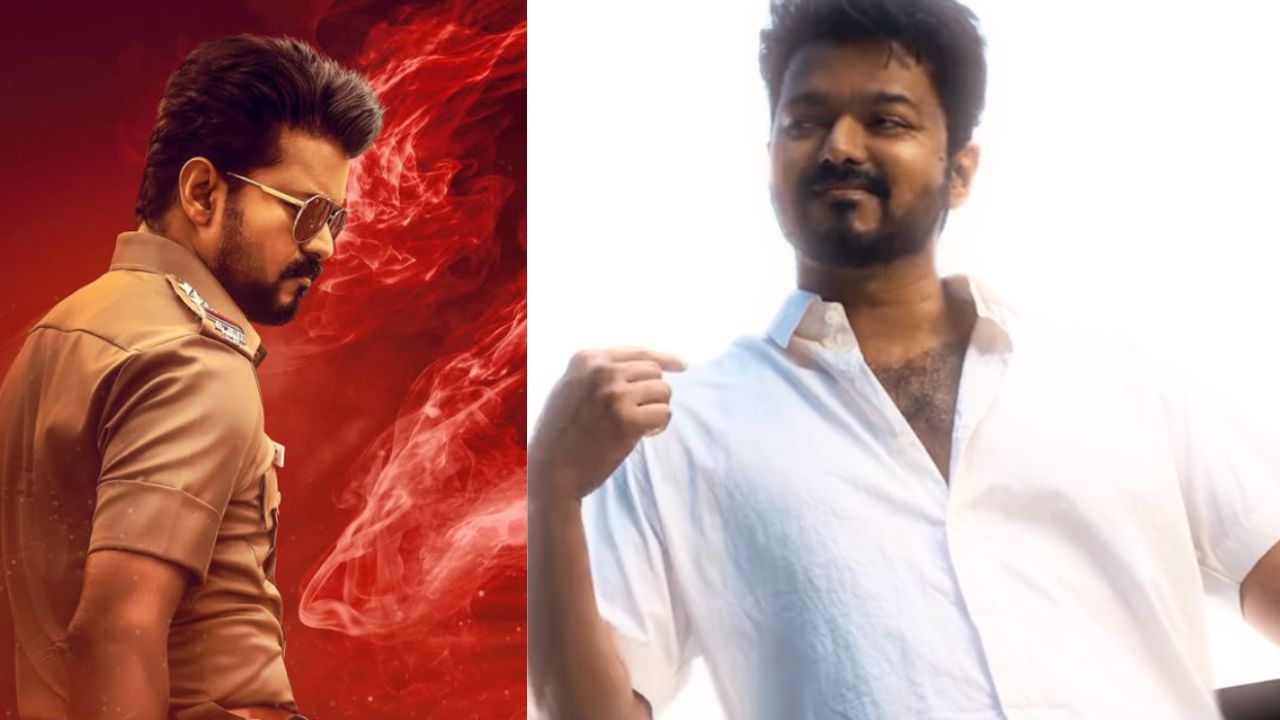
As expected from a Vijay film, there are explosive action sequences, including the mandatory bomb blast scene. Vijay looks stylish in his police uniform and continues to impress with his dance moves.
The film also gives importance to protests, communal harmony and unity among people instead of divisions based on caste and religion. Songs too carry political and caste-related references.
The emotional portions involving family, especially the sister-daughter sentiment, work well. Some viewers may also connect these moments with Vijay’s real-life loss of his younger sister Vidhya.
The second half is more engaging than the first as Vetri’s battle expands beyond one family and becomes a fight to protect the people of Tamil Nadu.
Jana Nayagan is not just a farewell film, it is a political statement wrapped inside a commercial entertainer.
Director H. Vinoth balances action, emotion and political messaging, although the political commentary often overshadows the storytelling. Several supporting characters remain underdeveloped because the film focuses almost entirely on Vijay’s journey.
The film strongly projects Vijay as a leader destined to serve Tamil Nadu. Many viewers may even feel it is a story of manifestation, considering Vijay’s rise from actor to Chief Minister. It repeatedly presents him as someone born for Tamil Nadu and its people.
However, despite all the emotional moments and political messaging, Jana Nayagan does not completely feel like the perfect farewell to Vijay’s cinema career. Instead, it leaves audiences wondering if he still had one more memorable film left in him before stepping away from acting.
Rating: 3.5/5

Comments are closed.