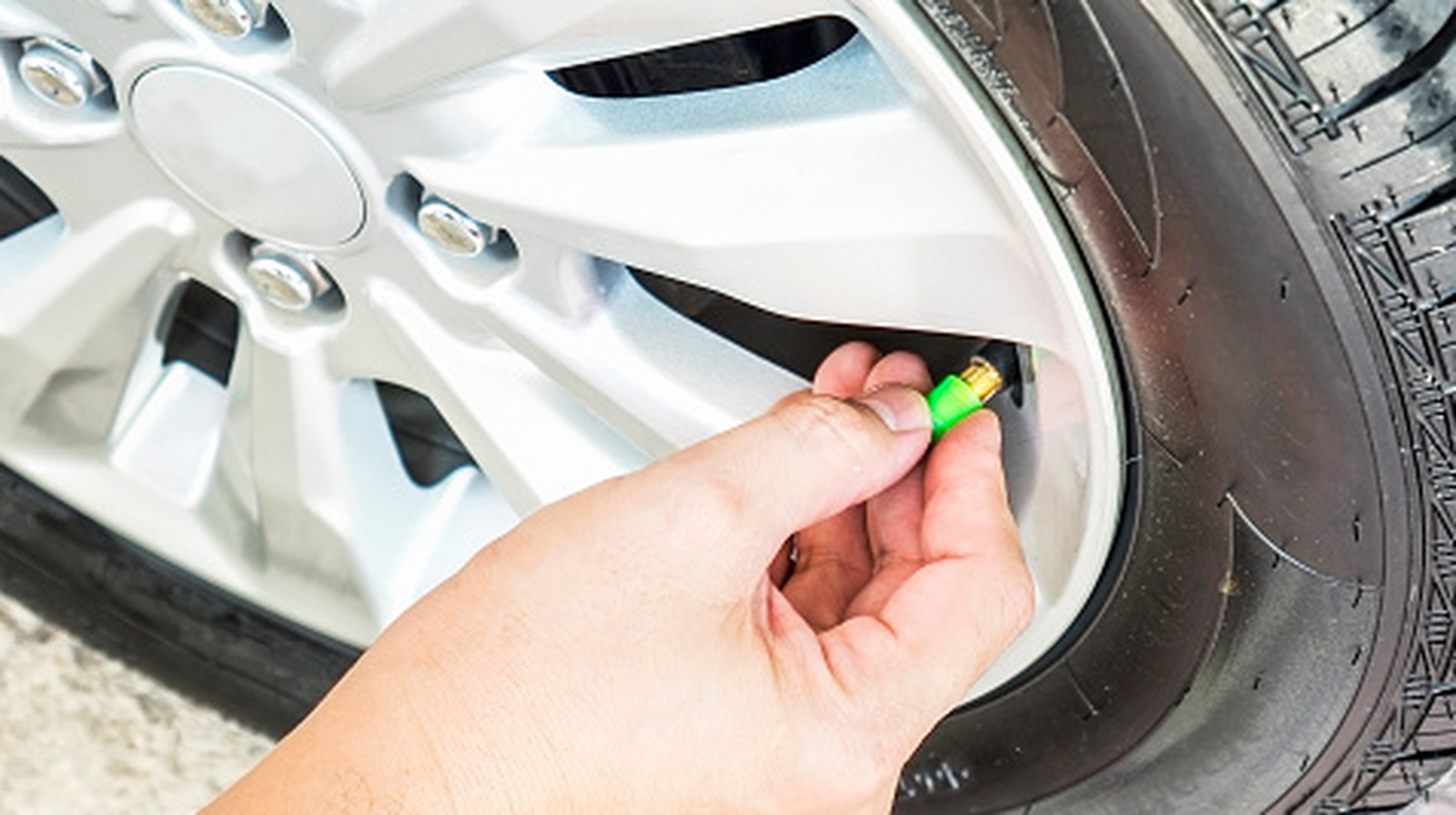
Nitrogen-filled tires have gained popularity in recent years. One of the major reasons behind it is the idea that filling your car tires with nitrogen can improve fuel economy. As a result, people often pay more for nitrogen, even when regular air is available for free. Unfortunately, there’s no conclusive study suggesting that filling your tires with nitrogen will improve fuel economy.
There are benefits to nitrogen-filled tires, but inflating your tires with the gas doesn’t lower the rolling resistance, something that has a significant impact on fuel economy. Whether you fill the tires with nitrogen or regular air, the rolling resistance remains the same, provided the pressure is the same in both cases. However, since nitrogen lasts longer in tires, it may lead to slightly better fuel economy if you don’t regularly check and refill your tires.
Consumer Reports conducted a test with 31 different tire models to assess air loss, and the results showed that nitrogen-filled tires have lower pressure loss. They filled one set of tires for each model with nitrogen and another with regular air, both to 30 psi, and after 12 months, tires filled with regular air lost 3.5 psi while nitrogen-filled tires lost 2.2 psi. That’s a difference of 1.3 psi over a one-year period. It’s worth noting that the tires weren’t being used on vehicles during the testing; they were simply kept outdoors. So, filling your tires with nitrogen may help, but it’s not guaranteed to improve fuel economy in the real world.
The benefits are questionable
When it comes to tires, air pressure is a major factor in fuel economy. If you maintain it at the recommended levels, the fuel economy improves. Given that nitrogen escapes more slowly through permeation compared to regular air, you may notice some difference over an extended period. That’s the reasoning behind it. But it’s also important to realize that the air pressure plays a bigger role here than what you are filling your tires with. This means even if you periodically top off your car’s tires with regular air and maintain optimal pressure levels, the fuel economy will generally be the same.
If you are paying extra for nitrogen, it’s a decision worth reconsidering. Studies have consistently shown that maintaining tire pressure is more important. That’s why you can mix nitrogen and regular air in a tire that was initially filled with nitrogen if the pressure is too low. There’s no harm in it.
That said, filling your tires with nitrogen does have a unique benefit. With lower water vapor concentration, the tires don’t experience as much degradation due to the oxidation process. But this too doesn’t impact the average car owner as much as it is often advertised. You are likely to replace the tires long before this degradation reaches levels that are concerning.