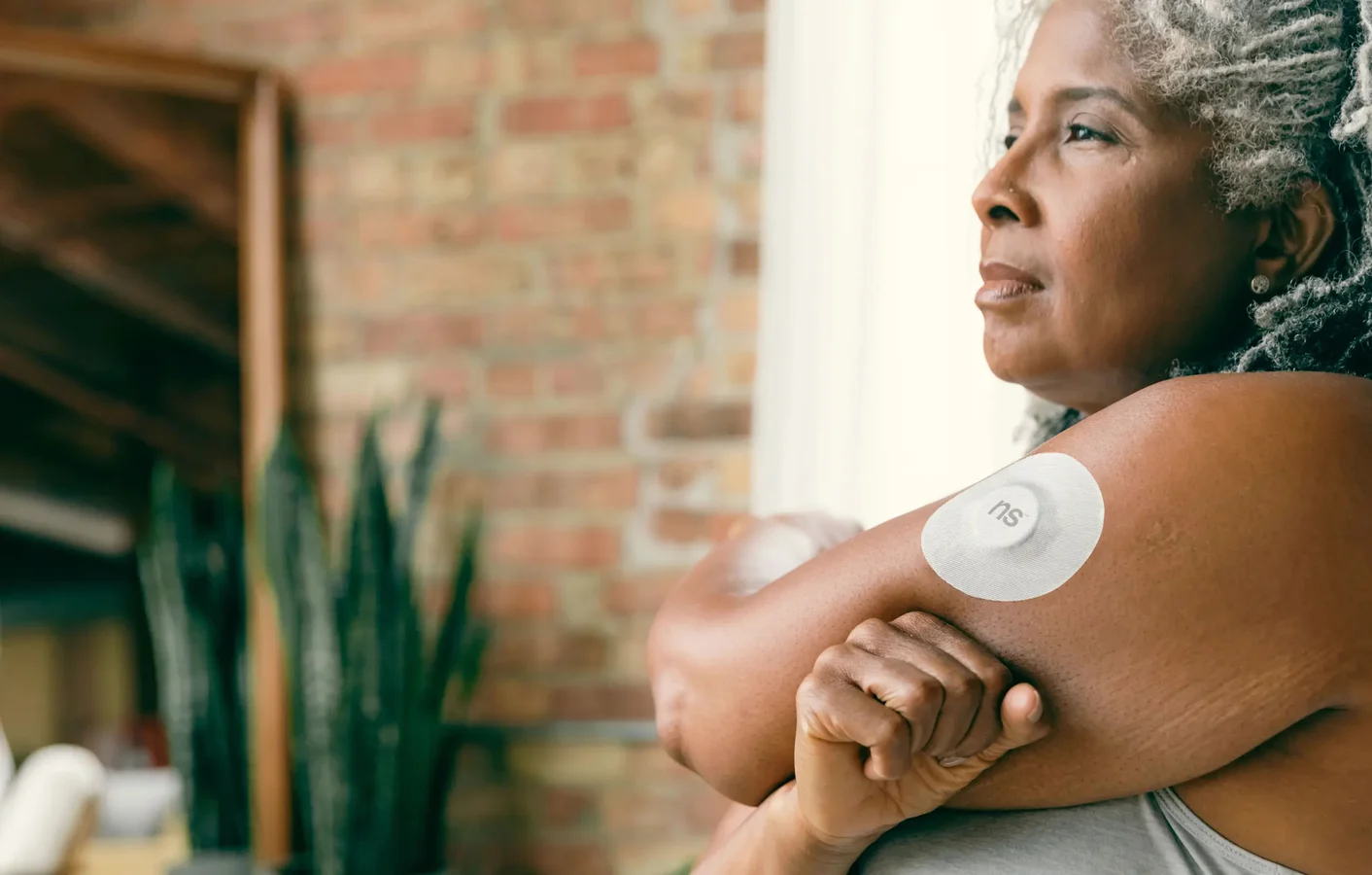
For people who live with severe diabetes, checking blood sugar is a part of the regular routine. Usually, this means pricking a finger a few times each day and using a glucometer to see glucose levels.
That method gives a reading at that moment, but it does not reveal how blood sugar moves between tests, Dr Girish Bathina, general medicine consultant at Manipal Hospital, Vijayawada, shared with Tezzbuzz Lifestyle.
This is where continuous glucose monitoring, or CGM, comes into play as it records glucose levels all day and all night.
What is continuous glucose monitoring?
In the words of the physician, “Continuous glucose monitoring is a device that measures glucose in the fluid under the skin. It uses a sensor, usually placed on the upper arm or abdomen, to take glucose readings every few minutes. The sensor sends those readings to a receiver or smartphone so the user can see glucose levels all day long.”
Unlike the finger‑prick test that gives only one reading at a time, CGM displays glucose trends over time. CGM can warn the user when sugar rises too high or falls too low, even while sleeping, shared the physician.
Why is tracking glucose patterns important?
Blood sugar levels fluctuate in response to food, exercise, stress, illness, sleep, and medication, explained Dr Bathina. A person might have a reading before a meal but then see a big rise afterwards. Likewise, glucose can drop during exercise or overnight.
“CGM helps spot these patterns so a person and the doctor can see how the body reacts to real-life scenarios. CGM also finds low‑sugar and high‑sugar episodes that might otherwise stay hidden,” he stated.
Who can benefit from CGM?
As per Dr Bathina, CGM is especially useful for:
- People with Type 1 diabetes
- Those who use insulin times each day
- People who often get low sugar
- People who cannot feel low‑sugar symptoms
“Some people with Type 2 diabetes, those on insulin or who cannot reach target glucose, may also benefit,” he stated. “CGM gives data for adjusting treatment, improving diet, and seeing how exercise changes glucose.”
However, the physician pointed out that CGM may not be needed for everyone. “Those who manage Type 2 diabetes by diet, exercise or medicines and rarely have blood sugar levels fluctuating can continue with occasional tests as advised by the doctor,” he said.
While CGM cuts down on frequent finger‑prick tests, it also does not fully replace them in every case.
“CGM reads glucose in the fluid between cells, not in the blood. There can be a delay, especially when glucose changes quickly,” stated Dr Bathina. “If symptoms do not match CGM readings, a finger‑prick test may still be needed.”
Dr Bathina further highlighted that while CGM gives useful data, the numbers must be read correctly and used to guide proper treatment by a doctor.
Note to readers: This article is for informational purposes only and not a substitute for professional medical advice. Always seek the advice of your doctor with any questions about a medical condition.