
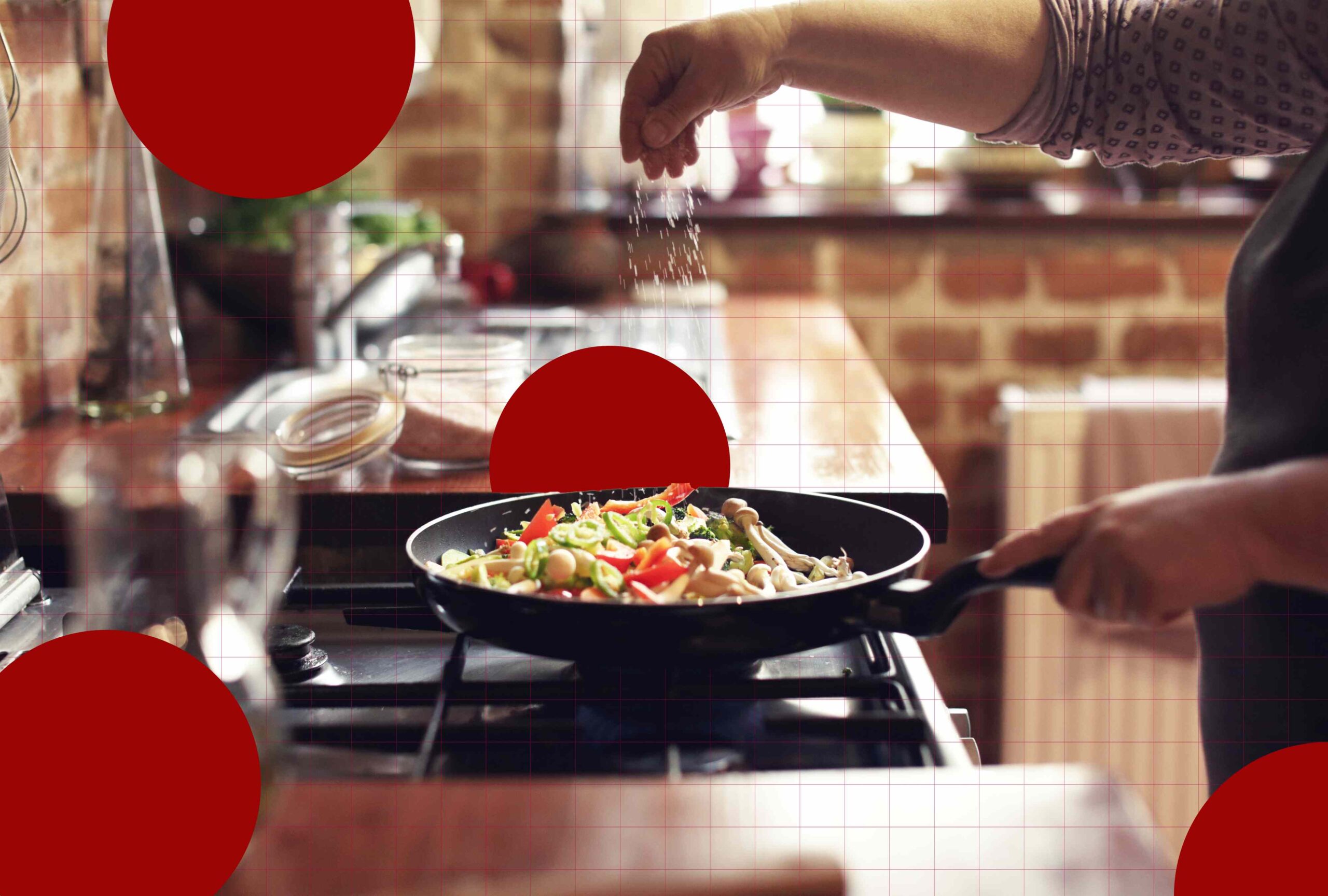

Step away from the salt cellar.
Reviewed by Dietitian Casey Wing, RD, CD
Key Points
- Measure salt carefully to avoid oversalting; a pinch can add a high amount of sodium.
- Use herbs, citrus and vinegars to boost flavor without adding extra sodium to your meals.
- Check nutrition labels on packaged foods; aim for less than 5% of your daily sodium intake per serving.
Ask any chef what mistake home cooks make in the kitchen and they’ll likely argue that they are undersalting their food. If you talk to doctors, though, they’ll contend that we should back away from the salt cellar. Confused? Us too. “Many people think they are ‘just adding flavor,’ but sodium often sneaks in long before the saltshaker comes out,” says Sahil Khanna, M.B.B.S., M.S. More than 70% percent of sodium intake in the U.S. comes from packaged, processed and prepared foods, like a jar of marinara sauce or bottled salad dressing. Using salt in addition to these, or oversalting your home cooking, can greatly increase the sodium in your food—and lead to health risks, experts told us.
How Oversalting Can Harm Your Health
According to the American Heart Association, Americans consume far more salt than they should: over 3,300 milligrams daily on average, with 2,300 mg being the recommended daily limit (though 1,500 mg is considered optimal). “Too much sodium is strongly linked to higher blood pressure, which raises the risk of heart attack, stroke and heart failure,” Khanna explains.
Before any of those risks come into play, your body might signal if you’ve had too much salt via swelling, water retention, bloating and increased thirst. “Even in people without chronic hypertension, a single high-sodium meal can transiently raise blood pressure within 30 to 60 minutes,” says Satara Brown, M.D.
Oversalting already salty foods like canned foods can even alter your taste perception. “Interestingly, high sodium [can alter] taste sensitivity to salt and start a vicious cycle of desiring more salt and using higher amounts over time,” Brown adds.
How to Use Salt Safely
That’s not to say that salt is completely forbidden. Both doctors we spoke with agreed that cooking with salt isn’t the problem; it’s often how we cook with salt. “Many times people sprinkle or pour salt without knowing how much they are truly adding,” Brown says. A simple fix? Measuring how much you’re actually adding. “A pinch of salt can vary from person to person, so a heavy pinch can add up to 600 mg of sodium to a meal,” she adds. Also, cooking tips from chefs should be taken with a grain of salt, says Khanna. Advice like salting your pasta water to taste like the ocean or using large pinches from the salt cellar to season meat is best left to restaurants, he says. “That may be fine for some restaurant-style cooking, but for everyday meals it overshoots quickly, especially when the dish already includes salty sauce, cheese, broth or condiments,” he explains. “The problem is that sodium adds up from multiple sources, many of which people do not think of as salty foods.” To avoid oversalting these foods, Khanna suggests keeping an eye on the nutrition label: if it indicates that the food has less than 5% of your daily recommended value, it’s low-sodium. If it’s 20% or more, it’s high.
So, how much salt should you use? A good rule of thumb, according to Brown, is to use a teaspoon of salt per pound of pasta in a full pot of water to season it. For seasoning meat, she suggests a quarter-teaspoon of salt per pound.
Other Ways to Add Flavor
Rather than solely leaning on salt to season your food, both Brown and Khanna suggest looking to other seasonings and herbs for extra flavor. If you’re punching up a jarred or canned tomato sauce, for example, adding in fresh onions, garlic and herbs like parsley and basil will make it taste more like homemade than a few extra pinches of salt would. Vinegars and citrus can also help make meals more complex, without tacking on extra sodium. Plain yogurt with spices and citrus can also make for great marinades that taste better than what you’ll find in a bottled dressing.
Cooking with whole foods and fresh ingredients will also ensure that home cooks aren’t using too much salt at home. “If someone cooks at home more often, uses more whole ingredients and gradually cuts back on sodium, saturated fat and sugary add-ons, that usually moves them in the right direction without making food joyless,” Khanna says.
Our Expert Take
Doctors we spoke with said that the biggest mistake home cooks make in their kitchen happens at the salt cellar. Often, they’ll add additional salt to sodium-packed, ready-made ingredients, or oversalt their from-scratch cooking by eyeballing table salt, rather than measuring it. If you’re using ready-made, canned or processed ingredients like a sauce, dressing or stock, make sure it’s low-sodium or no-salt-added, then double-check the nutrition label and make sure it contains less than 5% of your daily recommended value for sodium. Measure the salt you add to meals and meats, and try to keep it to a quarter-teaspoon of salt per pound of meat and 1 teaspoon of salt per pound of pasta. Aromatics, vinegars and herbs can also add tons of flavor without increasing your sodium intake.

Comments are closed.