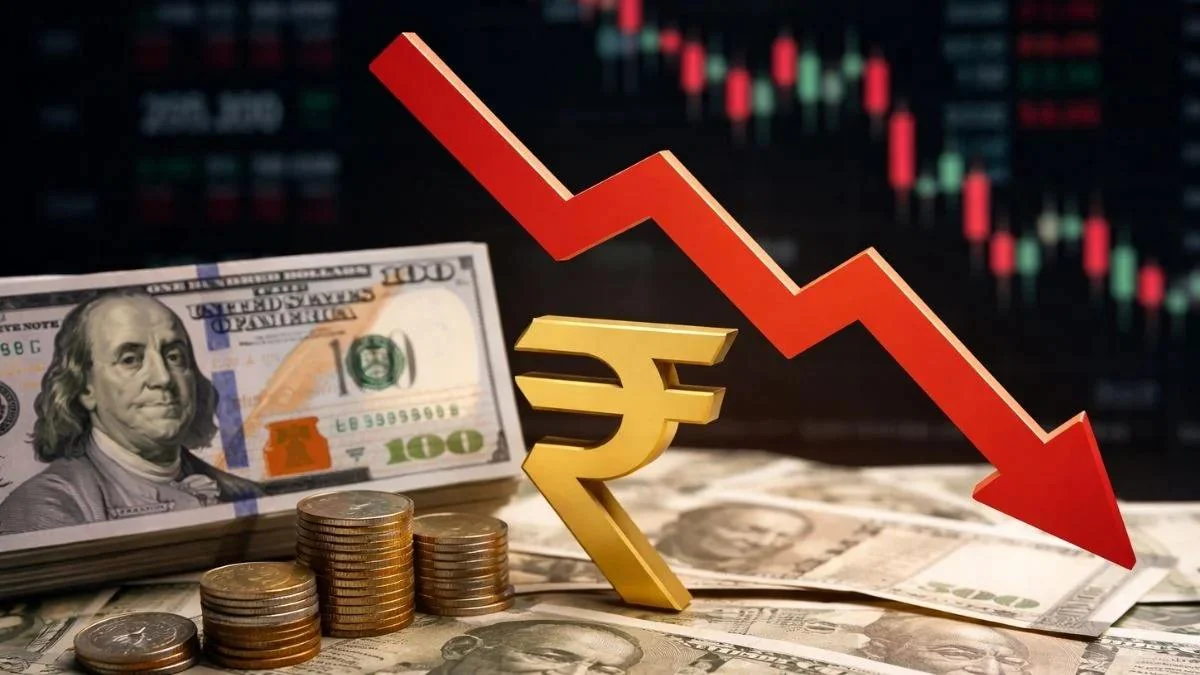
Business Desk: India’s rupee weakened against the dollar for the second consecutive day. On Friday, the rupee fell 8 paise to close at 94.20 per dollar (provisional). On Thursday also it had fallen by 41 paise. It closed at 94.12. During trading on Friday, the rupee reached a high of 94.05 and a low of 94.28.
Rupee’s fall due to strengthening of US dollar
Inflation figures in America are higher than expected and American bond yields are increasing. Apart from this, the fall in the domestic stock market and rise in crude oil prices also put pressure on the rupee. The foreign exchange market is closed on Saturdays, so Friday’s closing price is the latest trading level at the moment.
Dollar strengthened due to rising inflation in America
After inflation figures in America were higher than expected, the fear that interest rates there will remain high for a long time has increased. The dollar has also been strengthened by the tough stance of US Federal Reserve officials.
Due to increasing returns on US bonds, investing in dollars is becoming attractive for investors. This increases the risk of foreign capital leaving emerging markets. The dollar index reached 103.16, indicating the US dollar’s strength against six major global currencies.
Pressure on rupee due to increase in trade deficit
India’s trade deficit has increased to $39.88 billion in October. In September it was $30.21 billion. Gold imports increased more than three times to $5.51 billion and petroleum imports stood at $22.82 billion.
India buys about 85% of its crude oil requirement from abroad. Increasing demand for dollars for imports of oil and other goods puts pressure on the rupee. The rise in crude oil prices in the international market also increases India’s import bill.
What will be the impact of rupee weakness on the common man?
- Pressure of petrol and diesel becoming expensive: India imports a large part of crude oil. Due to the expensive dollar, the cost of imports may increase for oil companies. This may affect the prices of petrol and diesel. However, domestic prices also depend on international oil prices, taxes and companies’ policies.
- Studying abroad is expensive: Indian students studying in America, Britain and other countries may have to spend more money to pay fees and living expenses.
- Expenses of traveling abroad will increase: If you pay for hotel, shopping and other services abroad in dollars or other foreign currency, you will have to pay more money.
- Electronics and mobiles can be expensive: India imports large quantities of electronic components, machinery and other products. Due to the dollar becoming expensive, the costs of companies may increase. This may impact customer prices in the future.
- Pressure of gold becoming expensive: Even if the price of gold remains stable in the international market, the import cost of gold in India may increase due to the dollar becoming expensive.
Exporting companies may benefit
IT, pharma, textile and other exporting companies can benefit from the weakness of rupee. They get more rupees in exchange for the dollars they receive from abroad.
However, for companies that have to import raw materials and machinery from abroad for production, their costs may also increase. Therefore, a weak rupee does not provide equal benefits to all export companies.