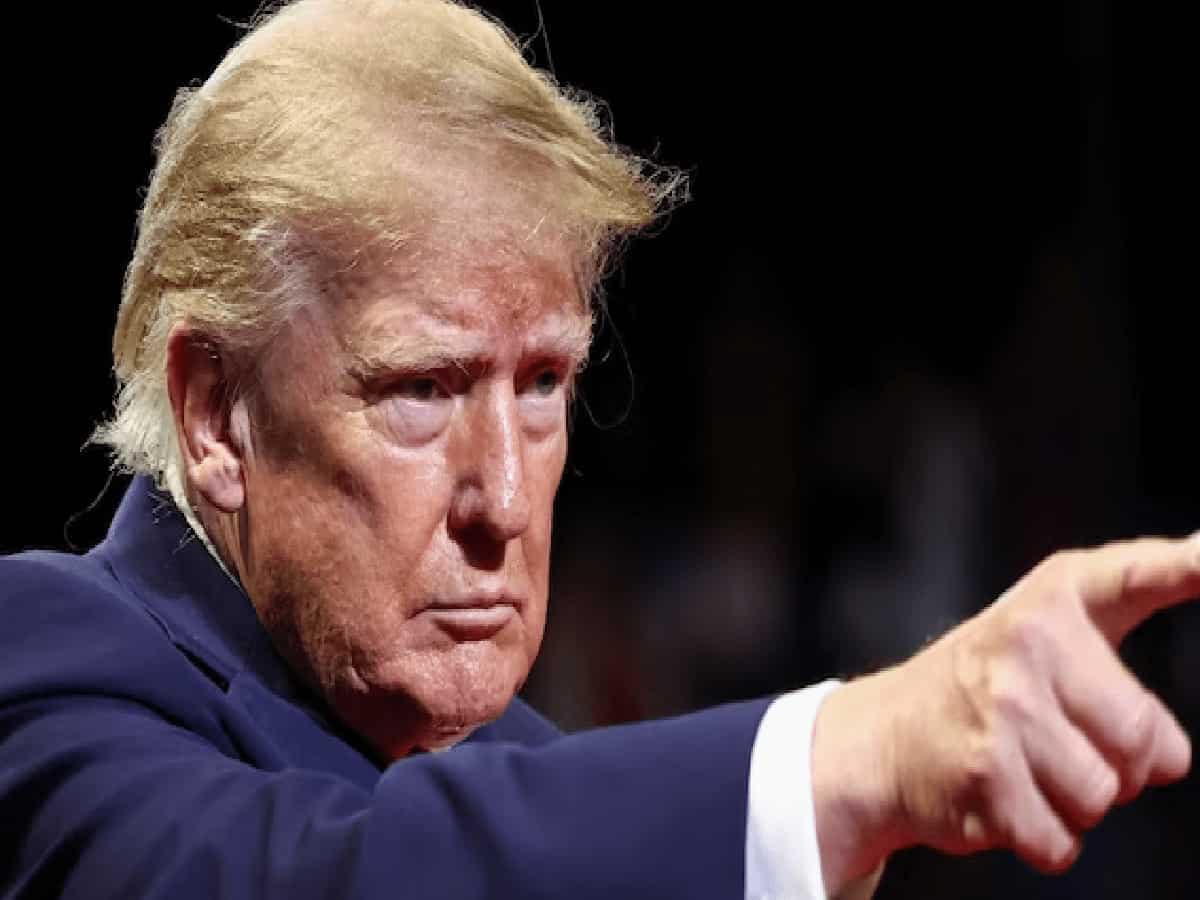
United States President Donald Trump has leveled direct accusations against Yemen’s Iran-backed Houthi rebels, asserting that their renewed offensive across the Arabian Peninsula is a calculated economic strategy designed to drive up international crude prices ahead of the US midterm elections. Speaking out after recent strikes struck deep inside Saudi Arabia, Trump claimed the militia is acting under specific instructions from Tehran to unsettle energy markets and influence American political sentiment. The US commander-in-chief issued an unyielding personal warning, stating that Washington’s response will not expire with the election cycle and that consequences will follow after November 3.
Warning on Truth Social: Trump Links Strikes to Tehran and Vows Action After November 3
The US President framed the rebel offensive as direct economic warfare tied to domestic American electoral timelines:
Allegations of Strategic Price Spikes: Trump asserted that the Houthi leadership is intentionally striking energy and commercial hubs to spike global crude benchmarks right as American voters prepare to head to the ballot boxes on November 3.
Tehran’s Hand in the Escalation: Noting that past American military strikes had enforced an interim period of operational deterrence, Trump posted on Truth Social that the militia has resumed destabilizing maneuvers solely at the behest of Iranian handlers.
Firm Post-Election Warning: Emphasizing his long-term leverage, Trump wrote that the rebels are behaving poorly and warned that even though he secured a historic mandate, he remains in power and will never forget these provocations once the midterm elections conclude.
Aviation Hub Shut Down and Aramco Threatened: Regional Security Spirals
The cross-border hostilities have targeted major civilian and petroleum infrastructure across Saudi Arabia:
Riyadh Airport Paralyzed: Following an aerial assault by Houthi drones and missiles on King Khalid International Airport in Riyadh, authorities ordered the commercial aviation terminal shuttered until October 17, grounding scores of domestic and international flights.
Retaliatory Coalition Strikes: In response, the Saudi-led coalition issued emergency evacuation orders for civilians residing near the Yemen Petroleum Company’s Sabaa Central Station on the outskirts of Sanaa before launching precision airstrikes, though company officials noted no operational oil stockpiles were hit.
Aramco Facilities on Notice: Houthi military spokesman Yahya Sari warned of painful retaliatory operations against any strikes on Sanaa, advising energy workers to avoid potential target zones, including the Saudi Aramco global headquarters in Dhahran and a key refinery complex in Riyadh.
Geopolitical Realignment and Market Reactions: Turkey’s Role and Crude Price Shifts
The standoff intersects with broader diplomatic agreements and turbulent international energy trade dynamics:
Turkey and the Mecca Defense Pact: Seeking to reinforce regional deterrence, Trump suggested that Turkish President Recep Tayyip Erdogan would support Saudi Arabia if called upon. Erdogan affirmed Ankara’s backing during discussions with Crown Prince Mohammed bin Salman, following the earlier Mecca Defense Pact signed between Turkey, Pakistan, and Saudi Arabia, which still awaits Turkish parliamentary ratification.
Chokepoints at Bab al-Mandeb: The conflict—rooted in the broader regional confrontations that accelerated following military strikes on Iran earlier in the year—has raised critical concerns for maritime transit across the Bab al-Mandeb Strait connecting the Red Sea to the Gulf of Aden.
Brent and WTI Price Movements: Despite heightened security risks, international oil prices saw a slight downward correction on Tuesday, aided by anticipation surrounding a US-brokered Russian diesel export mechanism, with Brent crude easing 0.6 percent to $105.98 per barrel and West Texas Intermediate (WTI) trading at $93.74 per barrel.