

Dang Phuc Nguyen, general secretary of the Vietnam Fruit and Vegetable Association, said that if the upcoming Central Highlands harvest proceeds smoothly and pending issues related to growing-area and packing-house codes are resolved promptly, exports could double to $4 billion for the year, up from $3.8 billion in 2025.
The optimistic outlook is supported by rising production. The Department of Crop Production and Plant Protection estimates Vietnam’s durian-growing area at around 192,000 hectares.
Output has risen by 20-30% annually in recent years, reaching around 1.8 million tonnes in 2025, and is forecast to increase to 2-2.1 million tonnes this year.
However, Nguyen warned that rising production also increases the urgency of approving additional growing-area and packing-house codes. If certification procedures fail to keep pace with output, the volume of durian eligible for official export channels will be constrained, affecting sales during the peak harvest season.
Alongside fresh durian exports, frozen products have also expanded this year but remains a supplementary segment. Frozen products currently account for 10-15% of shipments and are expected to rise to around 20% this year.
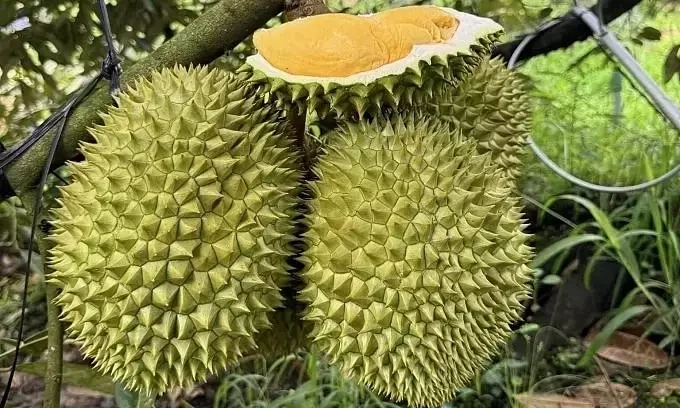
Durians in an orchard in the Mekong Delta city of Can Tho. Photo by VnExpress/Manh Khuong |
The association noted that China imported some $8 billion worth of durian from Southeast Asia last year, including more than $1 billion in frozen products and around $7 billion in fresh fruit. This indicates that Chinese consumers continue to favor fresh durian.
Frozen durian also faces logistical challenges because it requires strict temperature control throughout storage, transport and distribution. Meanwhile, value-added products such as frozen durian pulp and dried durian have yet to gain popularity in the Chinese market.
Durian prices in China have fallen sharply, which Nguyen attributed to weaker demand rather than quality concerns.
Many parts of China have been affected by heavy rain and flooding, slowing fruit consumption. This has affected not only durian but also many other imported fruits, he said.
Supply has also surged as Vietnam, Thailand and Malaysia enter harvest seasons simultaneously. In Thailand, abundant output has pushed durian prices to their lowest level in about a decade.
Vietnam is also entering its peak harvest in the Central Highlands, with the additional supply expected to intensify competition in the Chinese market during the second half of the year.
Vietnam’s Agency of Foreign Trade said improved logistics and lower transport costs have also contributed to lower durian prices in China by shortening delivery time and increasing product availability.
During the peak season, Thai durians can reach Kunming in about 26 hours and be distributed to more than 30 Chinese cities within 48 hours.
Thai and Vietnamese Monthong durians are currently retailing at 20-30 yuan (US$2.79-4.18) per 0.5 kg, well below the 35-45 yuan seen a year earlier. Wholesale prices saw even steeper declines.
Exporters said premium durian varieties are expected to maintain relatively stable prices due to resilient demand, while standard fruit will continue to face downward pressure as supply expands.
To support durian and other agricultural exports, the Vietnamese government is drafting a resolution to streamline procedures for growing-area and packing-house codes. The measures aim to shorten processing times, lower compliance costs, and strengthen post-clearance inspections and product traceability.
The Ministry of Agriculture and Environment also said it would continue negotiations with Chinese authorities to speed up approvals for growing-area and packing-house codes to help facilitate agricultural exports.

Comments are closed.