
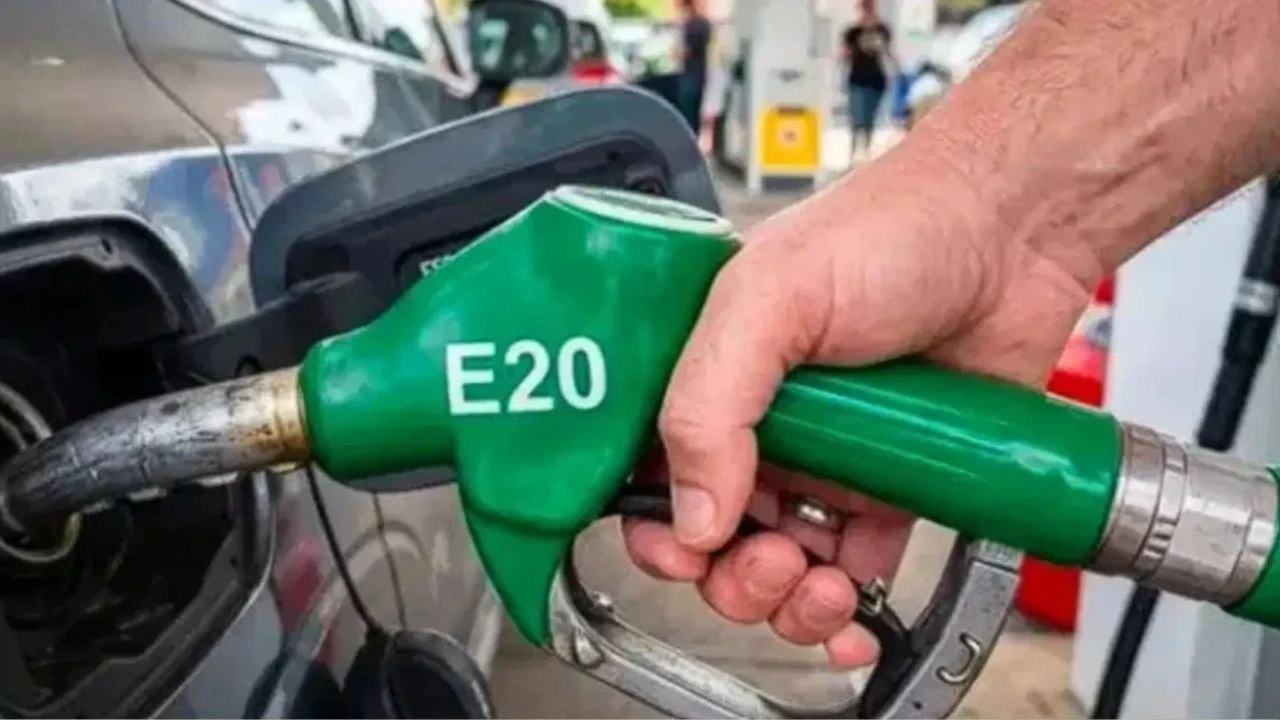

E20 Petrol: If you are also thinking that E20 petrol will cause rust in the engine of your car or bike, then there is no need to panic. According to ARAI (Automotive Research Association of India) tests, E20 fuel has almost no harm to metal parts of the engine like iron, steel or aluminium.
E20 Petrol: In view of the continuously increasing prices of petrol and diesel, the government has promoted E20 petrol across the country. The government says that this will reduce dependence on petrol and pollution will also reduce. However, many rumors are also spreading regarding E20 fuel. Some people are claiming that this damages the engines of vehicles or causes them to rust. In such a situation, it is important to know how much truth is there in these claims and what things vehicle owners should keep in mind.
Does the engine rust or not?
If you are also thinking that E20 petrol will cause rust in the engine of your car or bike, then there is no need to panic. According to research by the Automotive Research Association of India (ARAI), E20 fuel has almost no harm to metal parts of the engine like iron, steel or aluminium. During testing, these metals were exposed to E20 fuel for long periods of time, but neither unusual corrosion nor major defects were observed. That means the idea of rusting of the engine is not considered correct.
Possible effect on plastic parts of old vehicles
However, research has definitely revealed that E20 fuel can affect some rubber and plastic parts of vehicles. Especially in older vehicles, rubber pipes, hoses, O-rings, gaskets and seals can weaken over time due to ethanol. Ethanol acts like a solvent, due to which these rubber parts gradually harden and start bursting. This can lead to the problem of fuel leaking, which many people mistake for the problem of engine rust.
Read this also-Don’t worry if a tree falls on your car during monsoon, in this easy way the insurance company will pay the full amount.
Keeping the vehicle parked for a long time can increase humidity.
Ethanol quickly absorbs moisture from the air. If the vehicle remains parked without driving for several days, the possibility of water accumulation in the fuel tank may increase. This may cause slight rust in old iron fuel tanks. However, the chances of such a problem are very low in E20-compliant vehicles that are in daily use or manufactured after April 2023.

Comments are closed.