


The government has formally notified fuel quality standards for petrol blends containing up to 30 percent ethanol. The Bureau of Indian Standards published a new standard, IS 19850:2026, covering E22, E25, E27 and E30 petrol grades.
This is a regulatory framework document, not a pump rollout date. However, it signals clearly that the policy direction seems moving well beyond the E20 level that is still being implemented at filling stations across the country.
To put this in simple terms: petrol currently sold at most pumps has up to 20 percent ethanol mixed with the remaining 80 percent petrol. The new standards set the technical ground rules for selling petrol with up to 30 percent ethanol content. Before any fuel can be retailed, standards need to exist. The BIS notification creates those standards.
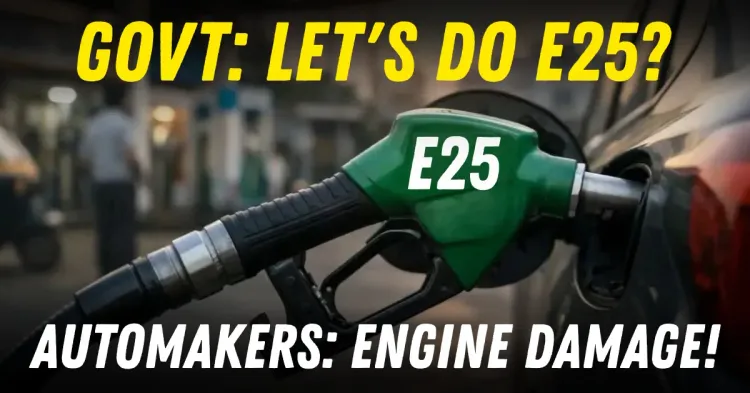
This has created panic among vehicle owners who fear the big shift from E20 to E30 petrol. This is a straight 50 % jump in ethanol blending, and is expected to cause engine problems as even the latest vehicles sold in India are compliant only upto E20 petrol.
In fact, the Government even consulted automakers about E25 petrol, to which the automakers replied that E25 petrol will cause engine damage, and warned the government against increasing ethanol blending from the current E20 level.

The national average ethanol blending level has crossed 18 percent, making the E20 target for the current ethanol supply year broadly achievable. E20 fuel was introduced at select retail outlets in 2023 and car manufacturers have been producing E20-compatible vehicles since then. Most petrol cars sold in the last two to three years are officially rated for E20 fuel and will run on it without any modifications.
The jump from E20 to E30, however, is not a small step from the engineering side. Ethanol has about 33 percent less energy per litre than petrol.
Higher ethanol blends mean slightly lower fuel economy per litre, though the per-kilometre cost equation depends on how ethanol is priced relative to petrol at the pump. As things stand today, E20 petrol is not cheaper than non-E20 petrol. In fact, there’s no option for vehicles owners to opt for non-E20 regular petrol. This has further led to dissatisfaction among vehicle owners who face a double whammy: lower mileage on E20 without any price benefit, and engine damage on older vehicles.
Ethanol also absorbs moisture more readily than petrol, which creates concerns about fuel system corrosion and fuel line integrity in older vehicles that were not designed with high ethanol blends in mind.
For owners of vehicles manufactured in the last three years, the practical impact of E20 has been minimal. The higher compression ratios, fuel system materials and injector calibrations on modern cars handle 20 percent ethanol without issues.
Moving to E25 or E30 is a more significant ask. Fuel system seals, fuel pump materials and injector specifications need to be rated for higher ethanol concentrations, and not all current E20-compatible cars will automatically clear those requirements.
When and if E25 or E30 fuel arrives at pumps, the government will need to clearly communicate which vehicles are cleared for use. Running a non-compatible car on high-ethanol fuel can degrade rubber seals over time, cause fuel system corrosion and, in some cases, trigger fault codes through the engine management system.
Two-wheeler owners will need to pay particular attention since older bikes with carburetted engines and non-coated fuel systems are more vulnerable to ethanol-related degradation.
There is no commercial rollout timeline in the BIS notification. The petroleum ministry and oil marketing companies will determine when and where higher blends reach fuel stations. But given that the E20 rollout itself took years from policy announcement to widespread availability, E30 at scale is likely a few years away.
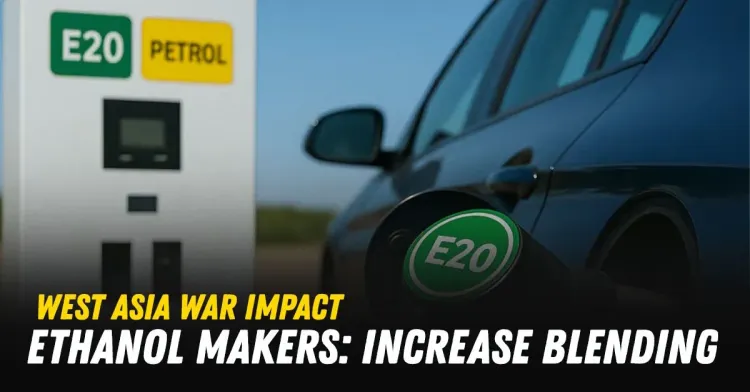
The underlying policy pressure is clear: crude oil prices have been volatile and the import bill for oil is a significant fiscal drag. Domestic ethanol, produced largely from sugarcane and food grain surplus, can displace imported petrol on a volume basis.
Higher blending targets reduce the net crude import requirement, support domestic agriculture through higher sugarcane and grain procurement prices, and give the government a lever to manage the retail fuel price through supply-side diversification.
The government has also been discussing E85 blends for dedicated flex-fuel vehicles, and at least one manufacturer has commercially launched a flex-fuel compatible two-wheeler in this market.
As the ethanol blending programme moves from E20 to E30 and eventually beyond, the auto industry will need to stay ahead of the fuel transition in both new product development and after-sales support for existing vehicles.
Comments are closed.