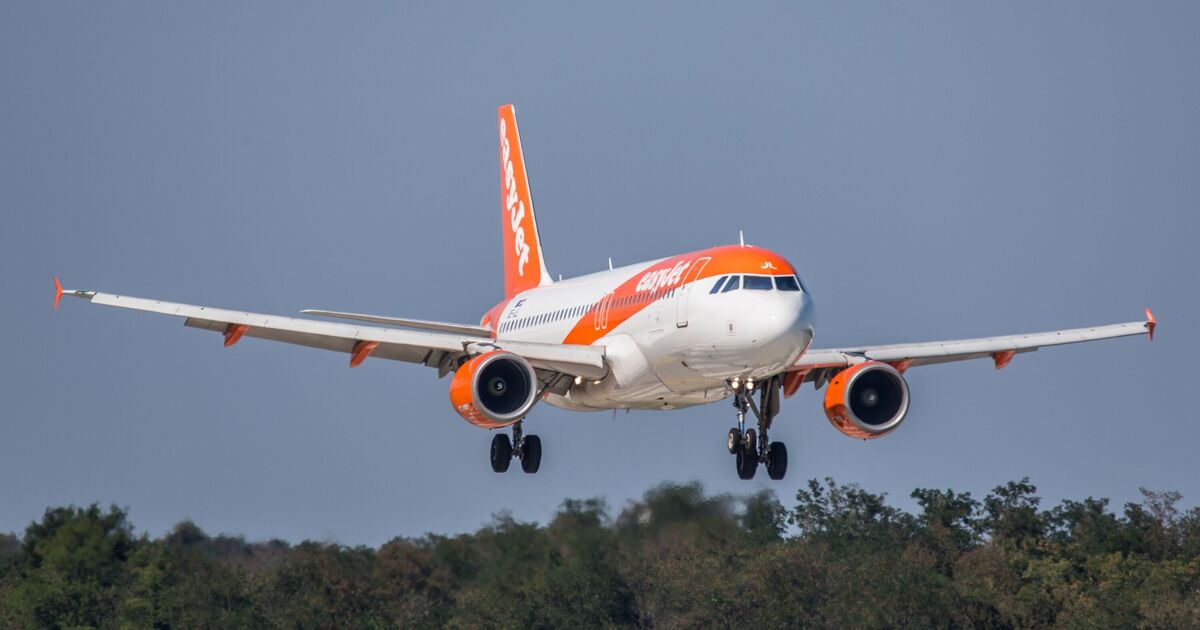
The dispute follows another strike by easyJet cabin crew last month (Image: Getty)
EasyJet passengers travelling in France this month have been warned to expect possible disruption. EasyJet pilots based in France have called to strike on Sunday, September 13, and Monday, September 14. This comes just weeks after easyJet cabin crew in France went on strike last month, leading to around 100 flight cancellations on Saturday, August 15, and Sunday, August 16.
“Enough is enough!,” trade union the Syndicat National des Pilotes de Ligne (SNPL) said last Friday. It said the SNPL has been trying to negotiate with easyJet management to secure concrete measures to improve the stability of pilots’ rotas. However, in the absence of “sufficient progress”, a strike notice has been served for September 13 and September 14.
According to the union, it is “impossible” to organise one’s family life, appointments or simply time off properly when timetables are subject to change several times a week.
EasyJet pilots in France have called a two-day strike for September 13 and 14 (Image: Getty)
“For years, the company has been promising improvements that have yet to materialise,” it added.
“It is common for a pilot to reach the end of the month with a schedule in which not a single day is the same as it was at the beginning of the month. Sometimes, a day’s schedule can change as many as 10 times on the day before. These changes, in addition to their impact on the organisation of private life and rest periods, lead to frustration and fatigue which, in the long term, can give rise to psychosocial risks.”
Cabin crew members staged industrial action in August. The dispute was later resolved through an agreement that provides staff with five fixed days each month, during which their schedules cannot be altered, along with compensation when changes exceed two hours. The SNPL has questioned why similar arrangements cannot be extended to cockpit crews, particularly given that pilots and cabin crew operate on the same aircraft and work within the same operational environment.
Despite announcing the two-day strike, the SNPL said it remains open to dialogue, adding that management can still prevent the industrial action from going ahead by “simply applying” measures that are already in place elsewhere within the company.
Passengers should therefore keep an eye on messages from the airline in the days leading up to their journey and check their flight status before travelling to the airport.
Tomas Vaišvila, CEO of Skycop told the Express: “With easyJet pilots set to strike on 13-14th September, passengers are understandably apprehensive about disruption to their journeys.
“If the strikes go ahead, delays and cancellations are likely but passengers can prepare by understanding their rights and what they are entitled to, even if an airline tries to tell them otherwise in the moment.”
Skycop is a flight compensation company that helps airline passengers to get their flight compensations for delayed, cancelled or overbooked flights. Airlines carry the burden of proof meaning they must show the reason for a delay or cancellation was genuinely extraordinary, unavoidable, and directly caused the disruption, not just assert it.
While air traffic control strikes are usually classed as out of an airline’s control, strikes by their own staff do not qualify as extraordinary. Where a cancellation isn’t caused by something genuinely outside the airline’s control, passengers informed less than two weeks before departure are typically entitled to compensation, the CEO explained.
Skycop’s top tips for ensuring they have the best possible chance of claiming compensation
- Establish proof of the booking and presence on the flight: Keeping a record of your boarding pass (digital or paper), booking confirmation, and ticket reference establishes the passenger was actually booked and checked in for the affected flight.
- Proof of the actual delay or cancellation, captured as it happens: Timestamps matter here. Take regular photos of the departure board showing the revised time, a screenshot of the airline’s app or flight-status page, and screenshots of any push notifications or emails announcing the disruption. Photographic evidence of the arrival time, key to any delay claim, should also be a priority.
- Written confirmation of the reason given, from the airline itself: This is the single most valuable piece of evidence and the one most people skip. Airlines are legally required to give every affected passenger a written notice of their rights whenever a flight is cancelled or delayed two hours or more, and there has to be a sign at check-in telling you to ask for it. That notice won’t tell you why the disruption happened, so also ask ground staff for the reason in writing. Airlines sometimes give vague or shifting reasons for a disruption. Having their own words on record, timestamped close to the event, makes it much harder for them to later claim a different, more convenient “extraordinary circumstance.”
- Itemised receipts for anything paid out of pocket: This includes meals, refreshments, hotel and transport. It’s worth noting that meals and refreshments are owed once a delay passes two hours on shorter routes, and a hotel if you’re stranded overnight, whatever the cause of the disruption, even when no compensation is due. Photograph receipts as they’re received rather than relying on keeping the physical copy.
- Invoices for any replacement travel arranged independently: If a new flight or onward transport was booked because the airline didn’t sort out rerouting, keep that booking confirmation and cost as evidence.
- A simple running timeline: This should focus on dates, times, what was announced and by whom, and any reference numbers from calls or complaints. This becomes the backbone of the claim narrative later and is often what separates a claim that gets accepted from one that gets bogged down in dispute over what actually happened.”