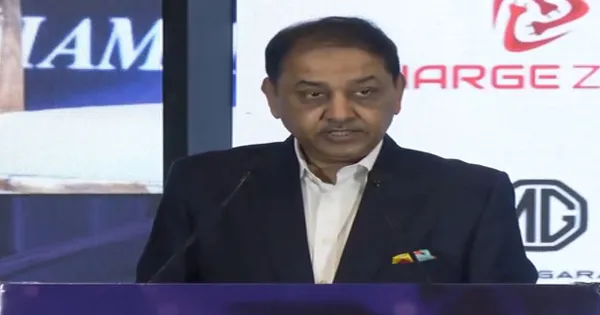
New Delhi. India's strong economic growth rate is creating new possibilities for the expansion of electric mobility in the country. Real GDP growth of 7.7 per cent in FY 2025-26 has kept India among the fastest growing major economies of the world. Its positive impact is also visible on the development of clean transportation, electric vehicles and charging infrastructure. Shenu Aggarwal, President of the Society of Indian Automobile Manufacturers (SIAM) said that it is very important to create a strong and reliable charging network for wide-scale adoption of electric mobility in the country.
Charging network should get priority like national infrastructure
Addressing the 'Growth and Readiness for EV Infrastructure Dialogue' (GRID) 2026 organized in the national capital, Aggarwal said that it would not be right to consider the electric vehicle charging system as just a supporting system for EVs. It needs to be developed as infrastructure of national importance.
He said that just as roads, ports and power systems are the cornerstone of the country's economic progress, similarly the charging network is also going to become an important part of the future transportation system and economic connectivity.
Demand will increase due to economic development and urbanization
According to SIAM President, due to rapid economic growth, urbanization and increasing income of people in India, the demand for clean, affordable and convenient transportation options is continuously increasing. In such a situation, to increase the use of electric vehicles, charging facilities will have to be expanded rapidly.
He said that the future of electric mobility does not depend only on manufacturing and selling of vehicles, but it is equally important to create a comprehensive charging ecosystem for it. Increasing the availability and reliability of charging networks will strengthen consumer confidence and accelerate EV adoption.
Important role in the goal of developed India by 2047
Aggarwal described the transportation system as an important medium connecting citizens, businesses and communities. According to him, creating a reliable EV charging network across the country is important for India's long-term development strategy and its goal of becoming a developed nation by the year 2047.
He said that a strong charging ecosystem will help in promoting electric vehicles and also in achieving national goals related to clean energy and environmental sustainability.
Record sales of electric vehicles in October
Signs of the expansion of electric mobility are also visible in vehicle sales figures. According to industry data, total retail sales of 31,72,466 vehicles were recorded across the country in October 2026, which is 25.05 percent higher than September.
The most notable performance was seen in the electric vehicle category. Retail sales of EVs reached a record high of nearly 3.55 lakh units in October. This is 44.88 percent more than the same month last year.
EV share in vehicle market almost doubles
According to statistics, the share of electric vehicles in the total vehicle market has increased to about 11.5 percent. A year ago this figure was around 6 percent. This change reflects the increasing acceptance of electric vehicles in the country and the changing preferences of consumers.
October 2026 was the best month ever for all major categories—electric two-wheelers, three-wheelers, passenger vehicles and commercial vehicles. The industry believes that in the coming time, expansion of charging facilities, technological improvements and increased investment can give further impetus to electric mobility.
India's economic progress and increasing demand for electric vehicles have created new opportunities in the field of clean transportation. In such a situation, the expansion of charging infrastructure can play a decisive role in making the country's transportation system more sustainable and modern in the coming years.