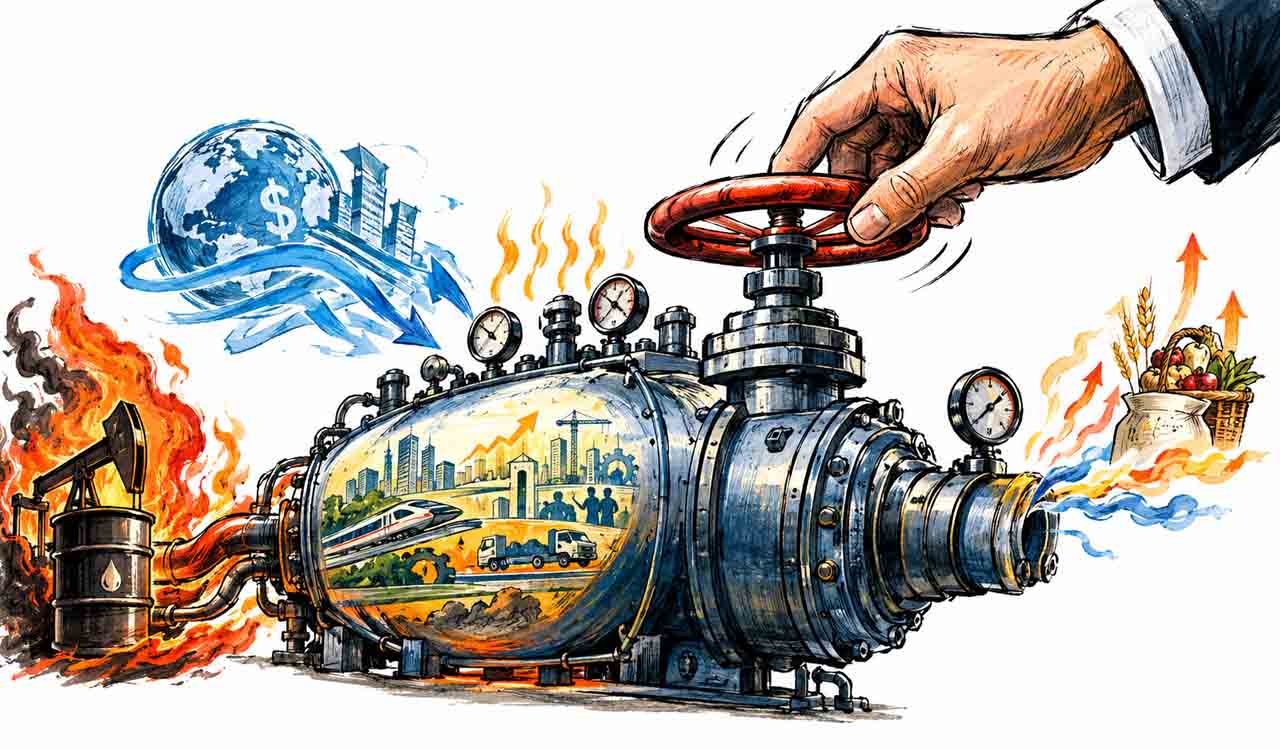
It is clear that the RBI is using strong growth as a window to act before inflation gets entrenched
Published Date – 7 October 2026, 09:47 PM
Illustration: GuruG
The Reserve Bank of India’s decision to raise the repo rate by 25 basis points to 5.50 per cent reflects a calibrated tightening in the face of inflation risks, uncertainties in the global environment, surging crude oil prices and currency volatility. This was the first rate hike in almost four years—the last dose happened in February 2023 when it was raised by 25 basis points. The six-member Monetary Policy Committee (MPC) unanimously voted for the rate hike, shifting the stance from neutral to calibrated tightening. It is clear that the RBI is using strong growth as a window to act before inflation gets entrenched. Overall, GDP growth has held up better than expected, while inflation risks are building again and the global interest-rate environment is making it harder for India to maintain a wide policy gap. India’s GDP expanded 7.8% in the June quarter, 80 basis points above the RBI’s forecast, while high-frequency indicators for July and August, though showing some moderation, continue to point to firm economic activity. The resilience has also been reflected in forecasts from global institutions. Multiple rating agencies around the world have been lifting their FY27 growth projections for India. Stronger domestic consumption, public investment and continued activity in manufacturing and services have helped the economy absorb the impact of higher energy prices and geopolitical tensions. The RBI now seems to have greater confidence that the economy can absorb some monetary tightening without a significant hit to growth.
Retail inflation had accelerated to 4.82%, pushing it uncomfortably past the central bank’s medium-term target of 4%. This led the RBI to revise its CPI inflation projection upward to 5.9% for the December quarter. Higher crude prices and a patchy monsoon have increased the risk that actual inflation could overshoot those projections. Experts estimate that if geopolitics and crude prices continue the way they are, Q3 inflation could peak at 6.2% to 6.3%. The combination of higher energy costs and weaker agricultural output has raised concerns that inflation could move above the RBI’s upper tolerance level of 6% in the December quarter. A prolonged oil shock can feed into transportation, manufacturing and other input costs, increasing the risk of broader and more persistent price pressures. Another factor that may have influenced the central bank’s decision is the changing global interest-rate environment and its implications for capital flows. The US Federal Reserve raised rates in September and is expected to tighten again in October. The global backdrop is particularly important for India because higher US rates, a stronger dollar and elevated commodity prices can simultaneously put pressure on the rupee, imported inflation and foreign portfolio flows. At a broader level, the RBI’s rate hike move is less about choking off growth and more about preventing the current inflation shock from becoming entrenched.