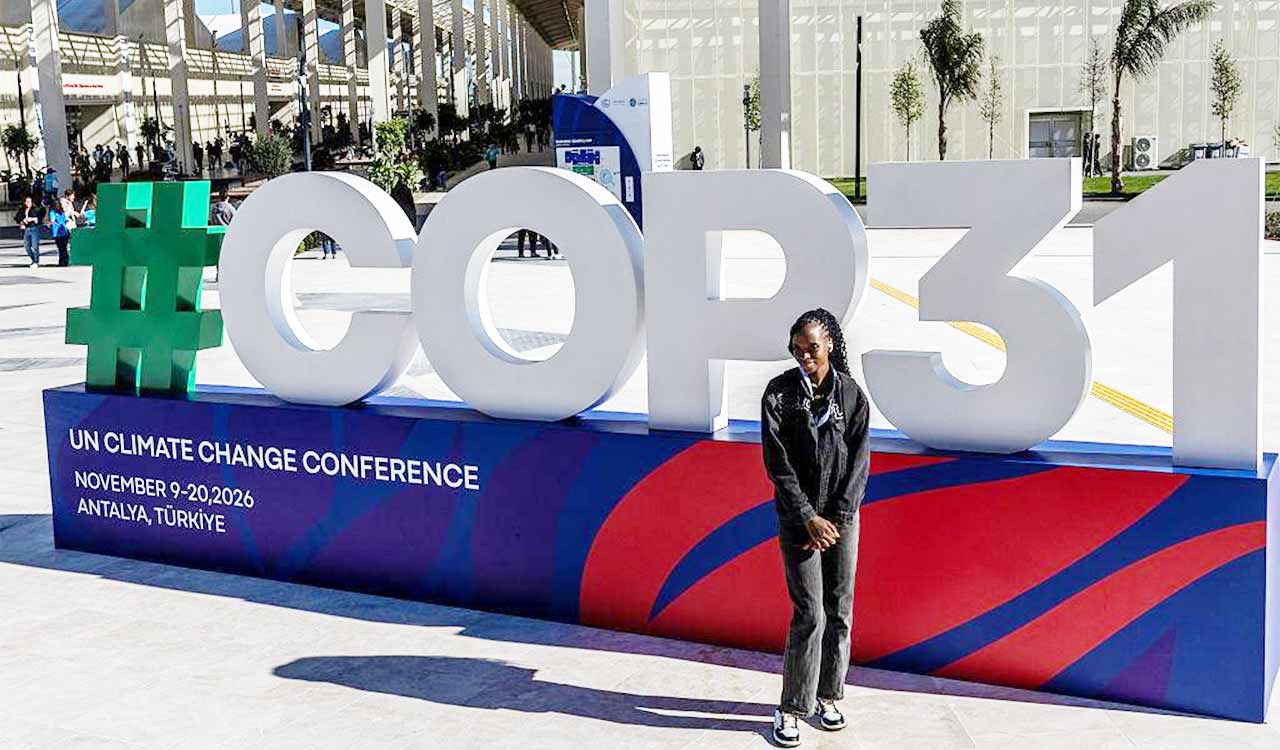
As COP31 unfolds, it remains to be seen whether wealthy nations will deliver on the climate commitments they have made over the past decade
Published Date – 12 November 2026, 10:51 PM
There is an air of cynicism surrounding the ongoing edition of the United Nations Climate Summit—Conference of the Parties COP31—as nations have collectively failed to check the soaring global temperatures, while regional conflicts and policy unpredictability among major powers have further dampened efforts. As global leaders gather at Antalya, Türkiye, for the summit, the fate of the climate finance and technology transfer promised by the rich nations remains high on the agenda. Amid rising emissions, increasing global temperatures and worsening climate-driven disasters, the brutal reality is that the time is fast running out for humanity. Global warming has now reached a point of no return. It is impossible for the world to achieve the Paris Agreement target, set more than a decade ago, of limiting the global temperature to 1.5 degrees Celsius above pre-industrial levels. The best we can hope for is to restrict the rise to 1.7-1.8 degrees Celsius, and that too with the help of concerted joint efforts. COP31 has inherent limitations, primarily the absence of climate multilateralism and contradictory goalposts. It remains to be seen whether wealthy nations will actually deliver on the commitments made over the past decade. Much of the cynicism stems from how little the needle has moved over time. There is also an undeniable sense of fatigue among governments. Yet, however painstakingly slow the process may be, there is no substitute for intense discussions on tackling rising temperatures and high greenhouse gas emissions.
For the Global South, it is essential to clearly define what is non-negotiable amid competing, multilayered interests, and underline the costs involved in the transition to renewable energy. Three-quarters of humanity live in countries that import fossil fuels, leaving them hostage to price shocks they did not create and cannot control. A decisive shift towards renewable energy alone offers a clear solution. COP31 is taking place as India’s national capital endures its annual nightmare. Delhi-NCR is struggling to breathe. Here, too, the answers keep falling short. Since global warming is now set to overshoot the 1.5 degrees Celsius, India faces a double imperative: it must accelerate deep decarbonisation across industrial sectors while rapidly shielding its economy, agriculture, and citizens from severe climate impacts. Adding intermittent renewables alone is no longer enough for India because the core challenge is grid integration and system stability. As an expanding manufacturing hub, India’s biggest increase in emissions will stem from industrial sectors such as steel, cement, chemicals, and heavy transport. Therefore, there is a need to move from pilot projects to large-scale commercial adoption of green hydrogen in steelmaking, fertilizer production, and refineries. Domestically, India can drive the transition through public incentives such as Production-Linked Incentive (PLI) schemes, but long-term success hinges on multilateral finance. India must lead Global South negotiations to demand predictable, concessional financing and technology transfer from developed nations.