
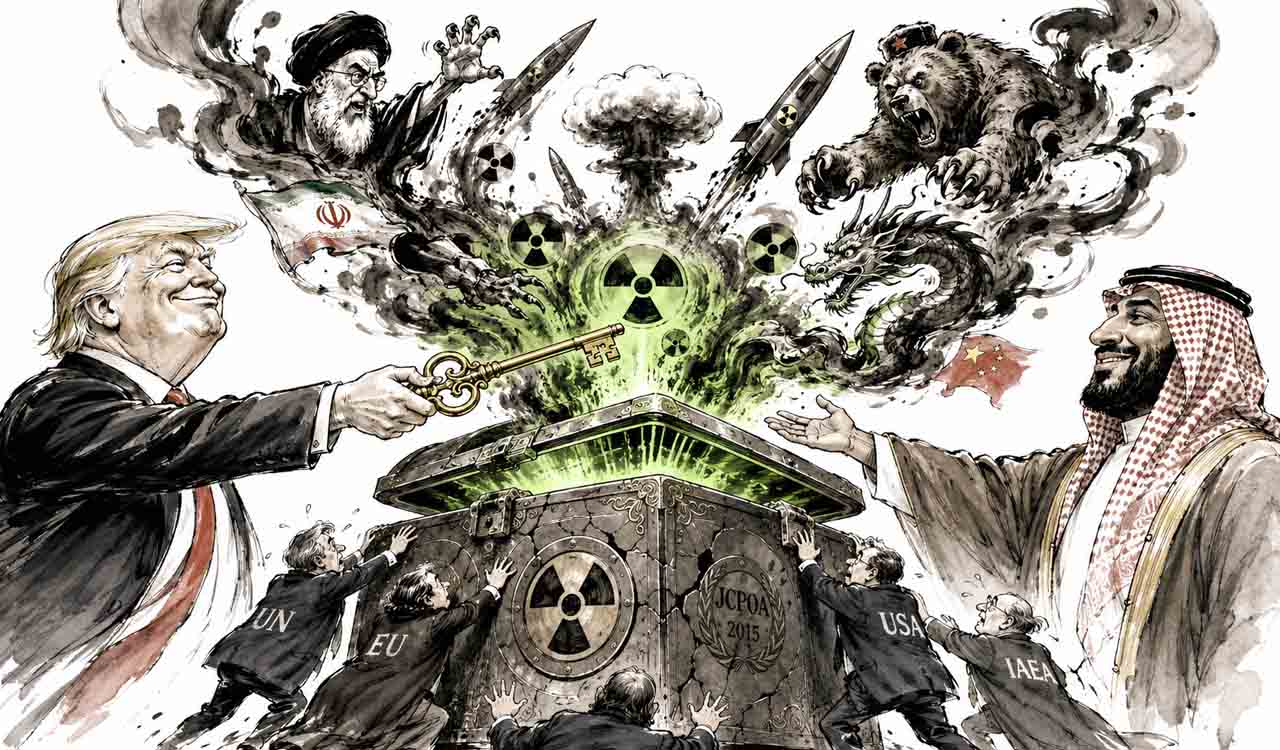

The deal heightens regional tensions with Iran and carries significant geopolitical implications tied to the Abraham Accords
Published Date – 27 July 2026, 09:27 PM
Illustration: GuruG
By signing a nuclear deal with Saudi Arabia, the United States may have committed a big blunder, as it could potentially allow the kingdom to enrich uranium in the future. This agreement may well lead to nuclear proliferation in a region that is already engulfed in conflicts. It is particularly paradoxical because Washington keeps justifying its war on Iran on the grounds that it wants to prevent the Islamic nation from acquiring a nuclear weapon. Washington has long argued that the gold standard is the United Arab Emirates’ agreement to permanently forgo enrichment and accept full monitoring by the UN’s International Atomic Energy Agency. Now, the nuclear agreement with America would allow Riyadh to avoid granting the international watchdog full inspection rights. This deal also sets a precedent that Russia or China could cite in future nuclear agreements. Mohammed bin Salman, the Saudi crown prince and de facto leader, has repeatedly asserted that if Tehran gets a nuclear weapon, his country too should get one. Business interests rather than moral principles have guided the latest deal. This will help American companies secure a significant share of the contracts to build two nuclear reactors in Saudi Arabia, as the kingdom will begin enriching its own nuclear fuel after two years. Also, Saudi Arabia will not have to abide by an inspection agreement that applies to more than 140 other countries. The crumbling of the region’s internal architecture — most visibly with the UAE’s departure from OPEC — adds to the dangers of proliferation.
For the Saudis, this is a major victory, but for the region as a whole this could mean greater chaos and uncertainty. Saudi officials have made no secret of their determination to keep pace with Tehran’s apparent efforts to build a nuclear weapon, and to match them if they do. In 2018, Prince Mohammed pledged that his kingdom would try to develop or acquire nuclear weapons if Iran continued its work toward a bomb — despite the fact that Saudi Arabia signed the Nuclear Nonproliferation Treaty in 1988. Other Saudi officials have issued similar warnings in recent years, or talked about the need for Saudi Arabia to become a “threshold” nuclear state. The nuclear deal itself provides a valuable boost to the Saudis at a time when their position vis-a-vis Iran has been shaky. However, there is a twist to the whole issue. US President Donald Trump has said that the deal was totally tied to the Saudis joining the Abraham Accords, which essentially means recognising Israel. Essentially, the whole thing revolves around not just giving Tel Aviv the legal recognition it craves but also learning to live with its nuclear capabilities. So far, only the UAE, Bahrain, and Morocco have signed on to the Accords. Sudan has also joined, although its position remains uncertain.

Comments are closed.