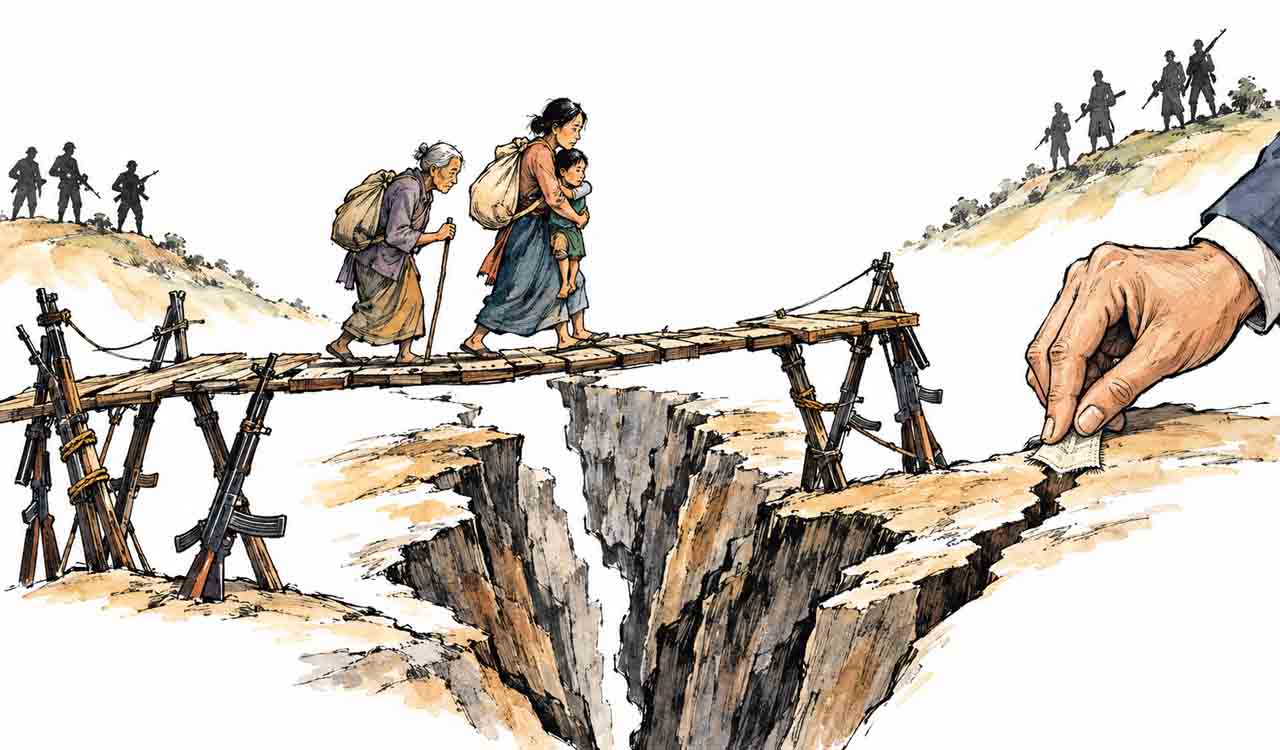
A return to normalcy will remain out of reach without concerted efforts to demilitarise society and re-establish the state’s authority
Published Date – 15 October 2026, 12:36 AM
Illustration: GuruG
A fresh outbreak of ethnic violence in Manipur, which claimed at least nine lives, is a grim reminder that peace remains elusive in the strife-torn northeastern State despite decades of efforts by successive governments. Clashes between the Kuki and Naga communities were reported in the hill districts of Kamjong, Kangpokpi and Senapati, involving ambushes and gunfights by armed groups. It is a matter of serious concern that even after three-and-a-half years of ethnic violence, there is only a fragile calm, and little progress seems to have been made towards an enduring end to the conflict. The appointment of two deputy Chief Ministers—one from each of the Kuki and Naga communities—in February this year raised hopes that normalcy would return to the State, which is desperately waiting for lasting peace. But the old Kuki-Naga fault line that fuelled bloodshed in the 1990s appears to have been reopened now. Since February, dozens of people from both communities have been killed and houses torched. The Meiteis, Kukis and Nagas are now caught in overlapping conflicts, with civilians bearing the brunt not only of the violence but also of blockades across the hill districts that restrict access to essential supplies. While the prolonged ethnic conflict that began in 2023 primarily involved the Meitei and Kuki-Zo communities, recent months have witnessed an alarming expansion of hostilities into violent clashes between the Kuki and Naga communities. This fresh wave of friction has severely escalated regional instability, compounding the State’s deep-rooted governance and security challenges.
In response to the latest wave of killings, local Naga bodies and civil society organisations called for total shutdowns, placing immense pressure on both state and central administrations to secure the area. Several historical, ethnic, geographical and political factors explain why peace remains elusive. Proliferation of illegal arms, porous Myanmar border, trust deficit and resettlement bottlenecks for internally displaced persons are some of the reasons acting as impediments to restoration of peace in the region. A return to normalcy will remain out of reach without concerted efforts, first, to demilitarise society and re-establish the state’s authority. In August, Chief Minister Y Khemchand Singh issued a 15-day ultimatum for the voluntary surrender of illegal firearms, thousands of which have been looted from state armouries since the conflict began. This was not the first such appeal: Soon after President’s Rule was imposed in February 2025, Governor Ajay Kumar Bhalla had also called for the surrender of weapons. The continued prevalence of gun violence suggests that such appeals have not worked. Disarming armed groups and punishing those responsible for the killings must be an immediate priority. At the same time, the government must also create the conditions for sustained dialogue. More than three years of unrest have resulted in hundreds of deaths, tens of thousands of displaced persons living in relief camps, and deep territorial and social segregation between the hills and the valley.