4
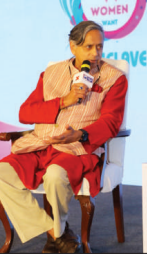
Congress MP Shashi Tharoor called for gender equality to be introduced in school education from an early age, saying women’s safety begins with how young boys are taught to view and treat women. Speaking at the We Women Want Conclave, organised by NewsX and Read Foundation, Tharoor said gender sensitisation must start in childhood to address deeprooted societal attitudes that contribute to violence and discrimination against women. “Women’s safety begins with the education we give our young boys,” Tharoor said. “A five-year-old male should be taught to respect the equality of the five-year-old female. This is something we haven’t done enough of.” During the session, Tharoor argued that many social challenges stem from a sense of “gender entitlement” among young men and stressed the need for values-based education in schools. “Too many young men across the country are growing up in the belief that they’re inherently superior because they’re male,” he said, adding that such attitudes harm both men and women and contribute to unequal social structures.
The Congress leader also highlighted the importance of women’s representation in politics, saying Parliament would benefit from greater participation by women.“Women bring a different set of experiences and a different sensibility to discussions in Parliament, which I think the country would be enriched by,” he said while reiterating his support for women’s reservation in legislatures. On education reforms, Tharoor criticised India’s exam-centric system and called for a shift towards critical thinking rather than rote learning. Referring to growing use of artificial intelligence tools by students, he urged educators to focus on developing analytical skills. “Please don’t teach the children what to think. Teach them how to think,” he said. “Don’t give them a well-filled mind. Give them a well-formed mind.”
Tharoor also spoke about the need to address paper leaks and reform competitive examinations, arguing that excessive dependence on single high-stakes tests places immense pressure on students and families. He suggested that technological safeguards and systemic reforms could help improve transparency and reduce opportunities for malpractice. The session, moderated by Priya G, covered a range of issues including women’s empowerment, education, population trends and political representation. Tharoor maintained that meaningful social change would require both policy reforms and a transformation in societal attitudes towards women. “I don’t make any apologies for saying it’s the boys who need more of the education, so that they learn how to deal with girls,” he said.