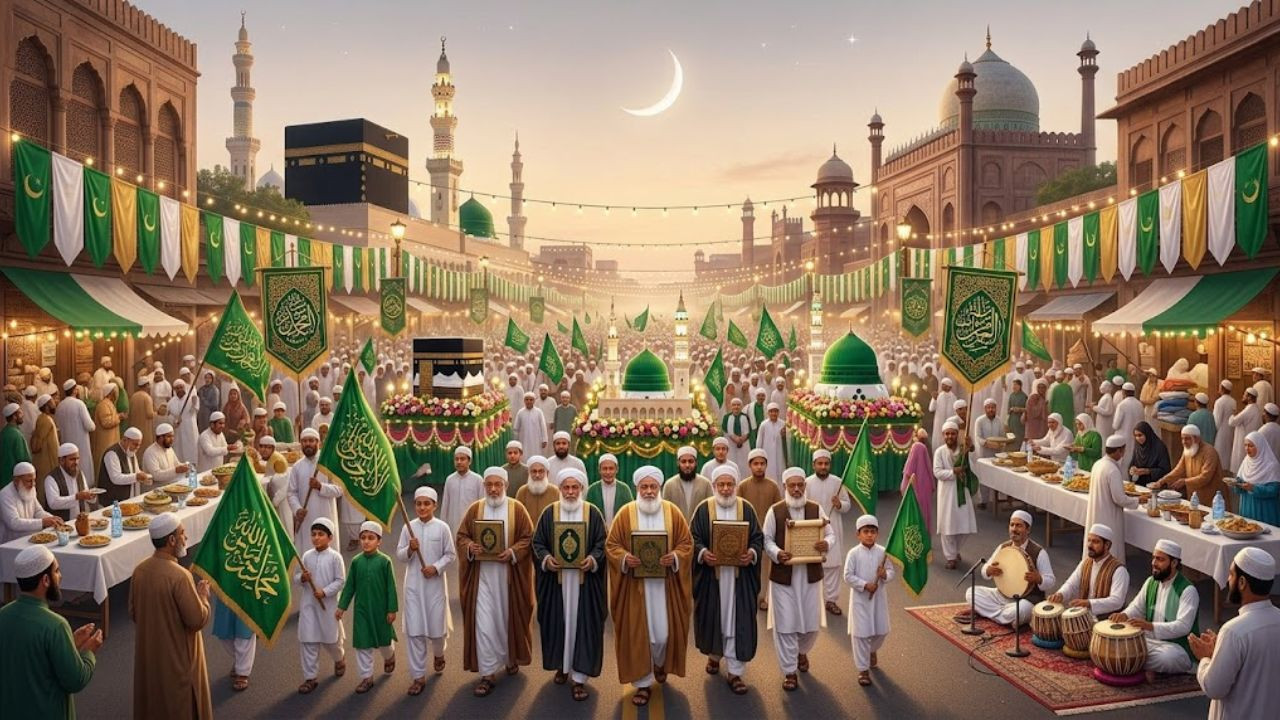
New Delhi: Eid Milad-un-Nabi, also known as Eid-e-Milad or Maulid, is a special religious occasion for the Muslim community. Let us tell you, this day is celebrated in memory of the birthday of Prophet Muhammad. This festival falls on the 12th of Rabi-ul-Awal month of the Islamic calendar. This year, Eid Milad-un-Nabi is being celebrated in India on 26th August i.e. today, whereas the events related to it have already started from 25th August. Let us know what is the history behind celebrating this tradition and where it started.
What is the significance of the birth of Prophet Muhammad?
Prophet Muhammad's birthday is considered very important in the Muslim community. According to Islamic beliefs, he was born in the month of Rabi-ul-Awal in 570 AD. He is considered the last prophet of Islam and the last messenger of God. Prophet Muhammad had emphasized on values like humanity, mercy, forgiveness, equality and helping the needy in his life. At the same time, things related to his teachings and life are found in Hadith and other Islamic traditions. Therefore, the day of Milad is also considered an opportunity to remember his life and messages.
Where did the tradition of Milad start?
The tradition of celebrating Eid Milad-un-Nabi is quite old. Initially, on this occasion, people used to gather at one place and discuss about the life and teachings of Prophet Muhammad and poems and religious compositions were also read in his honor. According to many sources related to history, during the Fatimid Caliphate in Egypt, the events related to Maulid got a widespread form and gradually this tradition reached many parts of West Asia and South Asia and then started being celebrated in other countries of the world as well.
How is this special festival celebrated?
On the occasion of Eid Milad-un-Nabi, mosques, houses and roads in many areas are decorated with colorful lights. Along with this, people participate in religious programs and processions are also taken out at some places. During this time, speeches are also given on the life and teachings of Prophet Muhammad. Religious texts and poems are also read. Overall, this day is considered an opportunity to remember the teachings of Prophet Muhammad and carry forward the message of love, brotherhood, kindness and humanity.