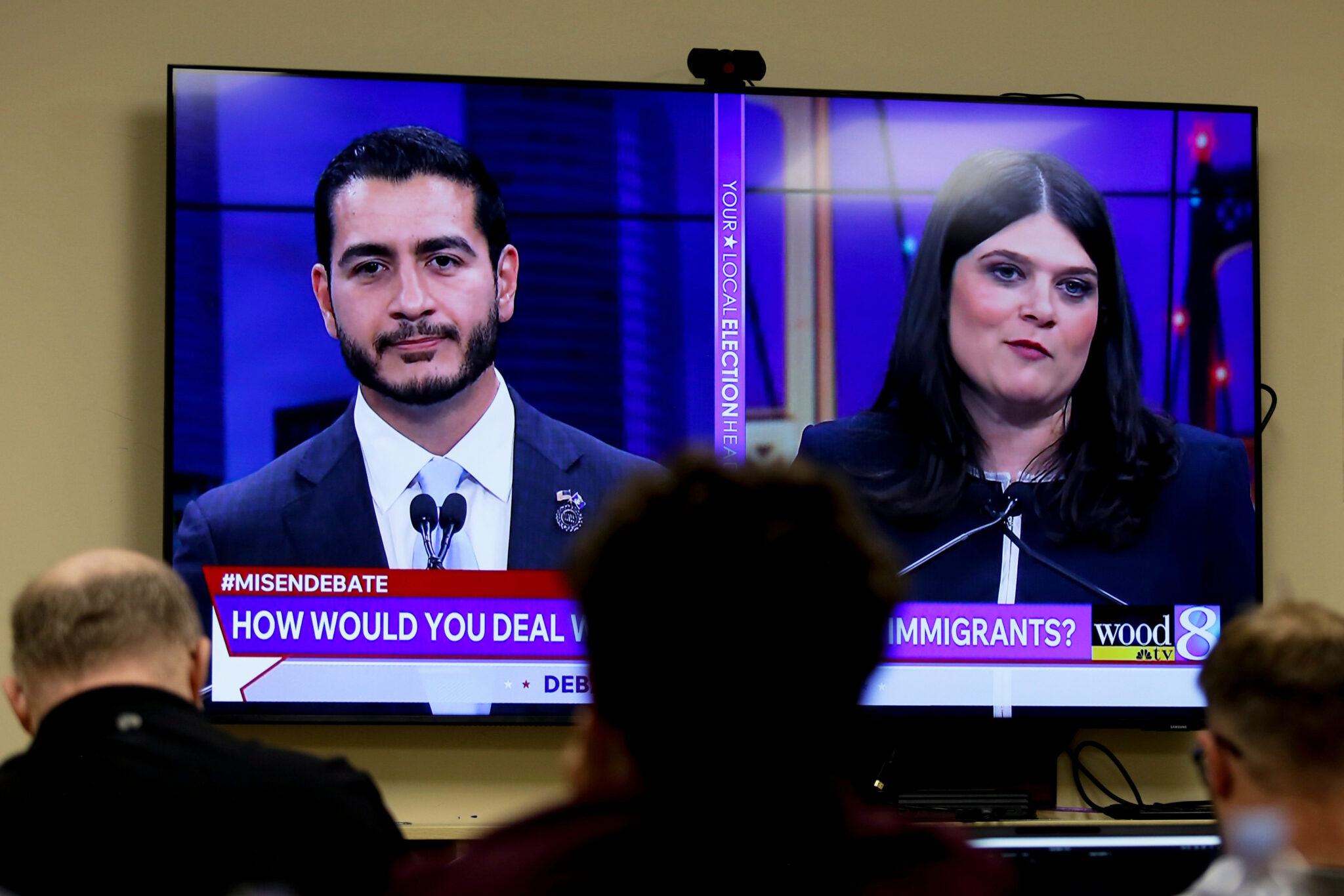
El-Sayed and Stevens Plan Detroit Appearance to Unite Michigan Democrats/ NEWSLOOKS/ WASHINGTON/ J. Mansour/ Abdul El-Sayed and former primary rival Haley Stevens will campaign together Sunday at a Detroit church, joined by Rep. Jim Clyburn. Their first public appearance together since August comes after renewed tensions over campaign messaging and concerns about Democratic turnout. El-Sayed and Republican Mike Rogers are making final appeals to Black voters as Michigan’s Senate contest approaches Election Day.


Quick Look
- Sunday event: El-Sayed, Stevens and Clyburn plan a get-out-the-vote appearance at a Detroit church.
- Rare joint appearance: El-Sayed and Stevens last appeared publicly together Aug. 6, shortly after the primary.
- Coalition concerns: Stevens is urging her Black and Jewish supporters to vote for Democrats.
- Public disagreement: Her fiancé, Jason Turkish, said he plans to support Republican Mike Rogers.
- Advertising dispute: Stevens wants El-Sayed to condemn an independent group’s ad linking Israel-related spending to grocery prices.
- Republican vulnerabilities: Rogers faces voter frustration with Trump, the Iran war, tariffs and high costs.
- Detroit outreach: Both campaigns are seeking support among Black voters, particularly in Wayne County.
- Voting underway: Michigan’s early in-person voting began Oct. 24.


Deep Look
El-Sayed and Stevens Plan Detroit Unity Event
Michigan Democratic Senate nominee Abdul El-Sayed will campaign Sunday alongside Rep. Haley Stevens, his former primary opponent, in a late effort to strengthen party unity before Election Day.
South Carolina Rep. Jim Clyburn, one of the country’s most prominent Black political leaders, will join them at a Detroit church for a get-out-the-vote event, according to two people familiar with the plans.
The people spoke anonymously because they were not authorized to discuss the arrangements publicly.
The appearance will be El-Sayed and Stevens’ first together since a Democratic unity breakfast on Aug. 6, two days after his narrow primary victory.
Renewed Tensions Precede Joint Appearance
The plans follow a week in which divisions within Michigan’s Democratic coalition again became public.
On Wednesday, Stevens’ fiancé, Jason Turkish, told The Detroit News he would vote for Republican Senate nominee Mike Rogers.
Stevens later reaffirmed her support for El-Sayed on CNN but urged his campaign to “shut out the hate and call it out.”
She said he needed to engage voters who supported her in the primary and “make them feel comfortable about coming to the polls.”
Asked Thursday about the joint event, El-Sayed said “we’re always trying to unify the party” and attributed the delay to busy schedules.
He also criticized the question, saying “nobody cares” about internal political dynamics when families face high living costs.
Primary Divisions Remain a Challenge
El-Sayed narrowly defeated Stevens in the Aug. 4 primary after a contentious advertising battle.
Nearly $60 million was spent on advertising attacking him, including $30 million from the American Israel Public Affairs Committee, or AIPAC.
Stevens, a strong supporter of Israel, represents a suburban Detroit district with a substantial Jewish population. She also attracted significant Black voter support during the primary.
After their August unity appearance, Stevens told CBS News she would do “whatever he wants me to do” to support El-Sayed’s campaign.
The Sunday church visit comes only two days before the general election, leaving limited time to affect voters’ decisions. Early in-person voting began Oct. 24.
“We’ve got a Black and Jewish coalition that came out and voted for me in droves. And I want them to come out and vote for Democrats,” Stevens told CNN.
Independent Advertisement Fuels Latest Dispute
Some Jewish voters have raised concerns about El-Sayed’s criticism of Israel, earlier statements and association with controversial streamer Hasan Piker.
The latest disagreement centers on an advertisement from Rebellion PAC, an independent left-wing organization, that linked U.S. support for Israel to high grocery prices.
“That has nothing to do with our campaign,” El-Sayed said. “It’s certainly not what I want to be talking about right now.”
Stevens and other Democrats have urged him to explicitly denounce the advertisement’s content rather than solely distancing his campaign from its production.
Turkish and others have argued that El-Sayed has not done enough to address their concerns before the election.
Conservative Outreach Generates Additional Criticism
El-Sayed has also sought voters beyond traditional Democratic constituenciescampaigning in heavily Republican areas, including the Upper Peninsula.
His campaign released an advertisement featuring favorable comments from prominent conservatives, including former Fox News host Tucker Carlson.
Carlson has faced accusations of antisemitism, which he denies.
The use of his comments created another point of disagreement with some Jewish voters.
Rabbi Aaron Starr of Congregation Shaarey Zedek in Southfield criticized both the El-Sayed campaign advertisement and the separate Rebellion PAC spot.
“We are one week away from the election, and it feels like the temperature has turned way up,” Starr said during a call with reporters. “Instead of things getting better over the last seven weeks, they’ve actually gotten worse.”
Rogers’ Trump Alliance Carries Political Risks
Rogers faces challenges stemming from voter dissatisfaction with President Donald Trump, the Iran war and elevated costs.
He has remained closely aligned with the president on most issues and appeared alongside him Sunday in Port Huron, crediting Trump with bringing manufacturing jobs back to Michigan.
The rally took place across the river from Canada, a country with deep economic connections to Michigan that has been targeted by Trump’s tariffs.
Rogers also appeared Wednesday with Texas Sen. Ted Cruz at a Republican Jewish Coalition event in Birmingham, Michigan.
Cruz described antisemitism as “a poison that is ripping the country apart” and accused Democrats of being overtaken by “self-proclaimed communists and Islamists.”
Trump has repeatedly targeted El-Sayed’s Muslim faith, calling him a “jihadist” and saying Sunday that he was “on the side of terrorists.”
Both Campaigns Seek Black Voters in Closing Days
Black voters, particularly in Detroit and surrounding Wayne Countyare a major focus for both candidates.
Stevens defeated El-Sayed in Wayne County during the primary. His planned appearance with her and Clyburn is part of an effort to consolidate support there, alongside other Detroit campaign stops.
Rogers has visited a reading remediation program at a Detroit high school and discussed housing costs with residents in Pontiac.
Earlier this month, his wife distributed $10 gift cards at a gas station.
Ruby Farmer, a 68-year-old Detroit retiree, criticized that outreach.
“You’re giving out gas cards in the inner city; you never would come for any other reason,” she said.
Medicaid Concerns Shape One Voter’s Choice
Farmer said she voted for El-Sayed three weeks ago, despite having some difficulty pronouncing his name.
She pointed to his opposition to Trump policies that she said affect her family directly.
“I have a special-needs son,” Farmer said. “He depends on Medicaid. Medicaid has been cut, and for home care workers in Michigan, all the benefits are on hold.”
Her concerns illustrate the policy questions competing with internal party tensions as both campaigns make their final appeals before Nov. 3.
More on US News