ElevenLabs is adding yet another AI-powered tool to its audiobook production platform, and this time it’s aimed at one of the more intricate bits of turning a book into audio: locating and organizing voices for individual characters, sort of like putting names to tones without the usual back and forth.
The company is rolling out ElevenLabs Character Casting for ElevenCreative Audiobooks. This feature is made to look at an uploaded manuscript, find the characters inside it, and then help creators pick voices that actually fit those roles.
On July 30, in the announcement, ElevenLabs framed it pretty straightforwardly: every character in a book already has a voice, and Character Casting is meant to help creators track it down. Instead of manually scanning the manuscript, spotting who’s speaking, and then separately testing different voices, creators can use this new flow to handle a big chunk of that work right inside ElevenCreative.
Character Casting Automatically Detects Manuscript Characters
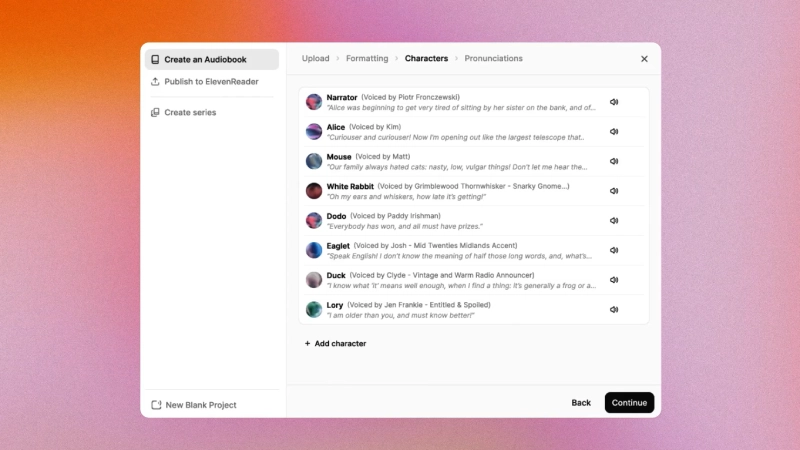
A big part of Character Casting is that it can automatically detect characters within a manuscript. Creators start by uploading their manuscript to ElevenCreative. After that, the system can identify the characters that show up in the text, which cuts down how much manual groundwork is needed before voice casting even begins.
That could be especially handy for novels with large casts. You know, a story might include a main narrator, plus protagonists, supporting figures, and characters who are only around now and then. Trying to keep all of those roles straight by hand can make audiobook production noticeably more complicated than it should be.
By spotting the characters directly from the manuscript, ElevenLabs is basically trying to pull that effort into the production platform itself, so the whole process doesn’t depend so much on manual prep and careful tagging.
Creators Can Preview Proposed Voices With Real Dialogue
Detecting characters is only part of the journey. Character Casting also brings proposed voices that creators can preview before they choose which one feels right for a specific role.
And yes, those previews can use actual lines from the uploaded book, not just something similar or a generic script.
So creators can hear how a candidate’s voice lands dialogue that was really written for the character, instead of depending on some generic voice sample. It should also offer more useful context when deciding whether a particular voice matches a character and the overall tone of the story, too.
A voice that sounds great in a quick standalone demonstration may not really align with a character’s dialogue. By using manuscript lines, creators can judge a proposed voice within the same setup where audiences would actually hear it.
ElevenLabs Character Casting: Pronunciations To Be Pre-Filled From Chapter To Chapter
Character Casting also tackles another snag that shows up in long-form audio production: consistent pronunciation. Per ElevenLabs’ announcement, creators can pre-fill pronunciations across every chapter in one step.
Audiobooks often include character names, made-up places, unusual terminology, and other terms whose pronunciation needs to stay steady over hours of narration. Handling those pronunciations one by one, across multiple chapters, can become another kind of repetitive work during production. So, having the pronunciation set up in one place could make continuity feel more manageable through the whole audiobook.
Voice Changes Can Be Applied Through the Whole Book
The workflow is also made to simplify what happens after a creator picks a voice, like it’s less of a mess later on. ElevenLabs says creators can choose a voice and then update the lines that match that character, so they don’t have to go back and manually check each appearance one by one.
That part matters a lot in a long manuscript. If a character shows up again and again across chapters, changing that character’s voice by hand could turn into a huge edit job, basically extensive chores with no end.
Character Casting treats voice selection as if it’s part of a manuscript-wide routine. With automatic character detection and pronunciation management in the mix, it’s meant to cut down on repetitive work while still keeping creators in charge of casting decisions.
ElevenLabs Aims at Multi-Character Audiobook Production
This new feature may be especially helpful for multi-character audiobooks, where giving different speakers distinct voices takes a fair amount more organizing than simple single-narrator reading.
Old-school audiobook work can include hiring performers, running recording sessions, editing, handling retakes, and trying to keep everything consistent across perhaps dozens of characters. AI-generated audio does change how that pipeline moves, but using lots of synthetic voices can still get complicated once the book has a big ensemble.
Character Casting looks built to solve that organizational headache. Instead of just generating spoken output from plain text, ElevenLabs can use the manuscript itself as the basis for spotting characters, then arranging their voices, all in one go. The announcement, however, mainly talks about the production abilities of character casting, and it does not really mention the wider stuff either, like pricing or the exact availability tiers, not at all in a clear way.
Conclusion
ElevenLabs’ new Character Casting feature is set up to make AI audiobook creation more manageable, especially when your story has multiple characters. Creators can upload a manuscript, and then ElevenLabs handles the character identification; after that, you can preview the suggested voices using real lines from the story. You can also pre-fill pronunciations across chapters and keep control over character voices through the whole book.
Instead of treating audiobook generation as just one single text-to-speech chore, Character Casting adds a workflow that feels more like digital casting and production. For writers converting dialogue-heavy novels or stories with a big cast, this could make it notably easier to organize an AI-produced audiobook, in practice.