
Elon Musk vs OpenAI trial begins today: Who is suing whom, key allegations, and what to expect

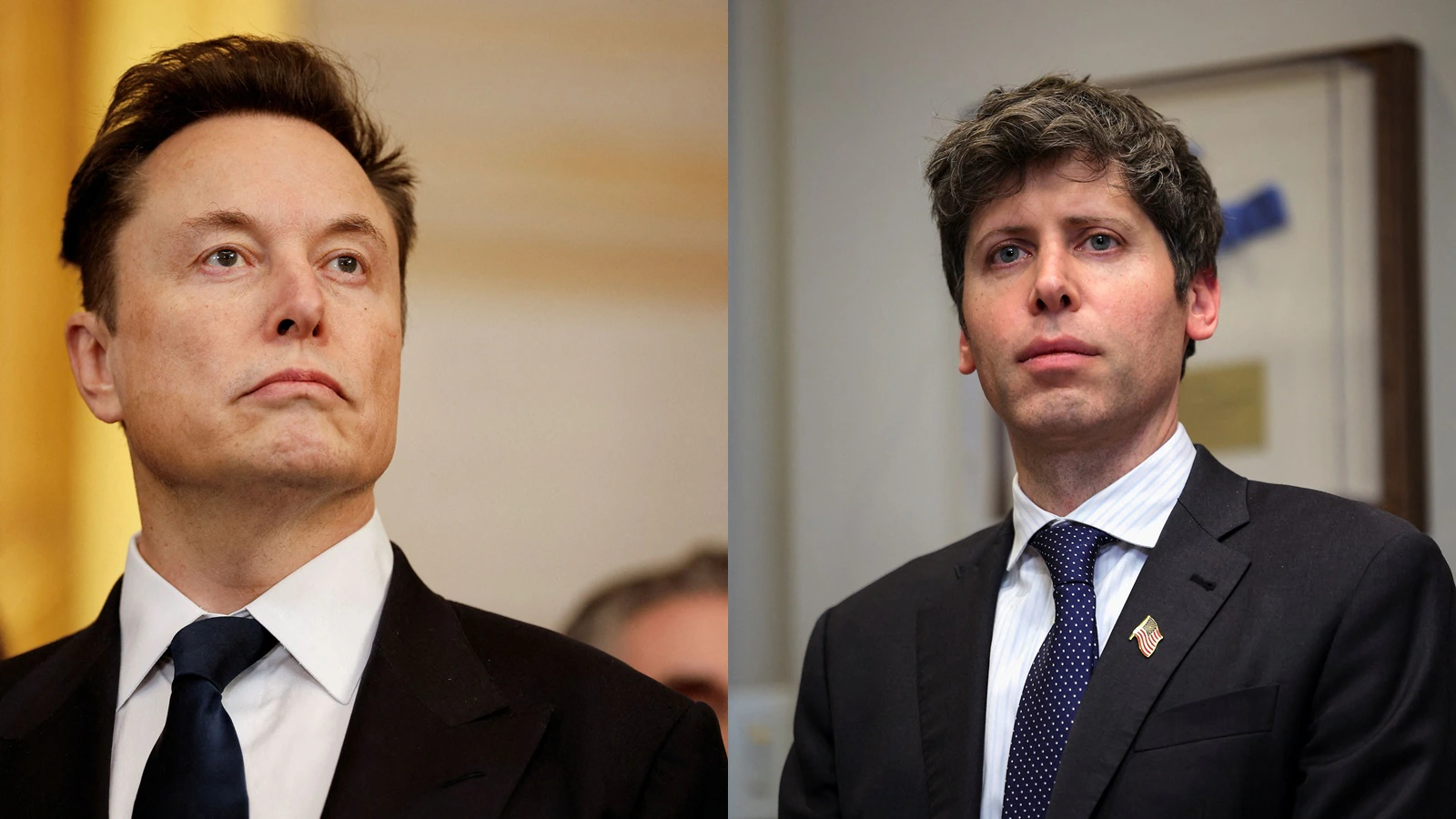
After years of trading barbs on social media, Elon Musk and Sam Altman – two of Big Tech’s most influential billionaires who once came together to form a little-known nonprofit called OpenAI, which went on to launch ChatGPT and spark the AI arms race – are now set to make their respective cases in a courtroom.
The case stems from Musk’s 2024 lawsuit against OpenAI, in which he has alleged that the ChatGPT-maker and its leadership abandoned the organisation’s original nonprofit mission, a vision Musk has claimed he helped fund, to ensure that artificial general intelligence (AGI) serves the broader interests of humanity.
The highly anticipated trial begins today (April 27) in a US district court in Oakland, California, where Judge Yvonne Gonzalez Rogers – who also heard Epic Games’ lawsuit against Apple over its control of the iPhone App Store – with guidance from a nine-person jury, will decide whether OpenAI has in fact drifted from its founding mission to ensure that AGI benefits humanity.
While Monday will be for jury deliberation, Tuesday will see opening arguments, and the rest of the week is expected to feature testimonies from some of the high-profile names on the witness list. Based on what has already come to light, the high-stakes trial is likely to surface fresh and fascinating details about the AI juggernaut’s early days as well as the circumstances surrounding CEO Sam Altman’s brief ouster in 2023 and Microsoft’s increasingly frayed relationship with OpenAI.
Several key tech industry figures including Microsoft’s Satya Nadella, and Mira Murati, OpenAI’s former chief technology officer (CTO), are slated to testify in the trial, which is expected to last several weeks. Shivon Zilis, a former OpenAI board member and mother of four of Musk’s children, is on the witness list along with the three OpenAI board members that are said to be behind Altman’s ouster in 2023, namely: Helen Toner, Tasha McCauley, and Ilya Sutskever.
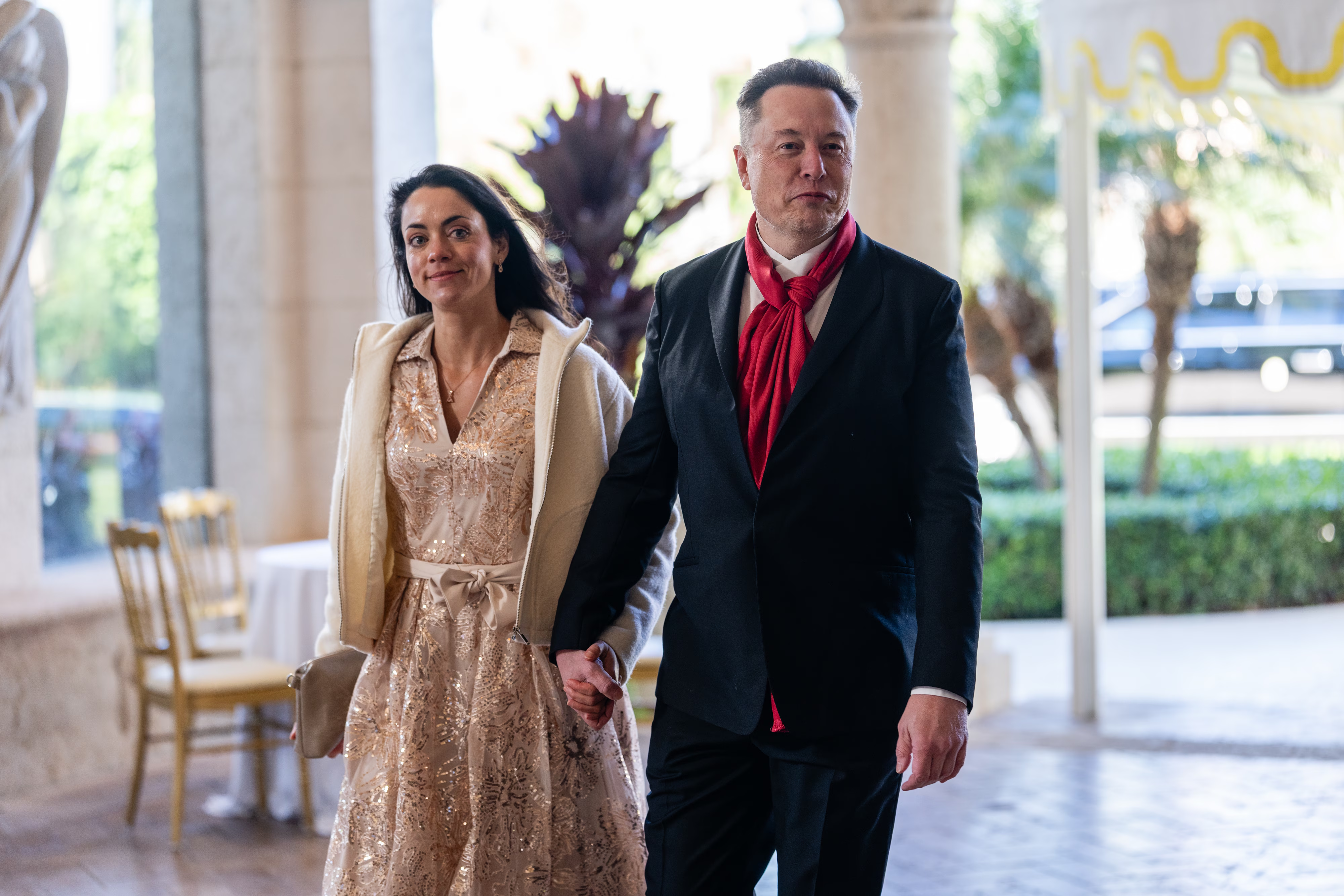 Elon Musk and Shivon Zilis arrive to the wedding of White House Deputy Chief of Staff Dan Scavino and Erin Elmore, at President Donald Trump’s Mar-a-Lago club in Palm Beach, Fla., on Feb. 1, 2026. (Eric Lee/The New York Times)
The outcome of this trial could not only shape the future of OpenAI by determining how one of the world’s leading AI developers controls and distributes the technology, but also potentially influence the entire trajectory of the tech industry’s AI race.
Here’s a refresher on the origins of OpenAI, the backstory to the Musk-Altman feud, the key arguments from both sides, the potential supporting evidence, and the questions that the court will ultimately be asked to weigh.
OpenAI: A brief history
On May 25, 2015, Sam Altman sent an email to Elon Musk proposing a ‘Manhattan Project for AI’ in order to build enormously powerful AI and share it with the rest of the world “via some sort of nonprofit.” Musk replied by saying that the idea was “probably worth a conversation.”
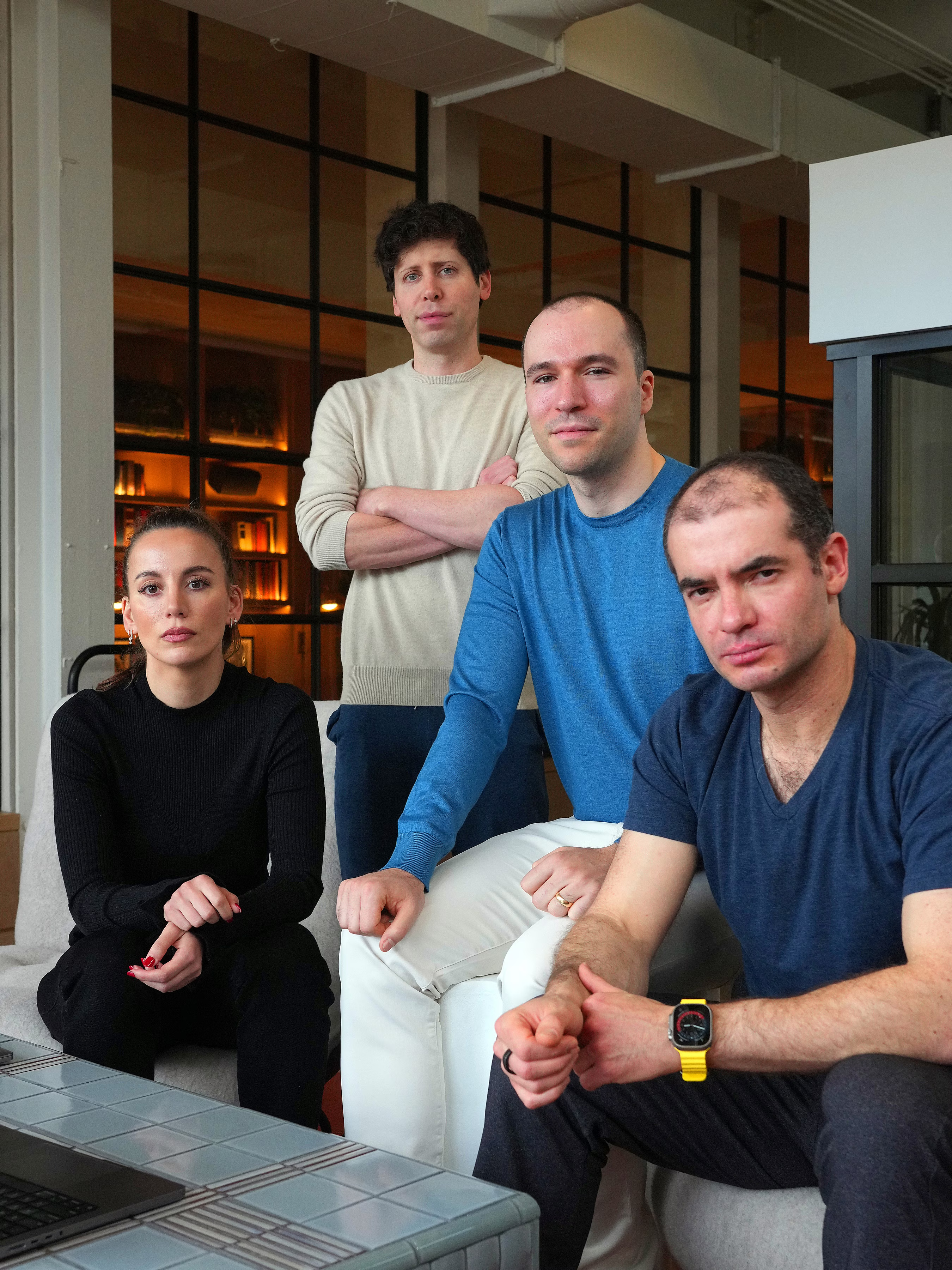 Then senior executives of OpenAI, from left: Mira Murati, then chief technology officer; Sam Altman, then chief executive; Greg Brockman, president; and Ilya Sutskever, chief scientist, at the companyÕs headquarters in San Francisco, March 13, 2023. (Jim Wilson/The New York Times)
That same year, the two tech entrepreneurs, along with nine others, founded OpenAI as a nonprofit with lofty charitable goals such as developing AGI for the benefit of humanity. They wanted to ensure a single company like Google, which had a huge lead in developing AI at the time, did not end up deciding what it would mean for the human race, according to a report by The Wall Street Journal. As a result, OpenAI’s founders initially vowed to freely share its AI technology with the public as open-source software.
However, by 2017, cracks began to appear in the relationship between Musk and Altman. By that time, many inside OpenAI believed that open-sourcing AI would be more dangerous than a closed ecosystem. This group, which included Musk, also worried that OpenAI would not be able to raise the money needed to achieve its AGI goal.
Musk even suggested that OpenAI should partner with Tesla and build its AI using the supercomputers that the electric car company was developing. After Altman and others refused to give Musk control, he left OpenAI’s board, withdrew financial support for the lab, and went on to start his own AI company called xAI in 2023, now part of his rocket company SpaceX.
Following Musk’s exit, OpenAI looked to find other sources of funding by setting up a for-profit arm under the original nonprofit entity, and eventually raising $13 billion from Microsoft. It also stepped back from efforts to open-source its AI technology.
Elon Musk’s arguments
In 2024, Musk sued OpenAI, accusing Altman and other executives of abandoning the lab’s humanitarian mission in favour of monetary gain. The lawsuit further accuses Altman and Greg Brockman, OpenAI’s president and a co-founder, of intentionally manipulating and deceiving him, and falsely promising that they would chart a safer path to AI than profit-driven tech giants like Google and Microsoft.
Prior to the trial, hundreds of documents obtained during the discovery process were unsealed by the court. Among them were diary entries by Brockman who appears to express doubts about pushing Musk out of OpenAI and committing to a non-profit-only entity. “Cannot say that we are committed to the non-profit. Don’t want to say that we’re committed. If three months later we’re doing b-corp then it was a lie,” one such entry read. Brockman also wrote in his diary that he wanted to be a billionaire.
According to Musk, the diary entries and other unsealed documents clearly show that OpenAI’s leadership had plans to go for-profit well before they announced the intention publicly, and that he and other stakeholders were deliberately misled. Brockman’s diary entries were cited by Judge Rogers in her decision that Musk had enough evidence that he had been misled to take the case to trial.
Story continues below this ad
OpenAI’s counter-arguments
OpenAI’s core argument is that Musk himself tried to recast the nonprofit lab as a commercial enterprise before he left in 2018. Documents released as part of the case seem to show that in 2017, Jared Birchall, the head of Musk’s family office, registered a company called Open Artificial Intelligence Technologies, which was meant to be a for-profit version of OpenAI.
“His own words and actions speak for themselves. Elon not only wanted, but actually created, a for-profit as OpenAI’s proposed new structure,” OpenAI said in a court filing.
“Elon said he wanted to accumulate $80B for a self-sustaining city on Mars, and that he needed and deserved majority equity. He said that he needed full control since he’d been burned by not having it in the past, and when we discussed succession he surprised us by talking about his children controlling AGI,” OpenAI said in a blog post titled ‘The truth Elon left out’ published on January 16, 2026.
It has also accused Musk of trying to impede OpenAI’s progress while simultaneously building out his own competing AI efforts. For context, since October 2025, OpenAI is a for-profit public benefit corporation (PBC) under the control of its charitable arm, which is also a large shareholder of the PBC. Initially, OpenAI proposed to do away with the nonprofit’s oversight but later backtracked after facing backlash from advocacy groups.
What to expect from the trial
Musk’s claims against OpenAI will be decided by a nine-person jury. To be sure, Judge Rogers on Friday, April 24, dismissed Musk’s fraud claims in his lawsuit. This means that the trial will proceed only on Musk’s allegations of breach of charitable trust and unjust enrichment.
What happens if the court rules in favour of Musk? For starters, he is reportedly seeking $150 billion in damages with the proceeds going to OpenAI’s charitable arm. “He is asking the court to return everything that was taken from a public charity — and to make sure the people responsible are never in a position to do this again,” Marc Toberoff, Musk’s lawyer, said in a statement.
Musk has further asked the court to remove Altman from OpenAI’s board and direct the company to reverse its recent transition to a for-profit PBC. If these damages and remedies are granted by the court, it would potentially cripple OpenAI, which seems to be heading toward one of the biggest initial public offerings in history. It would also signify a major win for OpenAI’s closest competitors such as Anthropic and Google.
On the other hand, if Musk loses, it would free up OpenAI to operate as a for-profit entity, and pursue a data centre expansion plan that could cost hundreds of billions of dollars. The company has already expanded to more than 4,000 employees working in offices around the world, including in India.
“Part of this is about whether a jury believes the people who will testify and whether they are credible,” Judge Rogers had said in court, while dismissing OpenAI and Microsoft’s last-ditch efforts to have Musk’s lawsuit thrown out.

Comments are closed.