
Ethanol war: India’s ‘green fuel’ or drivers’ pockets? Analysis of impact on engines, agriculture and country’s economy

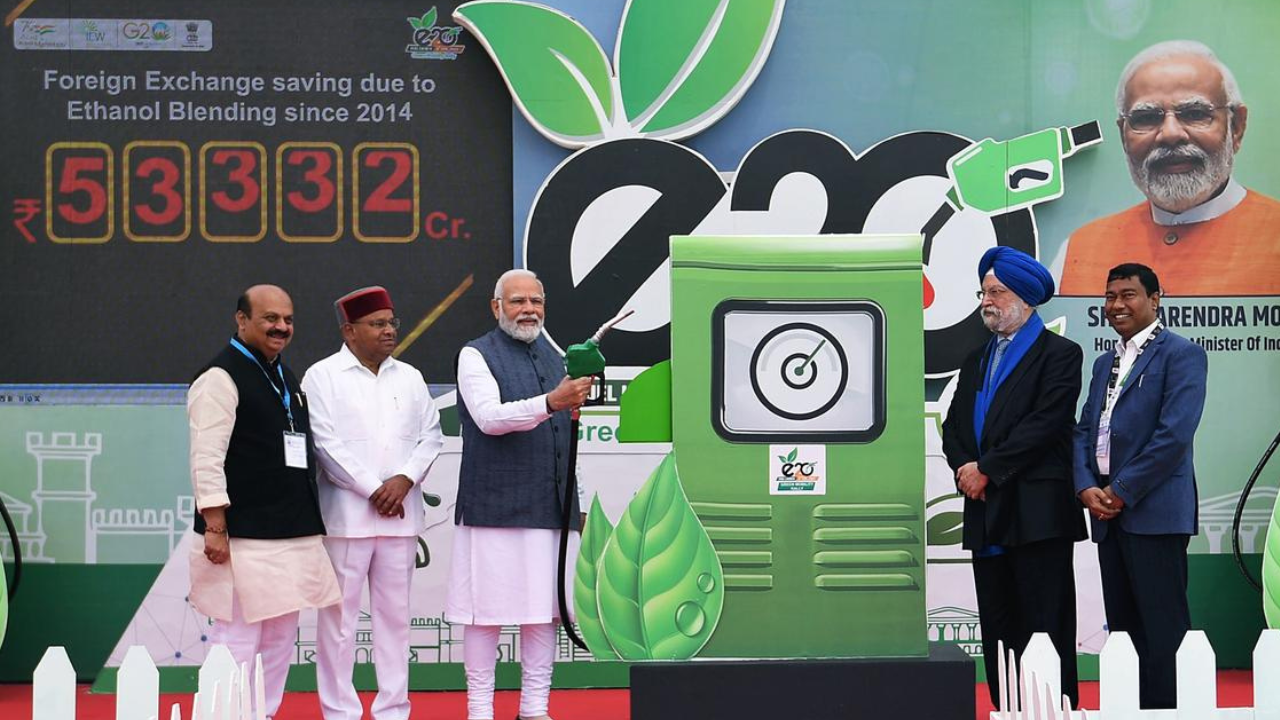
India has prematurely met the target of 20% ethanol blend in petrol by December 2025 itself, taking a giant leap towards its energy security. The central government has recently issued a notification approving flex-fuels like E85 and E100 in 2026, and more than 48 stations in the country have started getting E85 fuel. However, due to claims on social media and actual consumer experiences, an ‘Ethanol War’ i.e. a big ideological war has started in the country. This is a detailed review of the impact of this green revolution on the common motorist, the country’s economy and the agricultural system.
1. Effect on vehicle condition and engine
Difficulties to come
Ever since E20 petrol has been made mandatory across the country, many questions have arisen regarding the engines of older vehicles. Vehicles manufactured before April 1, 2023 are not designed for E20 fuel. According to a recent nationwide survey by ‘LocalCircles’, more than 55% of motorists said that their cars’ fuel pumps, injectors, carburettors and fuel pipes have increased wear and tear. Motorists claim that ethanol is hygroscopic (absorbs moisture from the air), increasing the risk of waterlogging in tanks and engine rust during monsoons.
Explanation of Govt
The Union Petroleum Ministry has refuted all these social media claims in July 2026. ARAI (Automotive Research Association of India) tests conducted over 40,000 km have not shown any serious negative impact on the vehicle’s drivability. The companies have also clarified that E20 does not void the car’s warranty or insurance.
Diesel’s number after Petrol? Big plan to mix 15% isobutanol, what exactly is Nitin Gadkari’s plan?
2. Mileage and price
Ethanol is 28% less energy dense than petrol. So the engine has to burn more fuel to produce the same power.
A drop in mileage
According to the survey, 66% of the customers complained that their pre-2023 cars have seen mileage drop of as much as 10 to 20 percent. Although the Union Minister termed the reduction in mileage as ‘minor’, the reality is that customers are getting less mileage for the same price.
Price and options
Currently, E85 fuel is being sold in the market at around Rs 20 cheaper than petrol. However, if the mileage is going to be reduced by 20%, then whether the rate discount is worth it is part of the math. Meanwhile, the Sugar and Bio-Energy Producers Association of India, in collaboration with IIT Delhi, has started preparations to launch an ‘Ethanol Conversion Kit’ costing up to ₹15,000 to convert old cars to flex-fuel.
3. The future of the automobile industry
The increasing influence of ethanol is forcing the automobile sector to change its entire engine technology. Now companies are having to make ‘flex-fuel’ engines that run on E85 and E100, not just E20. Although the cost of manufacturing vehicles will increase slightly, the government has made a policy that electric vehicles (EVs), CNG, hybrids and ethanol will all run together in the country. A 15% isobutanol blend in diesel is also being planned for heavy vehicles.
If E-20 petrol is filled, your responsibility, hand up from the government? Hoardings on petrol pumps, what is the real case?
4. Indian Agriculture and Food Security
Ethanol program is proving to be very beneficial for farmers.
- Increase in income: The government has so far disbursed more than Rs 1.6 lakh crore directly to the farmers.
- Variable Math of Crops: Earlier ethanol was made only from sugarcane. Now the share of maize has increased to more than 40%. Maize cultivation has increased by 9 lakh hectares during the Kharif season of 2025-26.
- Challenges of food security: The central government has sanctioned two million tonnes of additional rice from ‘Food Corporation of India’ for ethanol production in July 2026. However, experts have expressed fear that if foodgrains are used for energy, domestic pulses and oilseeds production may be affected and inflation may rise.
5. Broad impact on the Indian economy
This decision has been a game changer for India on the economic front.
- Foreign Exchange Savings: India has to import 85% of its crude oil. Ethanol blending has saved the country a whopping Rs 1.9 lakh crore in foreign exchange since 2014.
- Environmental Supplements: This has reduced crude oil imports by 310 lakh metric tonnes and reduced carbon dioxide emissions by 930 lakh metric tonnes, helping to improve India’s image internationally.
In short, while ‘Ethanol’ is a boon for the country’s economy and farmers, it has become a major challenge for common motorists due to reduced mileage and increased maintenance of old cars. Finding a suitable technical solution to this will be the final answer to this ‘Ethanol War’.

Comments are closed.