
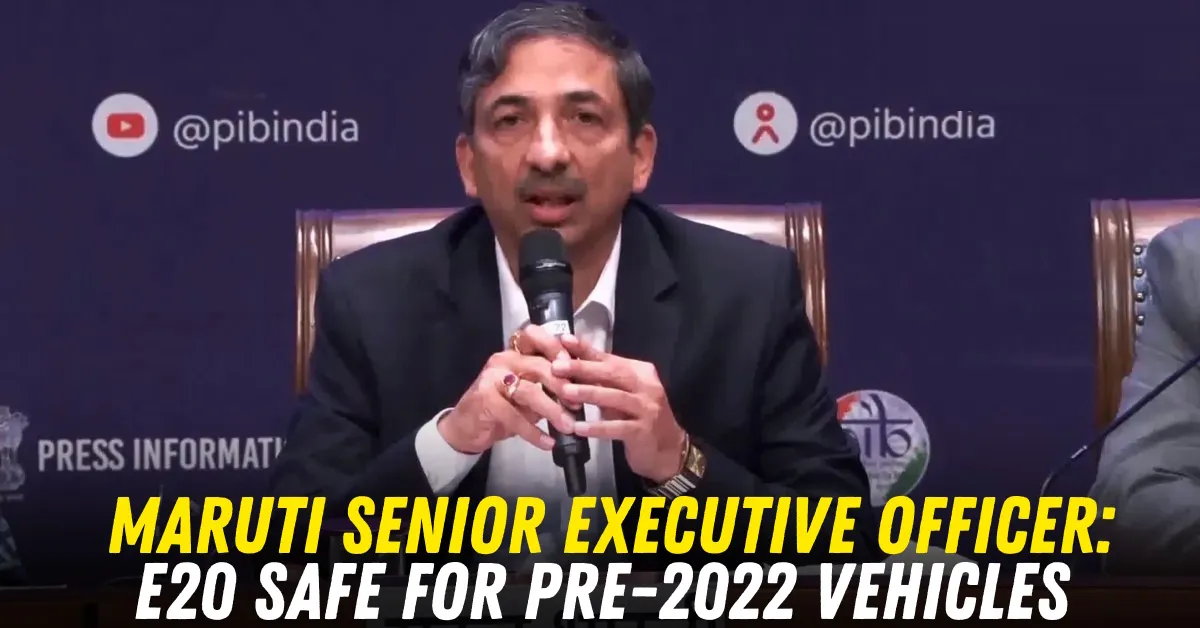
Maruti Suzuki Senior Executive Officer Rahul Bharti: E20 Petrol Is Safe For Pre-2023 Vehicles [Video]

Recently, Rahul Bharti, Maruti Suzuki India Senior Executive Officer (Corporate Affairs), stated that the company has already carried out extensive testing on vehicles that were manufactured before the 2023 E20 mandate. He explained that the company tested its older E10-compatible vehicles on E20 petrol across multiple parameters.
These tests included checking wear and tear, corrosion, material compatibility, and the overall durability of components that come into contact with ethanol-blended fuel. According to Maruti Suzuki, the company did not find anything that raised concern during these tests.
Rahul Bharti also added that there was no evidence of excessive wear, corrosion, or damage to the life of the vehicle or the parts that come into contact with E20 fuel. Basically, Maruti Suzuki has claimed that using E20 petrol alone should not damage its older vehicles.
Rahul Bharti also explained during the conference why Maruti is confident about this conclusion. According to him, vehicle manufacturers follow extremely strict testing and validation procedures before launching any model. Every component goes through extensive durability testing, certification, and continuous quality checks throughout the production life of the vehicle.
He added that manufacturers also build sufficient safety margins into their designs. So, because of these safety factors, Maruti says its older vehicles are capable of handling E20 fuel without suffering damage or excessive deterioration.
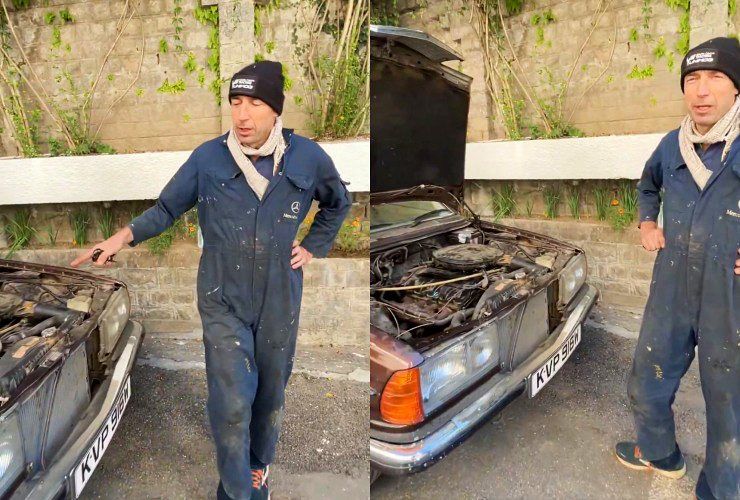
Cars sold in India before 2023, particularly petrol cars were designed to run on E10 petrol, which contained up to 10 percent ethanol. However from 2023 onwards, the government mandated that all new petrol vehicles should be compatible with E20 petrol.
As a result many old car owners became concerned about their cars compatiabilty with E20 petrol. Since their vehicles were originally designed for E10 petrol, many wondered whether continuously using E20 petrol could damage the engine, fuel lines, injectors, or other components over time. However, Maruti Suzuki has now stepped forward and claimed that this is not the case.
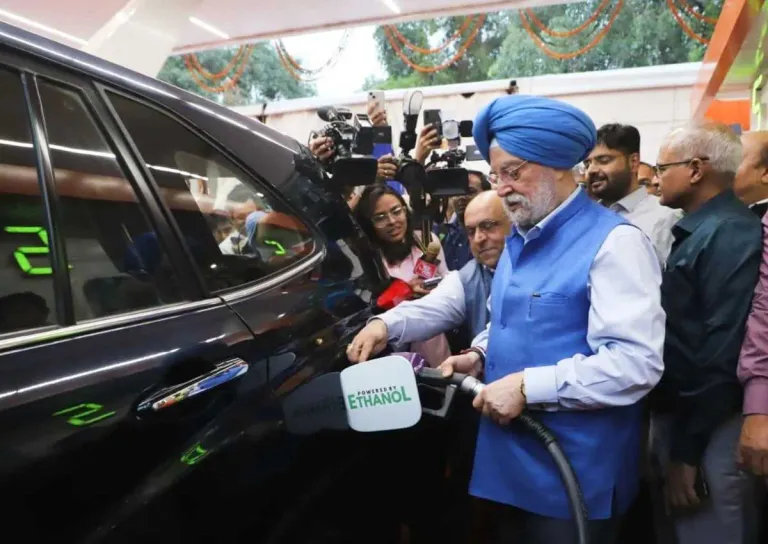
Recently, the Government of India also released a myth-busting statement to defend the E20 programme. The Ministry of Petroleum and Natural Gas recently released a detailed 10-point clarification to counter what it called misinformation regarding E20 petrol.
According to the ministry, trials conducted by the Automotive Research Association of India (ARAI) covered around 40,000 kilometres in passenger cars and about 20,000 kilometres in two-wheelers. These tests reportedly found no significant impact on drivability or fuel efficiency, with only marginal changes in mileage.
The government also referred to studies conducted jointly by ARAI, Indian Oil Corporation, the Indian Institute of Petroleum, and SIAM. These studies reportedly found no major compatibility issues with metal or plastic components. However, the ministry did mention that certain rubber components in older vehicles may require replacement slightly earlier than usual.
The government also clarified that E20 is not an experimental fuel. Ethanol-blended petrol has been used for several years in countries like the United States, Brazil, Canada, Thailand, Japan, and several European nations.
It has to be noted that even though both Maruti Suzuki and the government have defended E20 petrol, the discussion is not over. There are many vehicle owners who continue to report lower fuel efficiency after switching to E20 petrol. There have also been numerous claims on social media regarding higher maintenance costs, fuel pump failures, and injector-related issues in older vehicles.
Some independent surveys and workshop reports have also suggested that certain owners have experienced increased maintenance expenses after using E20 fuel for extended periods. As a result, many consumers remain unconvinced despite the official statements.
Comments are closed.