
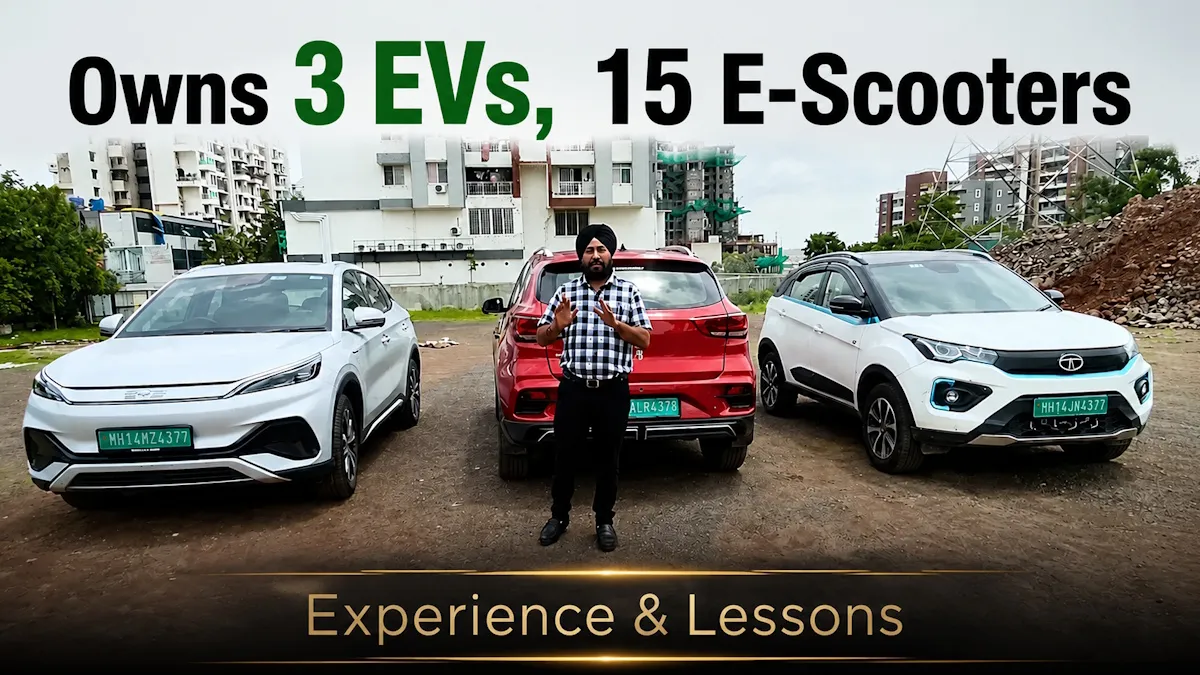

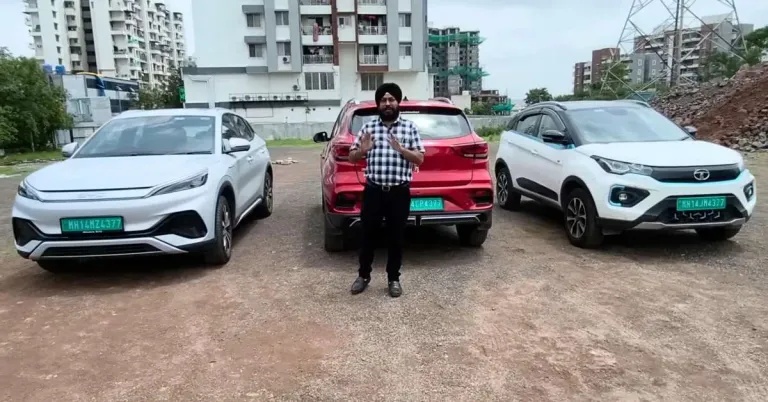
The video of this particular owner with three electric cars from different price brackets and his experience with them has been shared on YouTube. It comes courtesy of Electric Vehicle News Hindi’s channel. It starts off with the host introducing the owner of these EVs, Harjeet Singh Khalsa. The owner mentions that he has a business related to import-export and machinery and has been using electric vehicles for a long time.
He starts off by mentioning that the first electric vehicle which he bought was an EV bicycle. Khalsa then highlights that he has been an early EV adopter, and after the bicycle, he also bought the Hero Photon LP, which was one of the very first EV scooters in the market. Following which, when his confidence grew in EVs, he started buying more of them. The owner adds that he has handed the Photon LP to his staff, who still use it.
Khalsa then continues and states that after being satisfied with EV scooters and three-wheelers, he bought the first electric car in January 2021, the Tata Nexon EV Prime with the 40 kWh battery pack, which has been driven 62,000 km in the past five years. He added that after which, when he was facing some issues with the Nexon EV, he decided to buy the MG ZS EV.
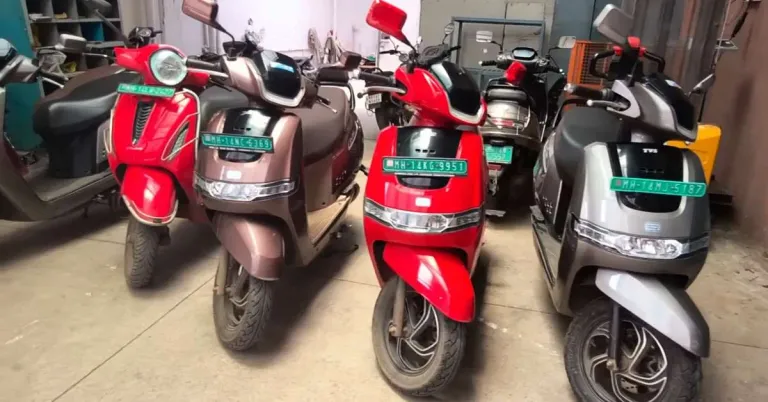
It was bought in February 2024 and has done around 50,000 km. Finally, earlier in February this year, he bought a BYD Atto 3, which so far has been driven over 12,000 km. As for the electric scooters, amongst his family and his business, they own around 15 to 16 electric scooters, including models like the TVS iQube, Okinawa, Hero Photon LP, and Bajaj Chetak.
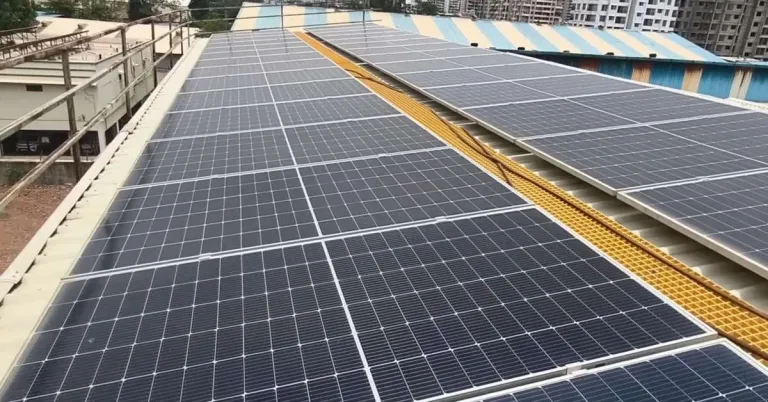
The owner in the video explains that his family and business own so many EVs. They have installed an 18 kW rooftop solar power system. He adds that the solar installation powers most of his vehicle charging requirements. And this has made the charging cost almost negligible. As per the owner, when rooftop solar is paired with an EV, it becomes one of the smartest ways to reduce ownership costs.
Following the details of the EVs owned, the host asks the owner about the claimed range of his EVs from the company and the real-world range that he gets. The owner then answers that his Tata Nexon EV Prime has the biggest variation in the range. He mentions that despite having a claimed range of around 312-320 km, it typically only delivers around 200-220 km in everyday driving.
Meanwhile, the MG ZS EV, which claims around 435 to 440 km, provides him a range of 360-370 km in real-world conditions. As for the BYD, Khalsa mentions that it performs the best and offers him close to 450 km on a full charge against its claimed 500 km range.
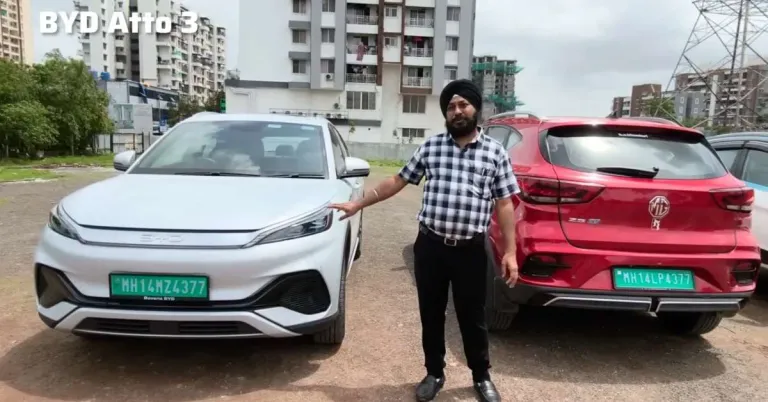
After this, the host then asks the owner about the best EV out of the three cars he owns. To this, he replies that each car has its own strengths. According to him, the BYD offers a very good overall package because it is the most expensive. It offers a very premium cabin, a lot of comfort, refinement, and long driving range.
However, the MG ZS EV is the best according to him. He explains that it offers a good balance between features, comfort, and after-sales service. The owner adds that with the MG, he has received the service which he expected from an EV carmaker, and for the price, it offers the best package.
The Tata Nexon EV, on the other hand, is also a good car, but he recommends it for budget-conscious buyers. He explained that the main reason behind this is that Tata Motors has not focused on the after-sales service. He added that the company did not train its service technicians. And because of which, a lot of problems were diagnosed and solved by the owner with the help of his friends and other EV owners.
The owner then talks about maintenance. He mentions that compared to petrol and diesel vehicles, the servicing costs are much lower and require less routine maintenance. However, as mentioned, after-sales service still plays an important role. In his experience, MG has offered a better service experience, whereas Tata’s service centres are still behind.
Finally, the owner gives his advice on how EVs should be driven. He highlights that driving style has a major impact on battery efficiency. Khalsa stated that instead of pressing the accelerator aggressively, drivers should use it smoothly and provide gradual acceleration.
He also mentions that the air conditioning system should be used sensibly and not by lowering the temperature and fan to full speed. According to him, these simple habits improve driving range and also help in preserving battery health over the long term.
Comments are closed.