
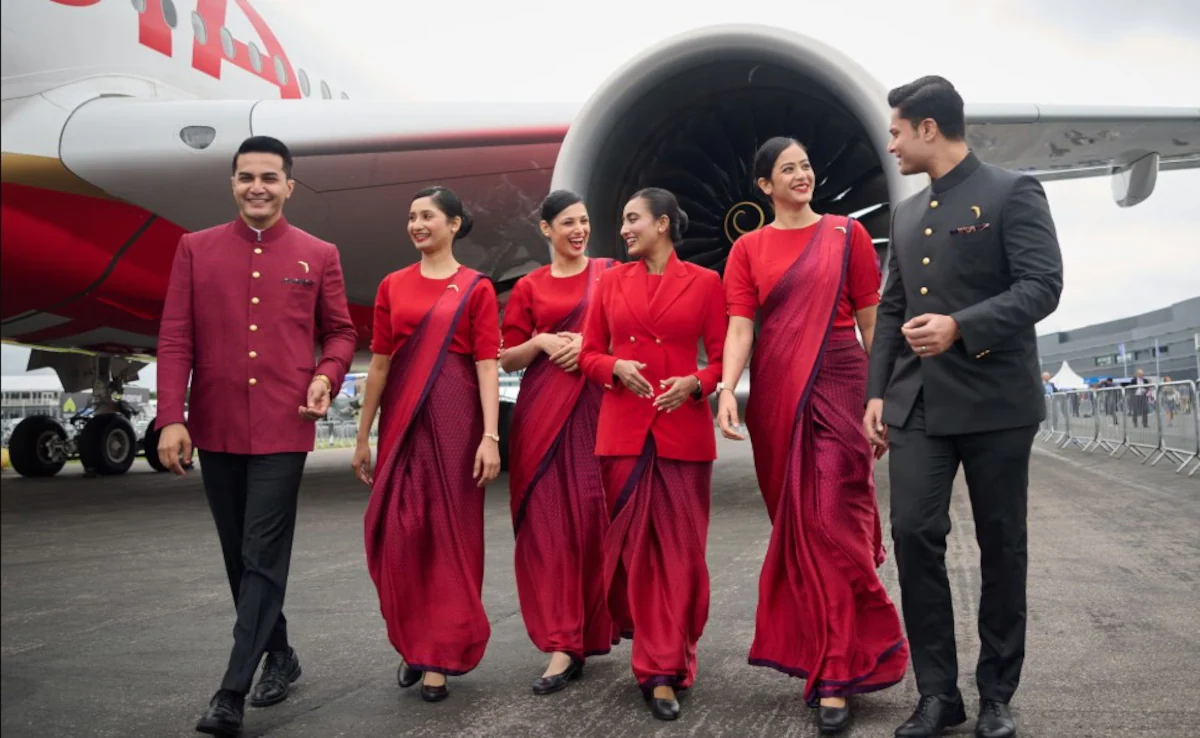

What began as backlash against a retail brand has snowballed into a wider debate about religious expression, workplace neutrality, and whether “uniformity” comes at the cost of cultural identity.
The trigger this time was a viral post claiming that airline crew manuals barred religious markers such as sindoor, tilakand sacred threads.
It appears that this problem runs much deeper.
Here are some pictures from the Air India Cabin Crew Handbook. Bindi, Sindoor, Tilak etc not allowed.
Why are they doing this so blatantly?#SocietyFromStreet pic.twitter.com/uqVRbXBwwF
— Pranav Mahajan (@pranavmahajan) April 18, 2026
The claim drew sharp reactions online, with many users questioning why such restrictions appeared to target specific cultural practices.
What Is Happening
The earlier row erupted after a leaked internal document suggested that Lenskart staff were barred from wearing Hindu religious markers like bindi and tilakwhile certain other religious symbols were permitted under specific conditions.
The backlash caused boycott calls and viral criticism accusing the company of religious bias.
In response, Lenskart clarified that the document was outdated and that its current policy allows religious and cultural markers, including bindi, tilak, sindoorand sacred threads. Founder Peyush Bansal emphasised that the company is “built in Bharat, by Indians, for Indians” and promised tighter internal checks.
The controversy then spilled to aviation, when on X people started pointing out the dress code policies set by airlines.
‼️Tata’s Air India doesn’t permit Tika, Bindi or Sindoor for Hindu women.
The same Tata that owns TCS.
See Page 27: pic.twitter.com/J2pXdGjocP
— Arun Pudur (@arunpudur) April 18, 2026
What The Airline Policies Say
The aviation debate intensified after images, purportedly from a crew handbook, surfaced online, suggesting restrictions on visible religious markers such as bindi, sindoorand tilak.
Air India dress code manual. Photo: X
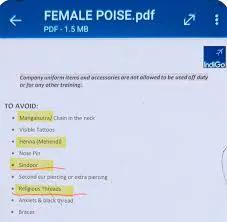
Indigo dress code manual. Photo: X
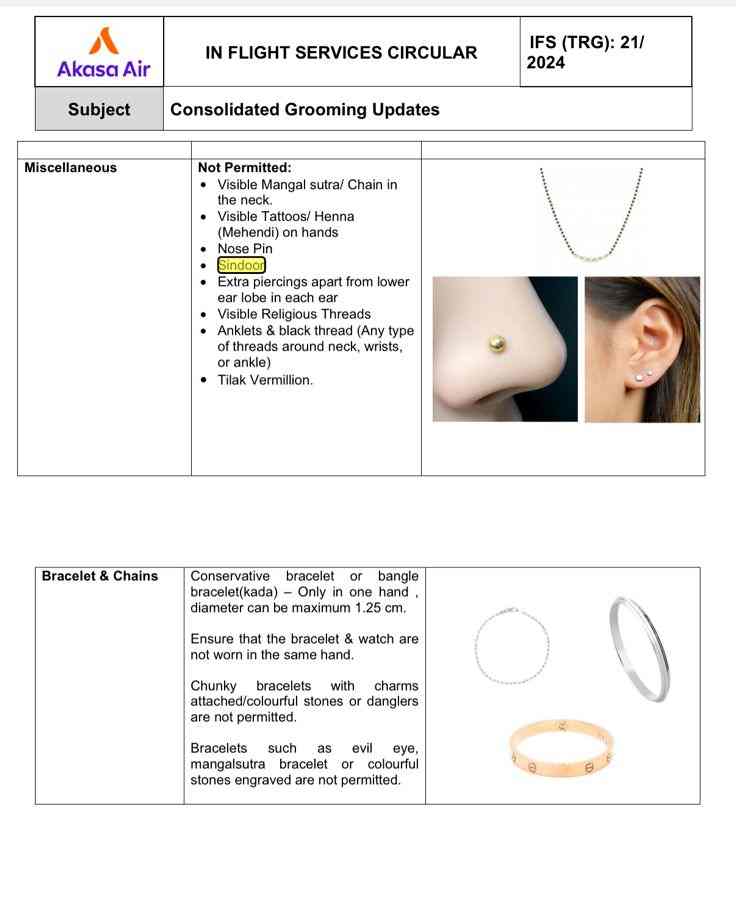
Akasa Air dress code manual. Photo: X
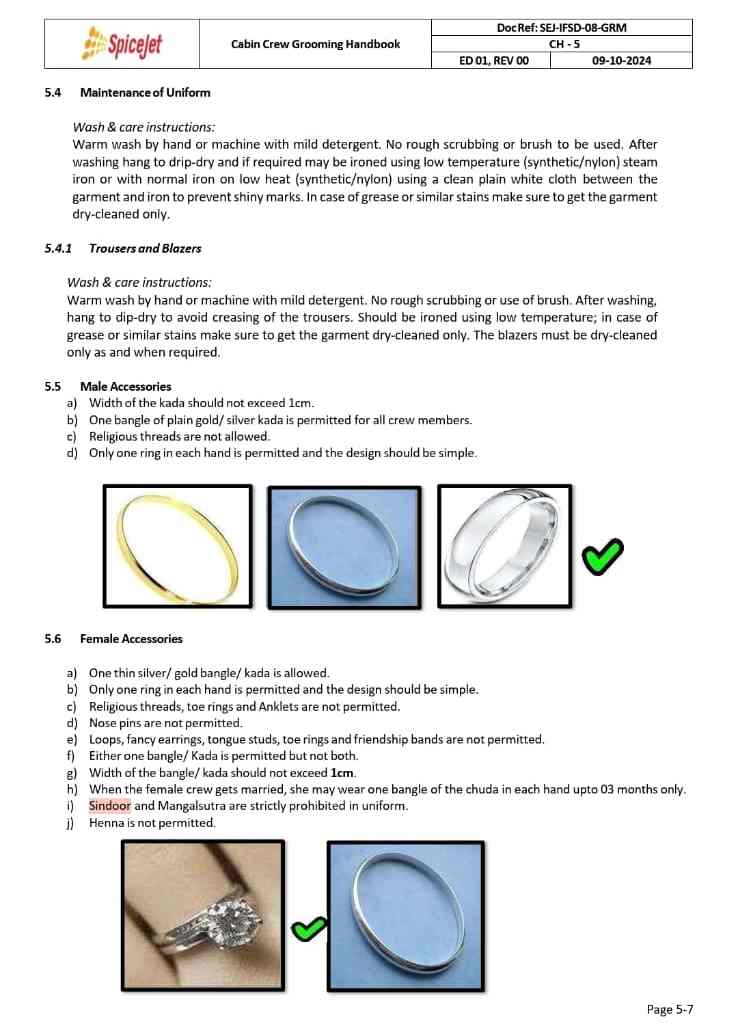
SpiceJet’s dress code. Photo: X
However, airlines have pushed back strongly against these claims.
A spokesperson for Air India clarified, “Air India would like to clarify that its employees have the choice to wear bindi. The images being circulated online are from an older manual that is no longer in use.”
Other carriers, including Akasa Air and SpiceJet, declined to comment when News reached out to them.
Despite clarifications, the issue has sparked a larger conversation online, with some users arguing that global aviation standards may carry a Western bias, while others stress the need for uniform safety norms.
Why Aviation Experts Defend These Rules
Aviation professionals say the debate misses a crucial point: airline grooming policies are rooted less in cultural considerations and more in safety.
An aviation expert who wanted to stay anonymous explained, “Dress codes for airlines are not merely a matter of appearance, but they are a crucial aspect of operational discipline and safety culture, especially at 35,000 ft.”
The global aviation ecosystem is governed by bodies such as the International Civil Aviation Organization and implemented in India by the Directorate General of Civil Aviation. These frameworks prioritise efficiency, safety, and standardisation.
Cabin crew, the expert stresses, are not just service staff but trained safety professionals. Their attire must allow:
- Quick and unrestricted movement in confined aircraft spaces
- Zero interference during emergencies
- Immediate recognisability by passengers in crisis situations
The Logic, Explained
Experts insist that restrictions on items like threads, jewellery, or cosmetic substances are based on risk assessment rather than religious bias.
“The purpose of these limitations is solely focused on safety and prevention, not culture or religion,” the expert says.
Examples cited include:
- Loose threads or chains getting caught in equipment
- Nose pins or jewellery causing injury during turbulence or evacuation
- Powders such as sindoor can potentially affect hygiene-sensitive environments
- The principle, according to experts, is simple: eliminate risk before it arises.
Why Uniformity Matters In Aviation
Standardisation is another key factor. Organisations like the International Air Transport Association promote consistent norms across airlines to ensure:
- Seamless coordination across international operations
- Predictable safety procedures
- Clear authority of crew members during emergencies
“In emergencies, there is no room for confusion,” the expert noted, adding that uniform appearance helps passengers instantly identify and trust crew instructions.
A Call For Balance
Industry voices also acknowledge that the issue is not black and white.
Dr Vandana Singh, Chairperson of Aviation Cargo at the Federation of Aviation Industry in India, said, “Airlines operate in a highly regulated environment where safety, discipline, uniformity, and brand representation all play an important role.”
She added that while restrictions on items like religious threads or sindoor may stem from operational concerns, airlines must also remain sensitive to cultural inclusivity.
“It is important that airlines maintain a balanced approach where operational requirements are respected alongside cultural sensitivity,” she concludes.
Comments are closed.