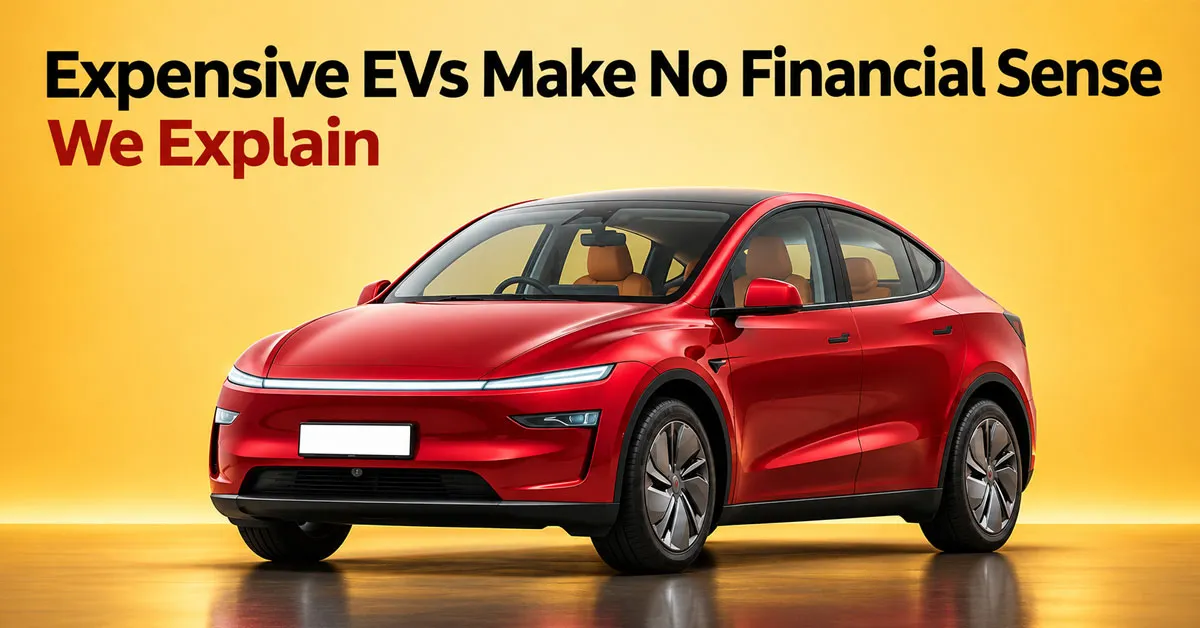
The global automotive narrative has placed electric vehicles (EVs) as the future of mobility. For a long time, many saw them as less-expensive alternatives to petrol and diesel cars. They believed that EVs make a lot of financial sense. This theory holds only for certain models. Expensive, performance-focussed EVs (like the Tesla Model Y for example) make little financial sense in the Indian context.
The Indian EV buyer now has plenty to choose from. Electric vehicles now span segments and price ranges. There are models like the MG Comet that cater to budget-conscious buyers. Models like the Tesla Model Y have ex-showroom prices of around 62 lakh rupees.
Even luxury brands like Mercedes Benz and BMW have all-electric models on sale. Ultra-luxury EVs like the Rolls Royce Spectre are also available in the Indian market. Let’s keep the luxury and ultra-luxury EVs out of this discussion, and keep the scope limited to the low and premium EVs alone.
The biggest financial advantage of an EV is the difference between electricity and fuel costs. Charging a car at home is generally cheaper than filling an equivalent petrol or diesel vehicle. However, these savings need to be considered against the additional amount paid upfront.
The total cost of owning a vehicle includes its purchase price, finance costs, insurance, maintenance and depreciation, minus the savings on fuel or electricity. This is where expensive EVs face a major challenge.
In the mass-market segment, a lower end product may cost around Rs 7 lakh, whereas a larger, higher-segment offering may cost Rs 14.85 lakh, ex-showroom. The upper end of the segment has EVs like the Mahindra XEV 9e, the top variants of which cost around Rs 31.25 lakh..
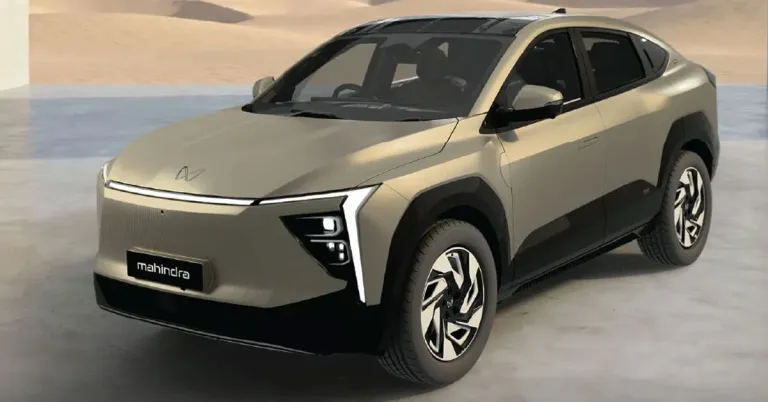
Many mass-market EV owners would wish to recover the car’s upfront costs through the energy savings. For cheaper EVs, this can likely be done in 4-6 years. However, for more expensive electric cars which cost around Rs 20 lakh, the recovery process becomes difficult and takes much more time.
Even if the owner saves Rs 7 per kilometre by charging at home instead of using premium petrol, the car would need to cover around 2.85 lakh kilometres just to recover the initial price difference.
For more premium and more expensive electric vehicles, recovering the additional purchase cost would take tens of years. This calculation also ignores depreciation, finance costs and other ownership expenses, which make the financial case even weaker. If those factors are factored in, an expensive EV can turn into a costly financial decision.
Electric vehicles have evolved significantly over the past few years. Locally-made, sharply priced options are now available which offer comparable feature levels, range and battery sizes to much more expensive models. So, a buyer may find it wiser to opt for the more affordable EV with similar packaging than putting the money on the more expensive option.

This logic even applies to power and performance as well. A Tata Sierra.EV that has an ex-showroom price of around Rs 22.74 lakh, has over 360 Bhp of power on offer. 300+ Bhp is well inside the performance territory.
In general, EVs depreciate faster than internal combustion engine-powered models. Premium and luxury EVs face severe depreciation. Their resale value can fall sharply. Battery technology, thermal management systems, charging speeds and vehicle software are improving quickly. These can accelerate depreciation.
Battery warranty is another concern in the used-car market. Most manufacturers offer an 8-year battery warranty. But, the exact coverage and distance limit vary by model. Some automakers also offer lifetime battery warranty, subject to strict terms and conditions. This, however, typically applies to the first owner alone. Uncertainty around warranty coverage can affect the resale value adversely.
Additionally, premium EV makers often adjust new-car prices to remain competitive in the race. This will have a direct effect on resale value.
Another major challenge is the insurance and tyre costs associated with expensive and performance-focussed EVs. They can be expensive to insure and maintain. Even a relatively minor accident can require extensive checks to confirm that the battery pack and its surrounding structure remain safe.
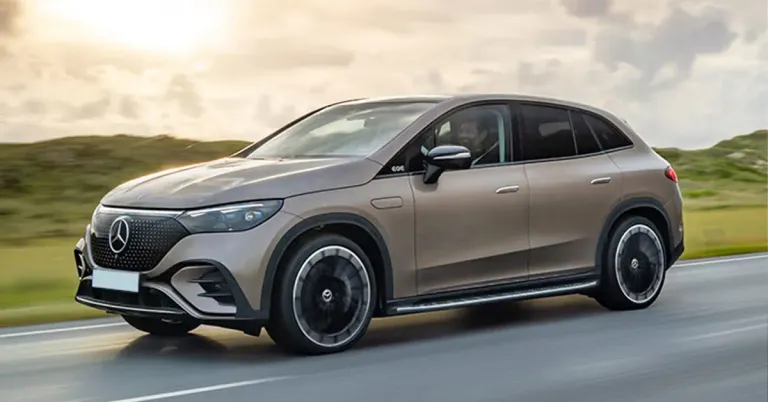
In some cases, repair costs can become so high that an insurer may consider the vehicle a total loss. As a result, insurance premiums for premium EVs can be 10% to 30% higher than those of comparable internal combustion models. Delay in getting the vehicle repaired is another concern. We recently came across the case of a Mercedes EQE 500 4MATIC that got stuck at the workshop after rodents damaged its wiring harnesses.
Tyres are another recurring expense. Large battery packs make EVs heavier. Expensive, performance-focussed electric cars come with low-resistance, soft-compound tyres. These wear out faster than regular tyres and are much more expensive.