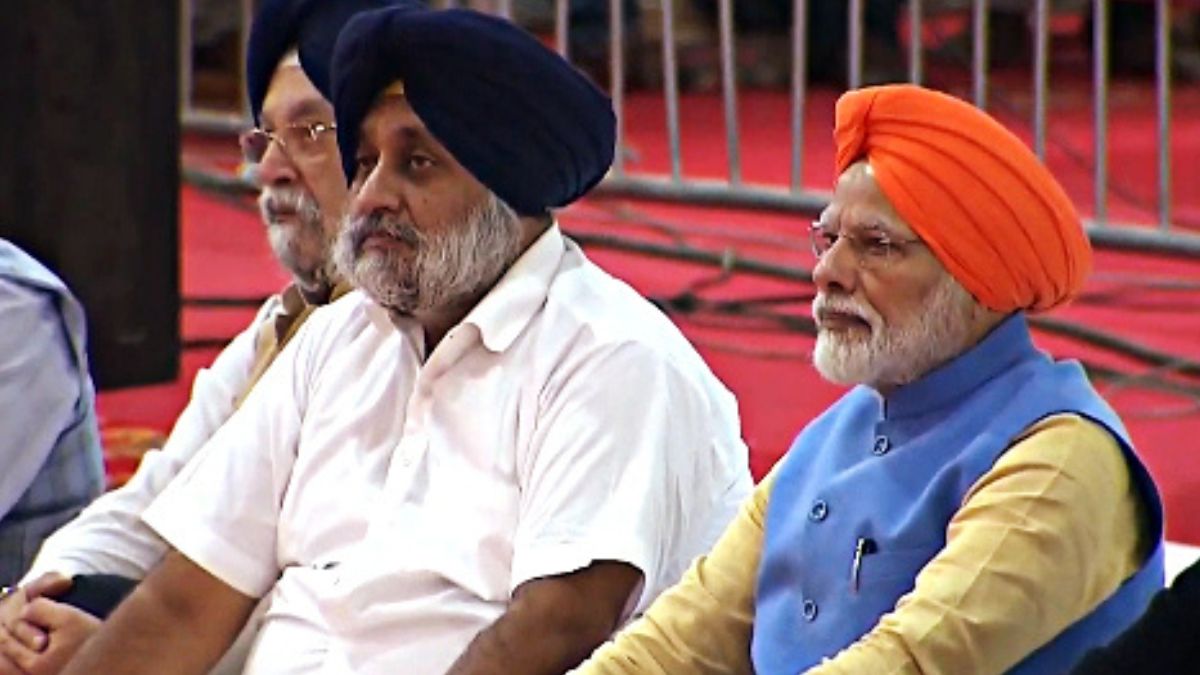
BJP-SAD alliance Punjab: Discussion has once again intensified in Punjab politics regarding the relationship between the BJP and the Shiromani Akali Dal . The question is: has the BJP decided to completely distance itself from its old ally, the Akali Dal, or is it already exerting pressure to maintain a strong position in a potential alliance? Another senior BJP leader has made it clear that the party is preparing to contest all 117 assembly seats in Punjab on its own.
National General Secretary Satish Poonia, appointed as the BJP’s organizational in-charge for Punjab, stated in his first media interaction that the central leadership’s message is clear: the party must prepare for all 117 seats in the state. Poonia also attempted to view Akali Dal President Sukhbir Singh Badal’s meeting with Prime Minister Narendra Modi from a different perspective. He said that not every meeting between political leaders should be seen as a possibility of an alliance. The current message from the BJP is that the party is preparing to contest the elections in Punjab on the strength of its own organization and candidates, rather than relying on any other party.
BJP has already given the message of 117 seats.
- Satish Poonia is not the first prominent BJP leader to speak about contesting all 117 assembly seats in Punjab independently. Previously, BJP National General Secretary (Organization) BL Santosh had also stated to party officials and workers in Punjab that the BJP was preparing to contest all 117 seats independently.
- Therefore, this statement cannot be seen as a message solely for the Akali Dal. It also serves as a strategic message to the BJP’s own workers: the party wants to strengthen its organization in Punjab in every part of the state.
- Interestingly, despite the BJP repeatedly talking about ‘contesting the elections alone’, the discussion about a possible alliance between the BJP and the Akali Dal has not ended.
- This raises the biggest question: is the BJP really closing the door to a fresh alliance with the Akali Dal, or is it strengthening its political and seat-related demands before any potential agreement?
Why is BJP more confident now than before?
- The BJP and the Akali Dal were coalition partners in Punjab for decades. At that time, the Akali Dal was the major partner in the coalition, and the BJP played a relatively minor role.
- In the 2017 Punjab Assembly elections, the last time the two parties contested together, the Akali Dal fielded candidates in 94 seats, while the BJP contested only 23. The Akali Dal won 15 seats, while the BJP won only 3.
- At the time, this arrangement was acceptable to both parties. The BJP found its political foothold in Punjab’s urban and Hindu-majority areas, while the Akali Dal was the major face of the alliance in rural and Sikh-majority Punjab.
- But things have changed. In 2020, the Akali Dal broke ties with the BJP-led NDA over the agricultural laws. Since then, the two parties have contested elections separately.
- During this period, the BJP attempted to expand beyond its old urban base in Punjab and build a state-wide organization. The party engaged leaders from other parties, expanded its organization, and attempted to increase its presence in various assembly constituencies.
- The BJP’s growing political power at the national level has also boosted confidence within the Punjab BJP. The party’s victory in West Bengal is also being seen as a reflection of this increased confidence within the BJP.
- Punjab BJP leaders have also consistently argued that the party’s vote share has increased in the state and its position has strengthened nationally. Therefore, contesting only a limited number of seats under the old alliance is no longer as attractive as it once was.
Preparation for 117 seats is not just a message to the Akalis
- To view the BJP’s decision to contest 117 seats solely as a strategy to pressure the Akali Dal would be an understatement. This is also signaling to its workers that the party now intends to establish its political base in every assembly constituency in Punjab.
- If the party assumes from the beginning that it has to form an alliance with the Akali Dal before the elections, then the pace of expansion of its organization may be affected.
- Conversely, if the BJP prepares for all 117 seats, it will have a basis to demand more seats even in the event of a potential alliance. This means that the message of “we can fight alone” could enhance the BJP’s electoral strategy as well as its bargaining power in potential alliance negotiations.
Then why are there signs of alliance from the Akali Dal?
Amid the BJP’s tough stance, the Akali Dal’s stance appears somewhat different. In the recent Punjab University Campus Students’ Council elections, the Akali Dal’s student wing, the Student Organization of India (SOI), supported the Akhil Bharatiya Vidyarthi Parishad (ABVP) candidate. This support came a day before voting, and the ABVP candidate subsequently won the president’s post. The ABVP also set a record by winning the top student council position for the second consecutive time.
It was just a campus election, but it was seen as a significant political signal in Punjab politics. While there has been no formal announcement of a large-scale alliance between the BJP and the Akali Dal, signals from both sides have kept alive the buzz about a possible return to the old relationship.
The Akali Dal distanced itself from its nearly two-decade-old BJP alliance over the farm laws in 2020. The party leadership has recently shown several signs of rekindling its relationship with the BJP.
The meeting between Sukhbir Badal and PM Modi started a new discussion.
The meeting between Sukhbir Singh Badal and Prime Minister Narendra Modi last month was also considered significant in this regard. This was the first face-to-face political meeting between the two leaders since leaving the NDA in 2020. Following the breakdown of the nearly two-decade-old alliance, this meeting reignited discussions about a possible return to Punjab politics. Just days later, the Akali Dal reversed its stance on the Delimitation Bill and announced its support for the Constitutional Amendment Bill being introduced by the BJP in Parliament.
This change was considered significant because the Akali Dal had previously criticized the BJP on the issue of delimitation. In April, the Akali Dal stated in the Lok Sabha that the BJP was constantly changing its goals regarding women’s reservation. The party also questioned that the delimitation process was being pushed forward under the guise of the Women’s Reservation Bill.
लेकिन बाद में परिसीमन से जुड़े विधेयक पर अकाली दल का रुख बदल गया. इसके बाद आम आदमी पार्टी और कांग्रेस ने अकाली दल पर बीजेपी के साथ दोबारा गठबंधन की कोशिशों को लेकर निशाना साधा. इसके बाद अकाली दल के भीतर से भी गठबंधन को लेकर खुले संकेत आने लगे.
अकाली नेताओं के बयानों से भी बढ़ी अटकलें
- अकाली दल के वरिष्ठ नेता बिक्रम सिंह मजीठिया ने सार्वजनिक रूप से बीजेपी के साथ गठबंधन की वकालत की. उन्होंने कहा कि पंजाब के लोग शांति, विकास और प्रगति के लिए अकाली दल और बीजेपी को साथ देखना चाहते हैं.
- इससे पहले पूर्व केंद्रीय मंत्री और अकाली नेता हरसिमरत कौर बादल ने भी बीजेपी के साथ रिश्ते सुधारने की संभावनाओं को लेकर एक संकेत दिया था. उन्होंने दिल्ली से पंजाब की प्रगति लाने वाले ‘समझौतों’ की इच्छा जाहिर की थी.
- इनमें से किसी बयान को बीजेपी के साथ औपचारिक गठबंधन का प्रस्ताव नहीं कहा जा सकता… लेकिन इतना जरूर है कि अकाली नेतृत्व की तरफ से बीजेपी के साथ पुराने रिश्ते को फिर से शुरू करने में दिलचस्पी के संकेत लगातार मिल रहे हैं.
अकाली दल को BJP की जरूरत पहले से ज्यादा क्यों महसूस हो रही है?
- अकाली दल को बीजेपी की जरूरत पहले से ज्यादा पड़ने के पीछे पंजाब की मौजूदा राजनीतिक स्थिति एक बड़ी वजह है. अकाली दल लंबे समय तक पंजाब की राजनीति की प्रमुख ताकत रहा है, लेकिन पिछले कुछ चुनावों में उसका वोट शेयर और सीटों की संख्या लगातार कमजोर हुई है.
- 2022 के पंजाब विधानसभा चुनाव में अकाली दल सिर्फ 3 सीटों पर सिमट गया था. वहीं, 2024 के लोकसभा चुनाव में पार्टी सिर्फ एक सीट जीत सकी. दूसरी तरफ बीजेपी लोकसभा चुनाव में पंजाब में एक भी सीट नहीं जीत पाई, लेकिन उसका वोट शेयर अकाली दल से काफी ज्यादा रहा.
- 2024 लोकसभा चुनाव में बीजेपी को पंजाब में 18.56 प्रतिशत वोट मिले, जबकि अकाली दल का वोट शेयर 13.42 प्रतिशत रहा. अकाली दल सिर्फ बठिंडा लोकसभा सीट जीत सका.
- बीजेपी कई विधानसभा क्षेत्रों में अकाली उम्मीदवारों से आगे रही और उसने 24 विधानसभा क्षेत्रों में बढ़त हासिल की. तुलना करें तो 2022 के विधानसभा चुनाव में बीजेपी का वोट शेयर करीब 6.6 प्रतिशत था, जबकि अकाली दल का वोट शेयर 18 प्रतिशत से थोड़ा ज्यादा था.
- इस बदलाव से पता चलता है कि अलग चुनाव लड़ने के दौरान बीजेपी ने पंजाब में अपनी राजनीतिक मौजूदगी बढ़ाई है, जबकि अकाली दल को नुकसान उठाना पड़ा है.
- पंजाब के मुख्यमंत्री भगवंत मान भी अकाली दल पर निशाना साधते हुए आरोप लगा चुके हैं कि अकाली नेतृत्व बीजेपी के साथ गठबंधन के लिए ‘घुटनों पर’ है और सत्ता में लौटकर पंजाब को फिर से ‘लूटना’ चाहता है.
- यह मुख्यमंत्री का राजनीतिक आरोप है, लेकिन इससे यह जरूर पता चलता है कि संभावित बीजेपी-अकाली गठबंधन पंजाब की मौजूदा राजनीति में बड़ा मुद्दा बन चुका है.
BJP के लिए भी पुराना गठबंधन अब पहले जैसा नहीं हो सकता
- अगर बीजेपी और अकाली दल दोबारा साथ आते हैं तो पुराना सीट बंटवारा शायद उसी रूप में स्वीकार करना बीजेपी के लिए आसान नहीं होगा. पहले गठबंधन में अकाली दल स्पष्ट रूप से बड़ा साझेदार था. उसके पास ज्यादा विधानसभा सीटें थीं और मुख्यमंत्री पद के उम्मीदवार से लेकर सीटों के बंटवारे तक फैसलों में उसका प्रभाव ज्यादा था.
- बीजेपी को उस समय करीब 20-25 सीटों के आसपास सीमित भूमिका स्वीकार करनी पड़ती थी. लेकिन पिछले कुछ वर्षों में बीजेपी ने पंजाब में अपना अलग संगठन खड़ा करने पर काफी जोर दिया है. पार्टी ने दूसरे दलों के नेताओं को अपने साथ जोड़ा, नए संगठनात्मक ढांचे को मजबूत किया और 2024 के लोकसभा चुनाव में पूरे पंजाब में उम्मीदवार उतारे।
- हाल के हफ्तों में भी बीजेपी दूसरे दलों और संगठनों से जुड़े लोगों को अपने साथ जोड़ती रही है. ऐसे में बीजेपी के लिए फिर से ऐसी व्यवस्था में लौटना मुश्किल होगा जिसमें उसे सिर्फ 20-odd सीटें मिलें और अकाली दल गठबंधन का बड़ा चेहरा बना रहे. यहीं से संभावित गठबंधन की असली बातचीत शुरू होती है.
- सवाल यह है कि अगर दोनों दल साथ आते हैं तो सीटों का बंटवारा किस अनुपात में होगा? मुख्यमंत्री पद को लेकर क्या व्यवस्था होगी? और सबसे महत्वपूर्ण बात- क्या अकाली दल बीजेपी की बदली हुई राजनीतिक ताकत को स्वीकार करेगा?
BJP दरवाजा पूरी तरह बंद क्यों नहीं कर रही?
अगर बीजेपी सच में अकाली दल से पूरी तरह दूरी बनाना चाहती है तो उसे अभी से गठबंधन की संभावनाओं को खारिज करना आसान होता, लेकिन बीजेपी ऐसा नहीं कर रही। वह लगातार सिर्फ इतना कह रही है कि पार्टी सभी 117 सीटों पर चुनाव की तैयारी कर रही है. इस रणनीति का एक फायदा यह है कि बीजेपी अपने कार्यकर्ताओं और नेताओं को सक्रिय रख सकती है.
अगर पार्टी बहुत पहले गठबंधन का ऐलान कर देती है तो उसका स्वतंत्र संगठन खड़ा करने का अभियान कमजोर पड़ सकता है. कार्यकर्ताओं को यह संदेश जा सकता है कि आखिरकार पार्टी को सीमित सीटों पर ही लड़ना है. लेकिन 117 सीटों की तैयारी जारी रखकर बीजेपी दोनों विकल्प खुले रखती है. एक तरफ पार्टी अकेले चुनाव लड़ने की स्थिति में रहती है, दूसरी तरफ अगर बाद में अकाली दल के साथ बातचीत होती है तो उसके पास मजबूत स्थिति से सीटों पर बातचीत करने का आधार होता है. यानी बीजेपी फिलहाल अपने पत्ते पूरी तरह खोलने के बजाय राजनीतिक विकल्प खुले रख रही है.
क्या BJP को वास्तव में अकाली दल की जरूरत है?
यह भी बड़ा सवाल है. अकेले चुनाव लड़ने से बीजेपी को पंजाब के हर इलाके में अपने संगठन का विस्तार करने का मौका मिलेगा. पार्टी नए नेताओं को आगे ला सकती है, ग्रामीण क्षेत्रों में अपना आधार बना सकती है और पारंपरिक शहरी वोट बैंक से आगे बढ़ने की कोशिश कर सकती है.
भले ही बीजेपी तुरंत सरकार बनाने की स्थिति में न पहुंचे, लेकिन अगर वह अकेले चुनाव लड़कर अपने वोट और सीटों में बड़ा सुधार करती है तो लंबे समय में यह उसके संगठन के लिए महत्वपूर्ण उपलब्धि होगी. दूसरी तरफ गठबंधन होने पर उसे अकाली दल के पारंपरिक आधार का फायदा मिल सकता है. खासकर पंजाब में सिख समुदाय और ग्रामीण राजनीति की भूमिका बेहद महत्वपूर्ण है.
बीजेपी का स्वतंत्र संगठन अभी भी उन इलाकों में उतना मजबूत नहीं है जहां अकाली दल की पारंपरिक पकड़ रही है. इसलिए अकाली दल के साथ गठबंधन बीजेपी को उन मतदाताओं तक पहुंचने में मदद कर सकता है जहां वह अकेले अभी संघर्ष कर रही है. यानी दोनों पार्टियों के पास एक-दूसरे को देने के लिए कुछ न कुछ है.
2024 के आंकड़े BJP को क्या बताते हैं?
बीजेपी के लिए 2024 लोकसभा चुनाव का सबसे महत्वपूर्ण संदेश यह था कि वोट शेयर बढ़ने के बावजूद वह एक भी लोकसभा सीट नहीं जीत सकी. 18.56 प्रतिशत वोट हासिल करना पार्टी के बढ़ते आधार को दिखाता है, लेकिन सीट में उसका तब्दील न होना यह भी बताता है कि अकेले वोट शेयर अभी उसे सत्ता के करीब नहीं ले जाता.
The Akali Dal, on the other hand, still holds some traditional political constituencies and vote banks. The party won the Bathinda seat in 2024. Therefore, if the two parties come together, the BJP could benefit from reaching out to rural and Sikh voters, while the Akali Dal could benefit from the BJP’s growing vote share and organization. But the question is how many seats each will give up in exchange for these gains.
The real fight is for seats and leadership?
This is why it would be incomplete to view the current political rhetoric solely from the perspective of “will there be an alliance or not?” The actual discussion may go beyond this. The BJP may now want more seats than before. Instead of seeing itself as a junior partner, it would want to be seen as an equal or at least stronger partner.
The challenge facing the Akali Dal is whether it will accept the changed political situation and agree to give the BJP more seats than before? If the Akali Dal wants to return to the old formula and the BJP demands a larger share based on its current size, this is where the biggest conflict between the two parties could arise.
Currently both languages are different.
At present, the public language of the BJP and the Akali Dal appears quite different. There have been consistent signs of the Akali Dal improving its relationship with the BJP. Statements by leaders, shifts in stance in Parliament, and cooperation between the two organizations in student politics have further fueled these speculations. Meanwhile, the BJP is holding off on announcing any alliance. All its key leaders are repeating the same principle: the party is preparing to contest all 117 assembly seats in Punjab.
This doesn’t mean the possibility of a coalition is completely over. In fact, political signals suggest that there remains room for dialogue between the two sides. The only difference is that this time the equations between the two will not be the same as before.
The Akali Dal feels the need for the BJP more than ever, while the BJP feels it now has more capacity to stand on its own. Therefore, the big question right now isn’t whether the BJP and the Akali Dal will come together. The bigger question is: if they do, who will be the “big brother” in this alliance and what will be the new seat-sharing formula? The BJP’s message of contesting 117 seats alone appears to be preparing the ground for this potential bargaining.