
Explosions in Iran: US Launches ‘Self-Defense’ Strikes Near Key Strait, but Peace Talks Continue – Breaking News & Live Updates Today

Did the US just attack Iran in the middle of active peace negotiations? Over the last 48 hours, the situation in the Middle East has become incredibly confusing. On one hand, we are hearing that the White House and Tehran are closer than ever to striking a major deal to end months of conflict. On the other hand, the sound of explosions is echoing near the Strait of Hormuz.
Here is what we know right now: The US military confirms it carried out fresh strikes in southern Iran. However, according to officials on both sides, the fragile ceasefire that has been in place since April appears to still be holding.
Let’s cut through the noise. Here is a detailed breakdown of what actually happened near Bandar Abbas, why the US is calling this “self-defense,” and how this fits into Donald Trump’s broader vision for a “new Middle East.”
What Happened Near Bandar Abbas?
On Monday, May 25, 2026, residents near the strategic port city of Bandar Abbas—located just north of the Strait of Hormuz—reported hearing several loud explosions. According to reports from the US Central Command (CENTCOM), the American military targeted specific assets belonging to the Iranian Islamic Revolutionary Guard Corps (IRGC). .
But why now? According to CENTCOM spokesperson Captain Tim Hawkins, the strikes were not an escalation of the war but rather a “self-defense” measure. Hawkins stated that US forces targeted IRGC boats that were actively laying mines in the shipping lanes of the Strait of Hormuz. Additionally, a surface-to-air missile site that was allegedly tracking or targeting American warplanes was also hit. .
In military terms, this was a tactical response rather than an all-out offensive. Initial reports from Iranian state media, cited by Fars News Agency, suggested that Iran’s air defense systems were activated to counter “hostile targets” and that, unfortunately, four people lost their lives in the exchange. .
Was the Ceasefire Broken?
If you are just scrolling through social media, you might think the ceasefire has collapsed. However, the reality on the ground seems different.
Despite the violence, both Washington and Tehran are signaling restraint. Captain Tim Hawkins was very specific in his language, adding that the US military is “using restraint during the ongoing ceasefire.” He did not frame this as a new offensive, but as a defensive action to neutralize an immediate threat. .
Similarly, Iranian officials quickly moved to downplay the severity of the attack. While they confirmed the explosions, they assured the public that the situation in Bandar Abbas was “fully under control” and that life in the port city was continuing normally. .
Why the soft response from Iran? It seems both parties have a vested interest in keeping the peace process alive. There is currently a high-stakes diplomatic dance happening in Doha, Qatar, involving high-level Iranian negotiators. Throwing that away over a skirmish at sea might not be in anyone’s interest right now.
Trump’s “Bigger” Warning and the Nuclear Question
While the military was engaged in the strait, President Donald Trump was busy on social media trying to dictate the terms of the peace. In a lengthy post on Truth Social, Trump made two things very clear.
First, he issued a stark warning: If the negotiations fail, the world should expect a return to “the Battlefront and shooting, but bigger and stronger than ever before.” . This suggests that while the ceasefire is currently intact, Trump’s patience has a timer on it.
Second, he brought up the thorny issue of nuclear material. Trump declared that Iran’s stockpile of enriched uranium must be handed over to the United States to be “destroyed in place” or shipped out of the country entirely. According to reports cited by NDTV, Trump referenced an “Atomic Energy Commission”—a US agency that hasn’t existed since the 1970s—adding a layer of confusion to the demand. .
For Tehran, handing over its enriched uranium is the ultimate red line. It is the primary bargaining chip they hold. It is highly unlikely they would simply “hand it over” without a massive, verified lifting of sanctions.
The “Abraham Accords” Trap
Here is where the story gets very political. Trump isn’t just trying to end a war; he is trying to use the war to force a regional realignment.
In his recent statements, the President has made it clear that any deal with Iran is conditional on other major Muslim nations normalizing relations with Israel. He specifically named Saudi Arabia, Qatar, Pakistan, Turkey, Egypt, and Jordan, demanding they sign the Abraham Accords .
This puts Iran in a difficult position. For decades, Tehran has built its foreign policy on opposing “the Zionist entity.” If Iran signs a peace deal that simultaneously results in Saudi Arabia and Qatar shaking hands with Israel, does that look like a victory for Tehran or a victory for Washington?
According to the ABC, when Trump raised this issue in a recent phone call with Arab leaders, there was apparently “silence” on the other end of the line. . Most of these nations still tie normalization to the creation of a Palestinian state—a condition Israel has not agreed to.
Fact Check: Is the Deal Really Close?
You may have seen headlines saying a deal is “imminent.” We need to fact-check that.
On Sunday, a senior Trump administration official claimed that Iran’s Supreme Leader, Mojtaba Khamenei, had agreed to the “contours” of a draft agreement. . However, the Iranian Foreign Ministry spokesperson, Esmail Baghaei, quickly pushed back. While he admitted that “a large portion” of the issues have been resolved, he insisted that signing an agreement is not impending .
Furthermore, there is a massive logistical hurdle: the leader of Iran is reportedly in hiding. US officials have stated that Khamenei is operating from an undisclosed location, communicating only through a complex network of couriers. It takes days, sometimes weeks, for messages to get to him and for his final approval to trickle back down. . So, even if the negotiators in Doha agree on a paper, getting the final “Yes” from the top could take a while.
Analysis: What Happens Next?
So, where does this leave us? We are in a strange purgatory between war and peace.
The Skirmishes Will Continue: The US is not going to allow Iran to mine the Strait of Hormuz (a critical route for global oil). If Iranian boats go out to lay mines, the US will likely keep sinking them. These are tactical hits, not strategic war.
The Ceasefire is Fragile but Alive: Neither side seems ready to walk away from the table. Iran needs the port blockades lifted to fix its economy, and the US wants the nuclear program frozen without a ground invasion.
The “Grand Bargain” is Complex: Trump is trying to tie the Iran nuclear issue to the Israeli-Arab normalization issue. That is a heavy lift for a single set of negotiations.
For now, the world holds its breath. The explosions in Bandar Abbas are a stark reminder that while the diplomats talk, the guns are still loaded.
People Also Ask (Google SEO Answers)
Q: Why did the US attack Iran in May 2026?
A: The US military stated the strikes near Bandar Abbas were “self-defense.” According to CENTCOM, US forces targeted Iranian boats that were laying mines in the Strait of Hormuz and a missile site that posed an immediate threat to American aircraft. The US insists it is still adhering to the ceasefire terms but retains the right to defend its assets .
Q: Is the Iran-US ceasefire still holding?
A: Yes, for the most part. Despite the military action on May 25, both the US and Iran have signaled that the ceasefire—originally established in April 2026—remains intact. US officials described the strikes as a specific defensive action rather than a renewed offensive, and Iran has largely downplayed the event to avoid derailing peace talks. .
Q: What is the Strait of Hormuz, and why is it important?
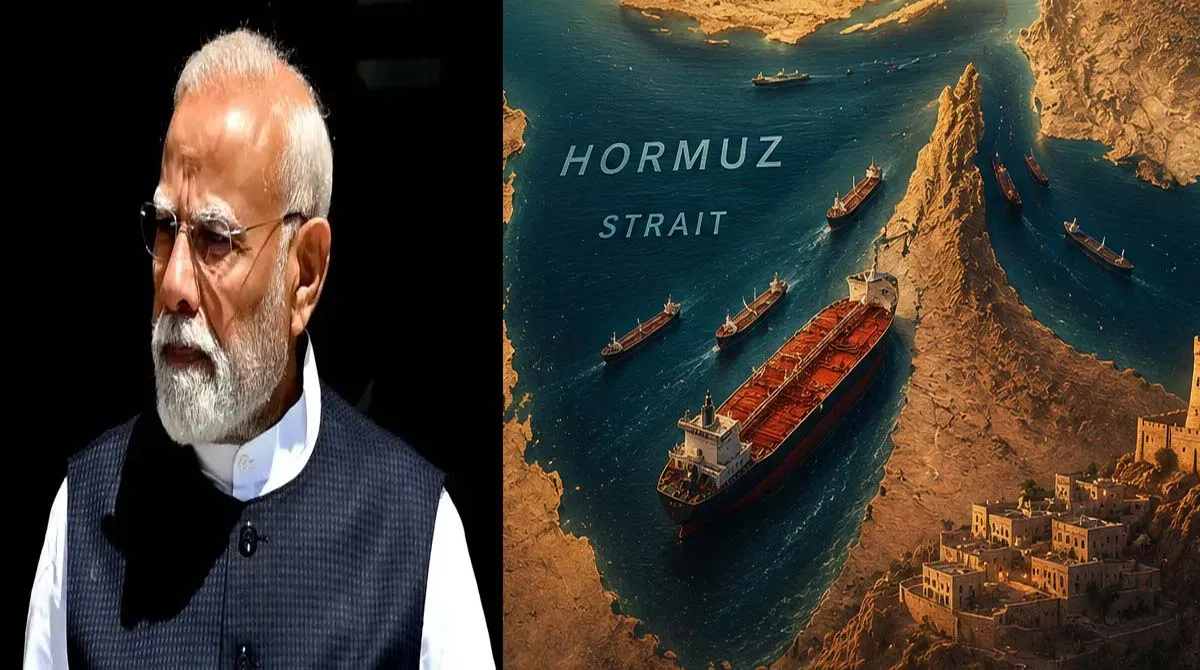
A: The Strait of Hormuz is a narrow sea passage between Iran and Oman, connecting the Persian Gulf to the open ocean. It is the world’s most critical oil chokepoint. Approximately 20% of global petroleum passes through this strait. Any conflict here, such as mining or blockade, causes global oil prices to spike instantly. .
Q: What does Trump want from Iran in the peace deal?
A: President Trump has several demands. First, he wants Iran to destroy or hand over its stockpile of enriched uranium. Second, he wants to ensure the Strait of Hormuz is reopened to free shipping. Third, Trump is pushing for Iran to accept the Abraham Accords framework, which normalizes relations between Israel and Arab nations. .
Q: Where is Iran’s Supreme Leader Mojtaba Khamenei?
A: According to US officials, Supreme Leader Mojtaba Khamenei is currently operating from an undisclosed, secure location. He has very limited contact with the outside world and communicates with his government only through a trusted network of couriers. This “bunker” strategy is reportedly delaying the final approval of any peace deal being negotiated in Doha. .

Comments are closed.