
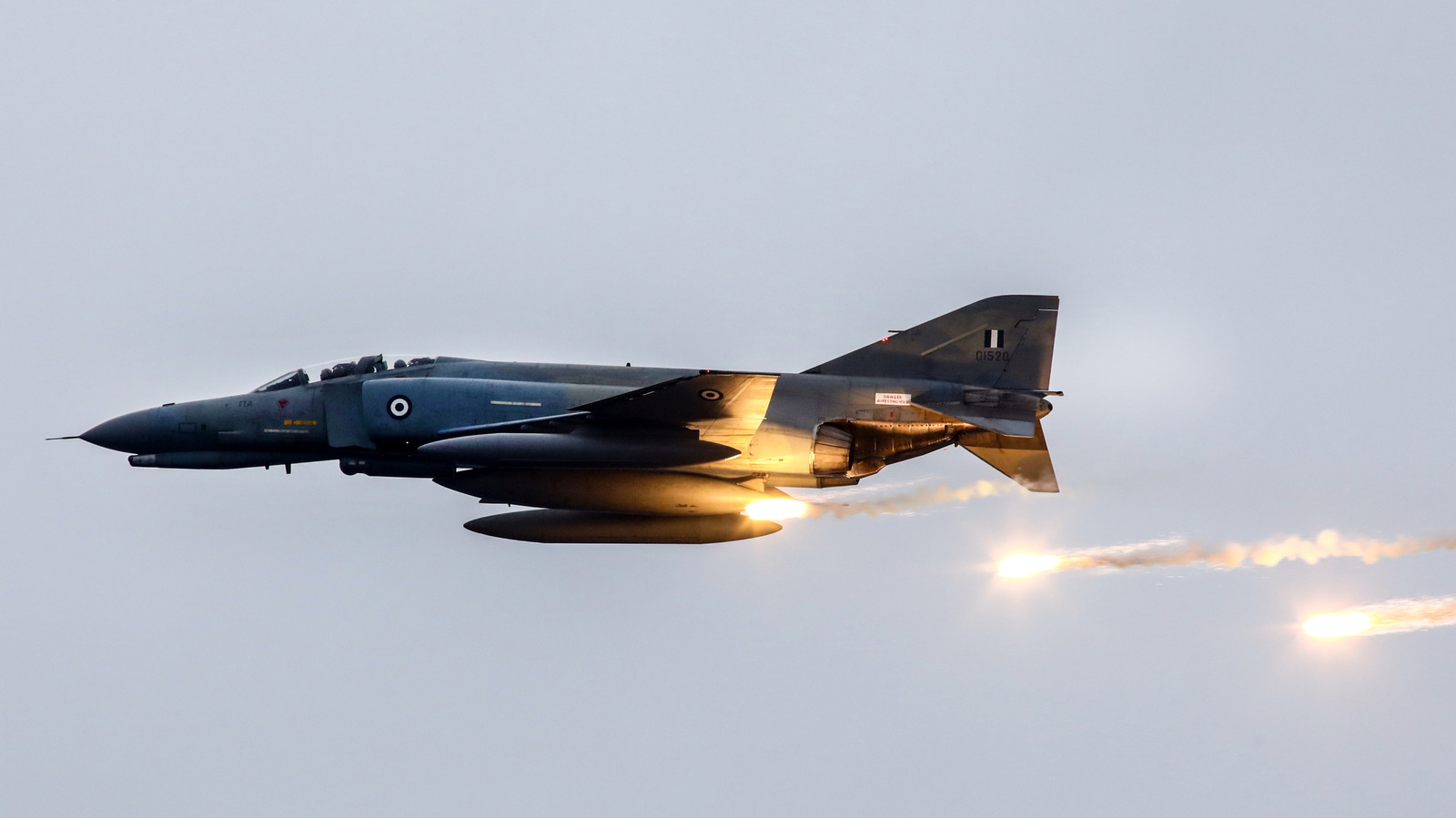

The McDonnell Douglas F-4 Phantom II flew with the United States military from 1958 to 1998, before it was finally retired from frontline service, although Greece and Turkey continue to fly the F-4E in a limited capacity. It was phased out in favor of jets like the F-14 Tomcat, and post-Vietnam Era aviation legends like the F-16 Fighting Falcon.
Still, despite a several-decade-old design, the most produced variant, the F-4E Phantom II, had a top speed of 1,485 miles per hour. That speed measures faster than the top speed of the F-16 when it first came on the scene in 1984. Yet, despite the storied history of the Phantom II, and its higher top speed, the F-16 is still a better aircraft. There’s no question about it.
The most obvious difference is technology. The F-16 and its many currently produced variants have the advantage of 21st-century avionics, including satellite uplinks, the ability to communicate with forces on the ground, and targeting systems for laser-guided bombs.
Newer, lighter, more advanced
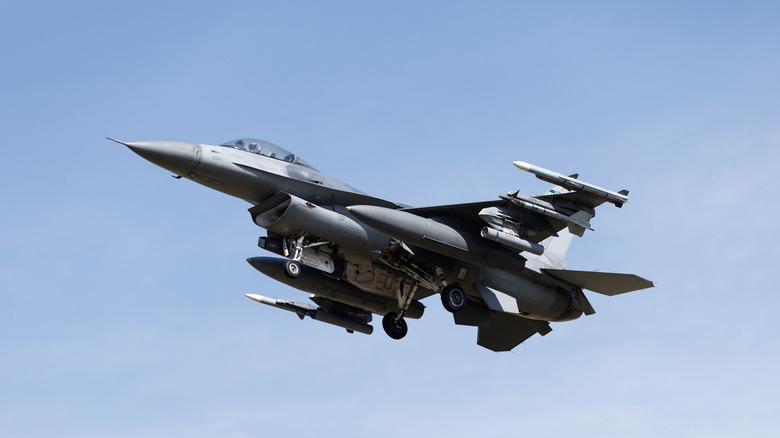
The F-16 is also significantly smaller and lighter than the relatively large Phantom II. The F-16 has a wingspan that’s a little more than seven feet shorter than the Phantom II, and it’s nine feet shorter in length. Weight-wise, the difference is even more apparent. The F-16C, with a full tank of fuel and two air-to-air missiles loaded, weighs in at 27,099 pounds. The F-4 Phantom II weighs 55,957 pounds with a combat load.
Despite being much lighter, the F-16 carries better, longer-range radar than even the most advanced F-4G “Wild Weasels” that used the Phantom II platform.
The F-16 is also a fourth-generation fighter jet, making the real comparison between it and the third-generation F-4E almost a moot point. The F-4E might be at home fighting MiG-21s, but the F-16 is suited for the internet and drone age. The newest Block 70/72 variant of the F-16 works seamlessly with bleeding-edge stealth fighters like the F-22 and F-35. Lockheed Martin, the jet’s primary contractor, wants to keep using the F-16 until 2060, which will be 62 years after the last American F-4E Phantom II even flew.

Comments are closed.