
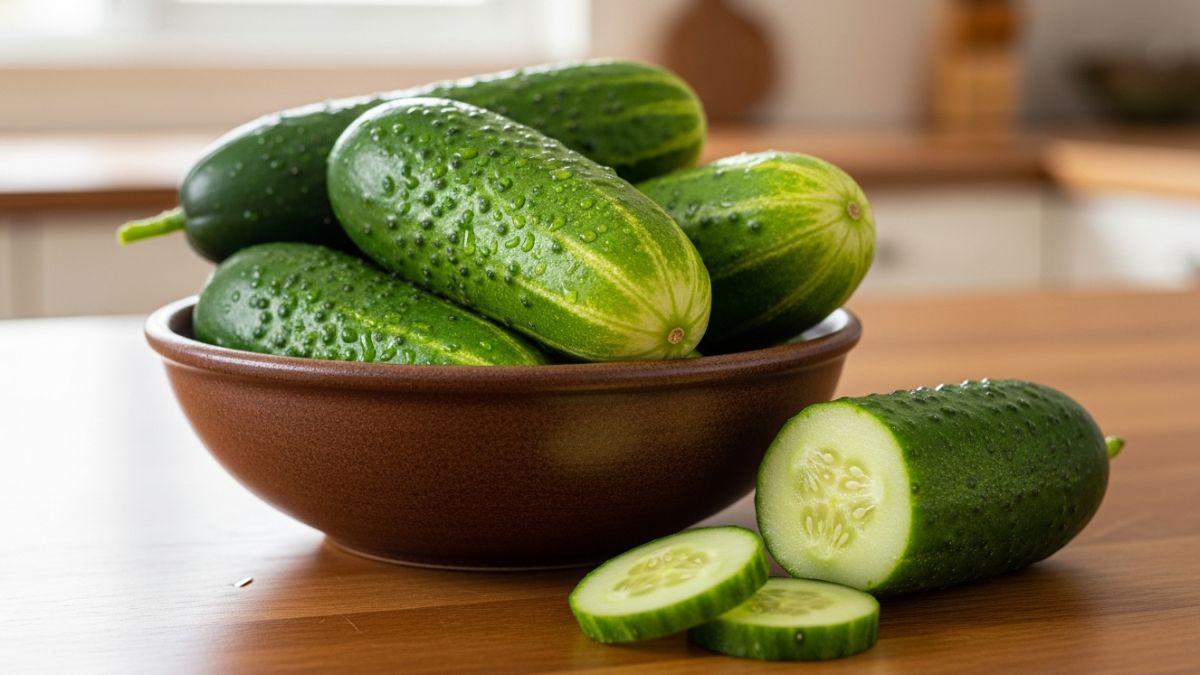

CLAIM:
The post claims that cucumbers can “kill” or reduce diabetes by “dissolving sugar” in the body. It suggests that compounds such as cucurbitacins, along with cucumber’s high water and fibre content, may help lower blood sugar, improve insulin sensitivity, and work in ways similar to the diabetes drug metformin.
FACT:
There is no scientific evidence that cucumber can cure, reverse, or “kill” diabetes. While some laboratory and animal studies suggest that compounds linked to cucumbers may influence blood sugar regulation and insulin-related pathways, these findings have not been proven in humans through clinical trials. Experts say cucumber can be part of a healthy, diabetes-friendly diet, but it is not a treatment or substitute for medical care.
In a viral Instagram post by the page ‘moessance4life’, which has over 2.36 lakh followers on Instagram, a claim about cucumbers “killing diabetes” is gaining traction online. The post presents cucumber not just as a healthy vegetable, but as a natural remedy that can allegedly “dissolve sugar” and help reverse diabetes through its compounds and nutritional properties.
The post mentions that, “Cucumber kills diabetes by dissolving sugar,” claiming that cucumbers contain “cucurbitacins, natural compounds that may help regulate insulin secretion and metabolism, potentially reducing blood sugar.” It further states that the vegetable’s “high water (95%), fiber, and low-carb, low-calorie nature” may help stabilise blood sugar levels, while antioxidants such as “B-carotene, vitamin C, & Vitamin E reduce diabetes-related oxidative stress.”
The caption of the post reads, “When you mess with cucumbers, juice ’em up to flush disease,” while also advising people to “stay off meat and dairy” because they allegedly “trigger inflammation and keep diabetes active.” The caption further claims that compounds like “Cucurbitacin B help lower blood sugar, boost insulin sensitivity, activate AMPK, raise GLP-1, and slow liver glucose like metformin which reduces diabetes.” The post frames cucumber as a natural alternative capable of supporting blood sugar control through multiple biological pathways.
The post has gained over 11.5k likes and 17.2k shares, with many users engaging with the claims surrounding cucumber and diabetes management.
Can cucumber cure diabetes? What does research say?
Research does not support the claim that cucumber can “cure” or reverse diabetes. However, some studies suggest that certain compounds found in cucumbers and related plants may influence blood sugar regulation, oxidative stress, and insulin-related pathways. Most of this evidence, though, comes from laboratory or animal studies rather than large-scale human clinical trials.
A 2016 study investigating Cucumis sativus (cucumber) extract in isolated rat liver cells found that the extract showed protective effects against oxidative and carbonyl stress — processes commonly linked with diabetes complications. The researchers observed that the extract “prevented all cytotoxicity markers” in the experimental models and concluded that cucumber “can be considered a safe and suitable candidate for decreasing the oxidative stress and carbonyl stress that is typically observed in diabetes mellitus.” However, the study focused on cell models, not diabetic patients, meaning it does not establish cucumber as a treatment or cure for diabetes.
Further research has focused on compounds such as Cucurbitacin B, a bitter plant compound found in cucurbit family plants. A 2018 study on diabetic rats reported that extracts from C. callosus fruit and Cucurbitacin B showed “hypoglycemic effect” in animal models. The study concluded that “the bitter pericarp of C. callosus fruit has a hypoglycemic effect due to the presence of Cucurbitacin B as phytoconstituent.” However, these findings were limited to rats and experimental tissue models, not humans.
Another 2018 study explored how Cucurbitacin B may influence glucose regulation through taste receptor signalling and gut hormones. Researchers found that the compound “ameliorated hyperglycemia by activating intestinal AMPK levels and by inducing plasma GLP-1 and insulin release in diabetic mice.” The paper suggested that Cucurbitacin B could represent a “novel hypoglycemic agent,” but the findings were again limited to mice and laboratory cell models. The study did not conclude that consuming cucumber itself can cure diabetes or replace standard treatment.
Similarly, a 2019 animal study investigating Esculeoside A – another plant-derived compound – found that it improved glucose tolerance and lowered fasting blood sugar in diabetic mice. The researchers noted that the compound showed “potential of alleviating the metabolic abnormalities in db/db mice via regulation of AMPK/IRS-1 pathway.” While promising, the evidence remained preclinical and cannot be directly applied to humans without clinical trials.
Expert insights
Dr Rajiv KovilHead of Diabetology and Weight Loss Expert at Zandra Healthcare, described the viral claim as “misleading” and “completely false.” He clarified that cucumber cannot “cure,” “kill,” or “dissolve” diabetes, explaining that diabetes is a complex metabolic condition and “not something that a cucumber can save, kill or dissolve.”
At the same time, Dr Kovil noted that cucumber can still be a healthy addition to a diabetes-friendly diet. According to him, cucumber has “one of the lowest glycemic loads” and is “very low calorie, low carbohydrate,” making it suitable for people managing diabetes. However, he stressed that “inclusion cannot be used as a treatment,” cautioning against presenting any single food as a cure.
Addressing claims around cucurbitacins, Dr Kovil said the available evidence is currently limited to animal studies. “As far as we know, it is done only in animal studies. There are no human trials on it,” he explained. He added that although the compound is believed to act on the AMPK pathway – “which is how metformin works” – there is still no clinical evidence proving similar effects in humans.
“Anything which works on animals doesn’t mean that it works on humans also,” he said, noting that researchers still lack proper human clinical trials, dosage data, and toxicity studies. He further pointed out that metabolism in animals differs significantly from humans, making it inaccurate to assume the same outcomes. “Experimental signals, toxicology doses, pharmacology doses of these are not known in humans,” he added.
Summing up the claim, Dr Kovil said, “It’s a good diabetes-friendly vegetable, but it’s not a diabetes medicine.”
What does a diabetes-friendly meal look like?
Speaking about foods that may help in diabetes management, Dr Kovil emphasised that meal composition and sequencing matter more than relying on any one ingredient. He suggested focusing on balanced meals and prioritising fibre- and protein-rich foods before carbohydrates.
According to him, foods such as salads, green vegetables, bhindi, lauki, tinda, beans, cauliflower, cabbage, curd, eggs, paneer, tofu, and, for non-vegetarians, fish and chicken, can be included as part of a diabetes-friendly diet. He explained that these foods should ideally “come into the plate before the carbs are put,” which may help lower the overall glycaemic load of the meal.
Dr Kovil further highlighted the importance of “food sequencing, portioning and protein with each meal and high fibre” for better diabetes management. He noted that many people focus mainly on counting rotis or rice portions, while overlooking the overall composition and balance of meals.
Agreeing with this, Dr Narendra BSLead Consultant – Endocrinology & Diabetology at Aster Whitefield Hospital, said there is no scientific evidence that cucumbers can “kill diabetes” or “dissolve sugar.” He noted that while cucumbers are low in calories and carbohydrates and can be included in a diabetes-friendly diet, “no single food can cure diabetes.”
Dr Narendra added that people with diabetes should focus on their overall dietary pattern rather than “miracle foods.” According to him, high-fibre vegetables, whole grains in controlled portions, legumes, nuts, seeds, unsweetened yogurt, and protein-rich foods may help support blood sugar management. He also suggested consuming lower glycaemic fruits such as berries, guava, and apples in moderation, while emphasising that effective diabetes management also depends on regular exercise, maintaining a healthy weight, proper sleep, and evidence-based medical care.
This story is done in collaboration with First Checkwhich is the health journalism vertical of DataLEADS
Comments are closed.