
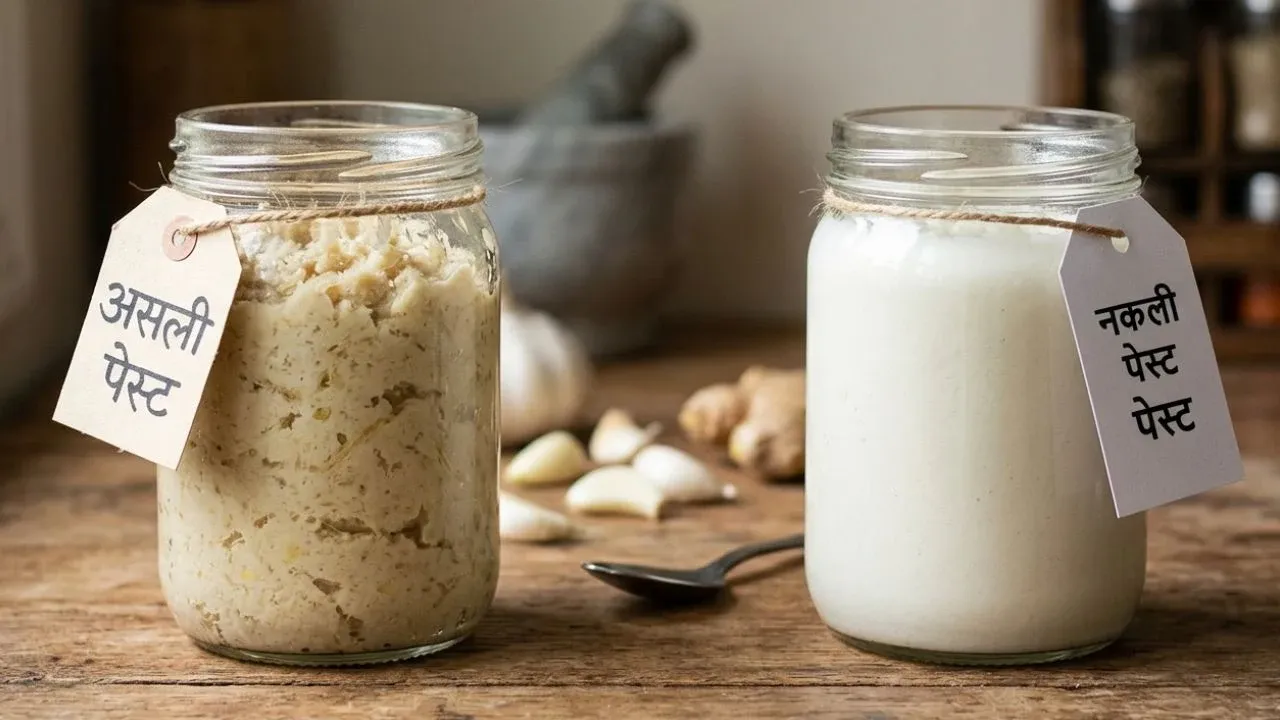

Fake vs Pure Ginger Garlic Paste: In today’s fast-paced life where it is difficult to find time for ourselves, in the race to save time, we have started choosing packaged options instead of fresh things. Many of these things are affecting our health. Today we are going to talk to you about one such packaged product, which is ginger-garlic paste. Have you ever wondered what effect this paste, which remains safe for months, is having on your health?
Fake vs Pure Ginger Garlic Paste: Easy way to identify purity
To identify the real ginger-garlic paste, take a little paste in a bowl and leave it for some time. Then observe carefully to see if water appears separately on top of the paste. If this happens, it may be a sign of adulteration. The original and pure paste never releases water and retains its texture.
Checking the texture of paste
If you want to check the ginger-garlic paste properly, then you have another method, to check its texture. Try rubbing a little paste between your fingers. The original paste is smooth, soft and easily adhesive. Whereas adulterated paste often feels thick and rough, as if flour or other adulterants have been added to it.
Identify by the color of the paste
The color also tells a lot about the purity of the paste. The color of pure ginger-garlic paste is light brown or off-white. If the paste is too white or unnaturally dark, it may have added coloring or bleaching agents.
Purity of paste from smell
You can also judge whether ginger-garlic paste is real or fake through smell. The strong, natural aroma of fresh ginger and garlic is the hallmark of the original paste. If its smell is light, faint or chemical-like, it could be a sign of adulteration. In such a situation, it is important to be careful before using.
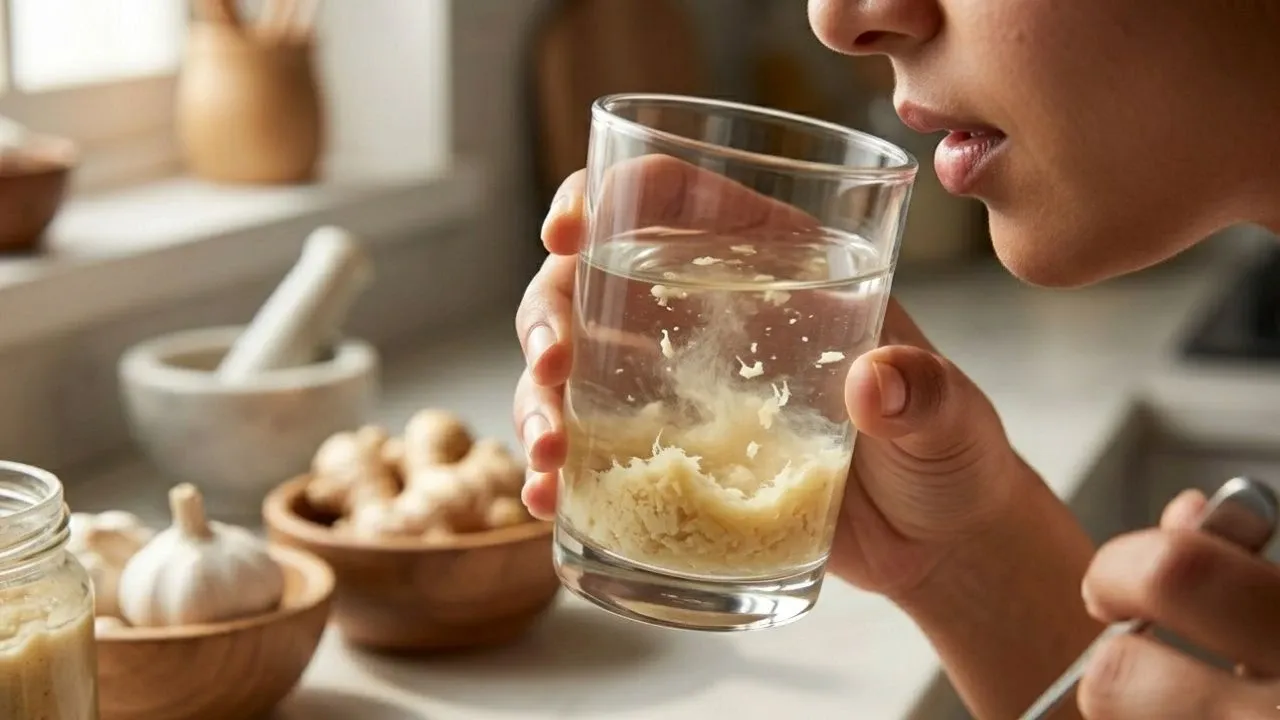
test by dissolving it in water
Another easy method is to try mixing the paste with water. Take half a glass of water and add one spoon of paste in it. Pure paste slowly dissolves in water, while adulterated paste either floats to the top or settles at the bottom.
Pay attention to packaging
It is very important to pay attention to the packaging while purchasing. Always choose paste of a trusted brand. Make sure to check the manufacturing date, expiry date and especially the FSSAI license number. If the printing on the packing is unclear or any information seems wrong to you, then it is a good option for you to avoid buying such a product.
Read More: How to take care of the vegetables grown in the kitchen garden, know what things need to be taken care of.
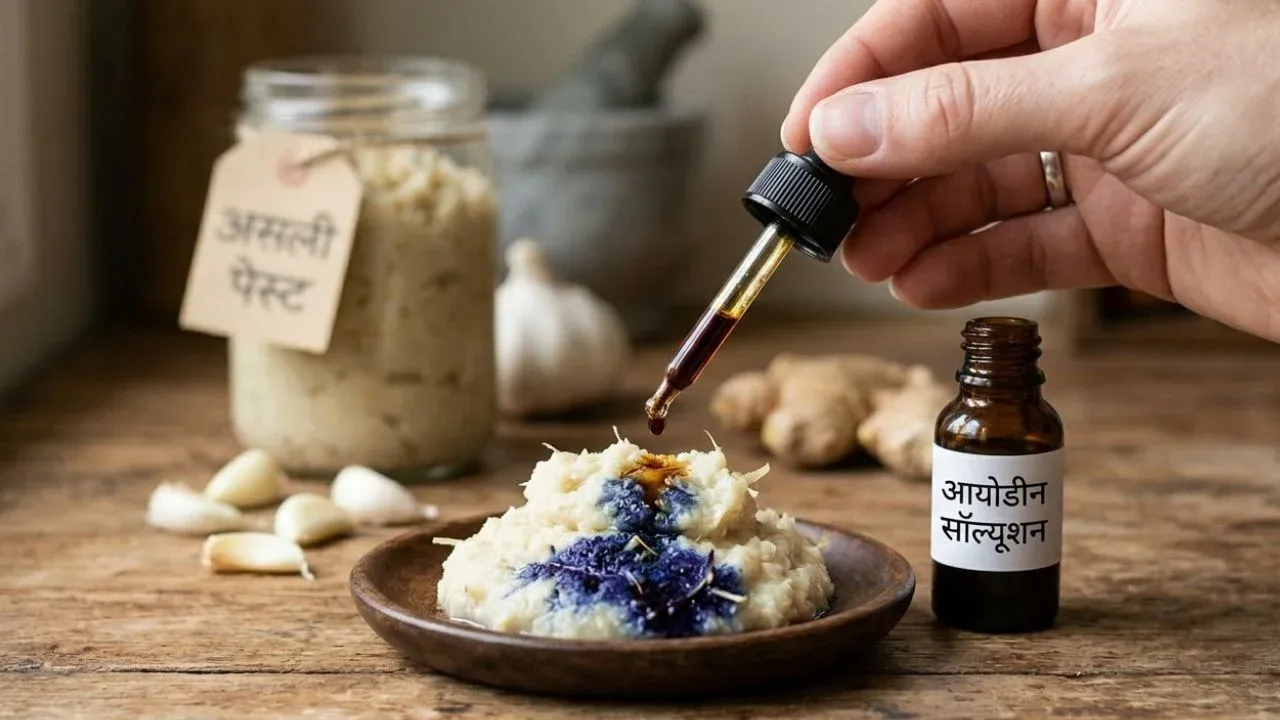
Identification of adulteration through iodine test
Flour or corn starch is often added to thicken the paste. Iodine test is most effective for its detection. In this, add two drops of iodine solution in one spoon paste. If the color of the paste turns blue or dark purple, then understand that starch has been added to it.
So these are some special measures by which you can check whether the ginger-garlic paste you have taken is real or fake.
FAQ
What is added to the market ginger-garlic paste?
Usually starch, flour, bleaching agent and extra sodium are added to it.
Why is the paste white?
Natural paste is not white. If the paste is very white, it may contain titanium dioxide or bleach.
Is adulterated paste harmful to health?
Yes, long-term consumption of adulterated and chemical paste can cause stomach problems and allergies.
Where to get iodine solution?
It is easily available at any medical store.
How long does homemade paste last?
It remains good for 15-20 days when kept in the refrigerator.

Comments are closed.