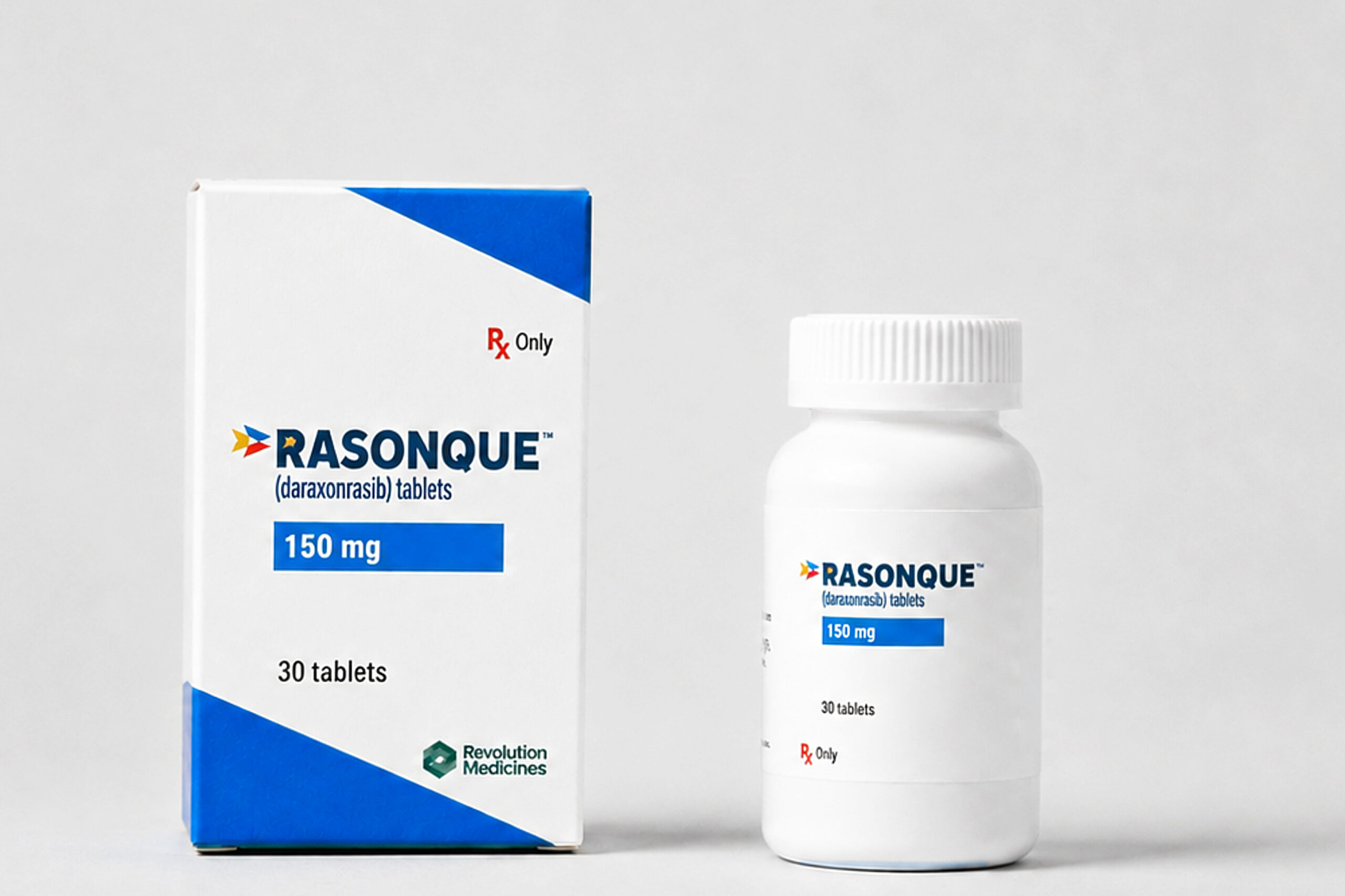
FDA Approves Landmark Pancreatic Cancer Pill That Nearly Doubled Survival/ TezzBuzz/ WASHINGTON/ J. Mansour/ The FDA granted expedited approval to daraxonrasib, the first-of-its-kind pill targeting mutated proteins that fuel most pancreatic cancers. In a 500-patient study, people receiving the drug had a median survival of 13.2 months, compared with 6.7 months for those receiving additional chemotherapy. Revolution Medicines will sell the treatment as Rasonque at an announced cost of approximately $39,800 for a one-month supply.
Quick Look
- The FDA approved daraxonrasib for advanced pancreatic cancer.
- Revolution Medicines will market the daily pill as Rasonque.
- The drug targets KRAS mutations linked to more than 90% of pancreatic cancers.
- The FDA granted approval more than six months ahead of its target date.
- A company-funded trial enrolled 500 patients with metastatic cancer.
- Participants’ tumors had stopped responding to previous treatment.
- Median survival was 13.2 months with daraxonrasib.
- Median survival was 6.7 months with additional chemotherapy.
- The treatment produced fewer serious side effects than chemotherapy.
- Reported effects included rash, mouth sores, diarrhea and digestive problems.
- A one-month supply will cost approximately $39,800.
- The drug is not a cure but represents a significant treatment advance.
- Researchers are studying similar technology in lung and other cancers.
Deep Look
FDA Approves New Pancreatic Cancer Treatment
The Food and Drug Administration approved a first-of-its-kind drug for advanced pancreatic cancer, providing patients with a treatment that significantly extended survival in a clinical study.
The agency granted expedited approval to daraxonrasib, a once-daily pill designed to block mutated proteins that drive tumor growth in more than 90% of pancreatic cancer cases.
Revolution Medicines will sell the medication under the brand name Rasonque.
The company announced that a one-month supply would cost approximately $39,800.
Trial Shows Nearly Doubled Median Survival
The company-funded clinical study included 500 patients with metastatic pancreatic cancer that had stopped responding to previous treatment.
Participants were randomly assigned to receive either daraxonrasib or additional chemotherapy.
Patients treated with the new pill lived for a median of 13.2 months. Those receiving chemotherapy had a median survival of 6.7 months.
Median survival represents the point at which half the patients in a group remained alive. It does not predict precisely how long an individual patient will live.
The study also found fewer severe side effects among patients receiving daraxonrasib than among those treated with chemotherapy.
Doctors Call Approval a Major Advance
“This is one of the most anticipated approvals I can think of,” said Dr. Andrew Coveler of the Fred Hutch Cancer Center. “This medicine is not a cure but a significant improvement.”
The distinction is important because the treatment does not eliminate pancreatic cancer. It offers some patients additional time and another therapeutic option after earlier treatments have stopped working.
Reported side effects included skin rash, mouth sores, diarrhea and other digestive problems.
Drug Targets Critical KRAS Mutations
Daraxonrasib targets mutations in the RAS family of genes, which normally help regulate cell growth.
KRAS mutations are particularly important in pancreatic cancer because they can cause cells to grow uncontrollably and fuel tumor development.
Drugmakers struggled for decades to target KRAS because the mutated proteins have a structure that makes it difficult for conventional medications to attach to them.
As a result, researchers long described KRAS as “undruggable.”
Molecular Glue Blocks Multiple KRAS Subtypes
Revolution Medicines developed technology that works like a molecular glue, allowing daraxonrasib to bind to multiple KRAS subtypes.
By attaching to the mutated proteins, the drug is designed to block signals that encourage cancer cells to grow and spread.
The treatment’s ability to address several KRAS variations distinguishes it from earlier targeted therapies developed for narrower groups of patients.
The Redwood City, California-based company is studying the same approach in other cancers, including lung cancer.
Pancreatic Cancer Remains Highly Lethal
Pancreatic cancer is one of the deadliest types of cancerlargely because it is difficult to detect before spreading to other organs.
The disease often causes few recognizable symptoms during its early stages. By the time it is diagnosed, surgery may no longer be possible and treatment options are limited.
The American Cancer Society estimates that approximately 67,000 people will be diagnosed with pancreatic cancer in the United States this year.
More than 52,000 people are expected to die from the disease, and its overall five-year survival rate is 13%.
FDA Acted Ahead of Scheduled Deadline
The FDA said it approved daraxonrasib more than six months before its target decision date.
“It is our fundamental duty to deliver more cures and meaningful treatments to patients as quickly as possible,” acting FDA Commissioner Kyle Diamantas said in a statement.
Before granting formal approval, the agency allowed certain patients to receive the medication through an “expanded access” program.
That pathway provides investigational drugs to some seriously ill patients who meet specific requirements and cannot participate in clinical trials.
Ben Sasse Helped Draw Attention to Treatment
The drug attracted national attention after former Republican Sen. Ben Sasse of Nebraska discussed his experience taking it during an appearance on CBS’ “60 Minutes.”
Sasse said he experienced less pain while receiving the treatment.
The resulting surge in public interest contributed to attention surrounding the FDA’s expanded-access decision and the anticipated approval.
An individual patient’s experience, however, does not establish how well a treatment will work for others. The primary evidence supporting approval came from the randomized clinical trial.
Researchers See Potential Beyond Pancreatic Cancer
Pancreatic cancer has not benefited from as many alternatives to chemotherapy as several other cancers.
Physicians hope the successful targeting of KRAS will encourage additional drug development for pancreatic tumors and other cancers driven by similar mutations.
Scores of experimental drugs targeting RAS-related pathways are currently under development.
“I think this has opened doors for many other companies,” said Dr. Pashtoon Kasi of City of Hope Orange County. “Downstream I think there are going to be a lot more trials looking at this approach in other tumor types.”
The approval could therefore mark both an immediate advance for eligible pancreatic cancer patients and a broader milestone in efforts to treat KRAS-driven cancers.
More on US News