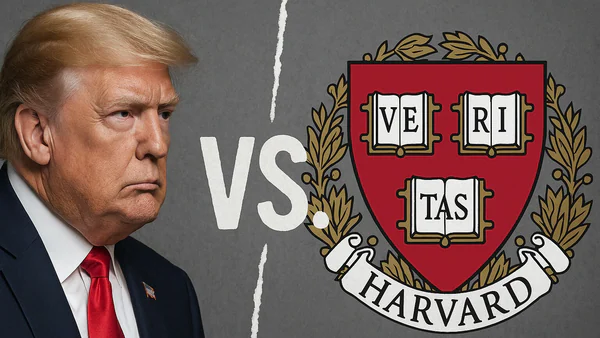
Federal Judge Dismisses Trump Administration Antisemitism Lawsuit Against Harvard/ TezzBuzz/ WASHINGTON/ J. Mansour/ A federal judge dismissed the Trump administration’s lawsuit accusing Harvard of failing to protect Jewish students from antisemitic harassment. The judge found the cited incidents too isolated and episodic to establish an ongoing violation of federal civil rights law. The case sought to recover billions in research funding and was part of a broader administration campaign against Harvard.
Quick Look
- U.S. District Judge Richard G. Stearns dismissed the lawsuit Thursday.
- The Trump administration filed the case against Harvard in March.
- Officials alleged Jewish students faced harassment, assault, stalking and spitting.
- The judge found no proof of an ongoing civil rights violation.
- Most cited incidents occurred during the 2023-24 academic year.
- The government sought to recover billions in federal research grants.
- Its claims relied on Title VI of the Civil Rights Act of 1964.
- Harvard said it has taken proactive steps to combat antisemitism.
- The administration has separately targeted Harvard’s funding and enrollment policies.
- Another judge previously ordered the restoration of more than $2.6 billion to Harvard.
Deep Look
Judge dismisses federal case against Harvard
A federal judge in Boston dismissed a Trump administration lawsuit Thursday that accused Harvard University of failing to protect Jewish students from harassment and discrimination.
U.S. District Judge Richard G. Stearns concluded that President Donald Trump’s administration had not demonstrated that Harvard was committing an ongoing violation of federal civil rights law.
The lawsuit was filed in March and sought to recover billions of dollars in federal research grants awarded to the university.
The ruling delivers another legal setback to the administration in its wide-ranging confrontation with Harvard.
Incidents found too isolated and episodic
Stearns said the federal government’s case focused primarily on incidents that occurred during the 2023-24 academic year.
Only a small number of the allegations involved events from March 2025.
The incidents were “too isolated and episodic” to establish a continuing civil rights violation at Harvard’s campus in Cambridge, Massachusetts, the judge ruled.
To sustain its case, the administration needed to show more than individual episodes of misconduct. It had to establish a persistent discriminatory environment and Harvard’s ongoing failure to respond adequately.
The court found that the government’s allegations did not meet that standard.
Harvard and White House offer no immediate response
Neither Harvard nor the White House immediately commented on Thursday’s decision.
The university had denied the administration’s broader accusation that it was indifferent to antisemitism.
Harvard has said it remains committed to protecting Jewish and Israeli students and enforcing policies against harassment and discrimination.
The administration may seek to appeal the ruling or continue pursuing other legal and administrative actions against the university.
Lawsuit followed pro-Palestinian campus demonstrations
The government’s case centered on Harvard’s response to pro-Palestinian demonstrations that disrupted the campus after Hamas attacked Israel on Oct. 7, 2023.
The protests generated heated debates over Israel’s military response in Gaza, Palestinian rights, free speech and antisemitism.
Trump administration officials accused Harvard of failing to intervene while Jewish students experienced threatening and degrading treatment.
The lawsuit said Jewish students were “harassed, physically assaulted, stalked, and spat upon.”
The government argued that Harvard’s alleged failure to stop such conduct violated federal civil rights protections.
Harvard says it acted against antisemitism
After the lawsuit was filed, Harvard said the institution was committed to the safety and well-being of its Jewish and Israeli community.
The university said it “cares deeply about members of our Jewish and Israeli community and remains committed to ensuring they are embraced, respected, and can thrive on our campus.”
Harvard also said it had strengthened its response to antisemitism and discriminatory conduct.
“Harvard has taken substantive, proactive steps to address the root causes of antisemitism and actively enforces anti-harassment and anti-discrimination rules and policies,” the statement read.
The university’s position was that campus incidents did not amount to institutional indifference or a continuing violation of federal law.
Government sought billions in research grants
The lawsuit sought to recover federal research funding awarded to Harvard since October 2023.
Those grants collectively amounted to billions of dollars.
Federal support helps finance research across medicine, science, technology and other academic fields.
The administration argued that Harvard was not entitled to retain the money because it allegedly violated Title VI of the Civil Rights Act of 1964.
Had the government prevailed, the financial consequences for the university and its research programs could have been substantial.
Case relied on Title VI
Title VI prohibits discrimination based on race, color or national origin in programs receiving federal financial assistance.
The Trump administration invoked the law to argue that Harvard failed to protect Jewish students from discriminatory harassment.
Antisemitism claims can fall under Title VI when discrimination is connected to shared ancestry or ethnic characteristics.
However, proving a violation generally requires evidence that a federally funded institution knew about severe discriminatory harassment and responded with deliberate indifference or failed to take effective corrective action.
Stearns found that the incidents presented by the government did not establish a persistent, ongoing violation.
Lawsuit part of broader conflict with Harvard
The dismissed case was one of several actions taken against Harvard since the university rejected a list of demands from the White House.
Trump returned to office in 2025 and sought major changes at Harvard involving governance, campus policy and university operations.
Harvard’s refusal triggered escalating legal, financial and administrative pressure.
The administration has attempted to reduce the university’s research support and restrict parts of its enrollment.
The confrontation has become one of the highest-profile disputes between the White House and American higher education.
Administration targets foreign student enrollment
Trump officials have separately attempted to limit Harvard’s ability to enroll international students.
Foreign students represent a significant part of Harvard’s academic community and contribute substantial tuition revenue and research work.
Restrictions on international enrollment could affect the university’s finances, global standing and ability to recruit scholars.
Harvard has challenged administration efforts that it says exceed federal authority and punish the university for resisting political demands.
Military enrollment also targeted
The administration has also sought to limit Harvard’s ability to enroll U.S. military personnel.
That effort expanded the conflict beyond research funding and foreign student participation.
Restricting military enrollment could affect service members seeking advanced education and professional development at Harvard.
The government’s multiple actions have been presented as responses to the university’s policies and leadership, while Harvard argues they constitute political retaliation.
Previous ruling restored $2.6 billion
In a separate case last year, a federal judge ordered the Trump administration to restore more than $2.6 billion in federal funding that it had cut from Harvard.
The court found that the White House had imposed unconstitutional conditions on the university’s federal support.
That ruling said the administration used antisemitism as a “smokescreen for a targeted, ideologically-motivated assault” on universities.
The decision did not conclude that concerns about antisemitism were illegitimate. Instead, it found that the administration’s funding actions were unlawfully connected to broader ideological demands.
New ruling adds to administration’s legal setbacks
Thursday’s dismissal follows the earlier decision requiring the restoration of federal funding.
Together, the rulings limit the administration’s ability to use antisemitism allegations to recover grants or impose broad financial penalties without demonstrating legally sufficient violations.
The latest decision does not prevent the federal government from investigating specific complaints or enforcing civil rights law when supported by evidence.
It does, however, reject the administration’s argument that the incidents cited in its March complaint established an ongoing institutional violation at Harvard.
Harvard conflict likely to continue
The ruling is unlikely to end the confrontation between Harvard and the Trump administration.
Other disputes remain over research money, student enrollment, military participation and the scope of federal control over university policies.
The administration could appeal Stearns’ decision or pursue different enforcement strategies.
Harvard, meanwhile, is likely to continue arguing that it can address antisemitism and protect students without accepting political conditions that interfere with institutional independence.
The legal struggle remains part of a broader national debate over campus speech, discrimination, federal funding and presidential authority over higher education.
More on US News