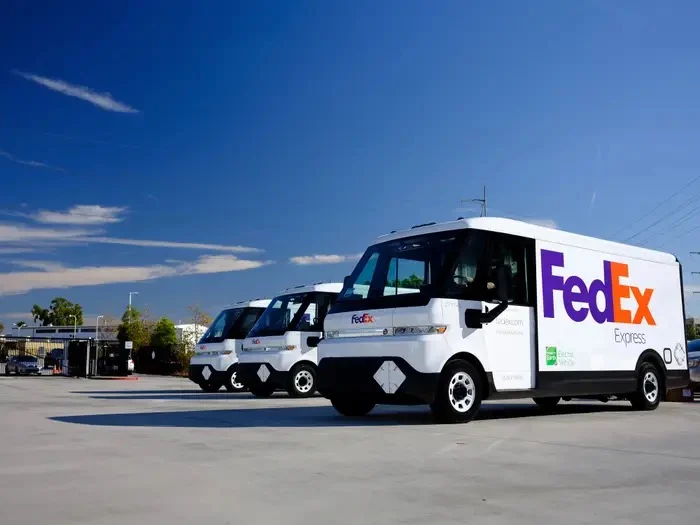
FedEx is making a major investment in electric transportation after ordering 2,000 electric trucks from American manufacturer Harbinger. The package delivery giant plans to deploy the vehicles across the United States and Canada as it works to modernize its fleet, reduce operating costs and lower emissions.
The company expects the electric trucks to deliver approximately $40 million in annual fuel savings once the vehicles are fully deployed. The order represents one of the more significant commitments to electric commercial vehicles by a major logistics company and demonstrates how fleet electrification is increasingly being driven by economics as well as environmental considerations.
For a company operating thousands of delivery vehicles every day, fuel is a substantial expense. Delivery trucks cover millions of miles annually while transporting packages between distribution centers, businesses and homes. Replacing conventional gasoline- and diesel-powered vehicles with electric alternatives could therefore produce substantial savings over time.
Harbinger’s electric trucks are designed specifically for commercial applications. Rather than adapting passenger electric vehicles for delivery purposes, the company focuses on medium-duty electric trucks intended for logistics, delivery and other commercial operations.
That distinction is important for FedEx because delivery vehicles have demanding operating requirements. They need to carry significant amounts of cargo while repeatedly stopping and starting throughout the day. They must also operate reliably across urban, suburban and regional routes.
Electric drivetrains can offer several advantages for this type of work. Electric motors provide immediate torque, allowing trucks to move heavy loads efficiently. Regenerative braking can also recover energy when a vehicle slows down, which is particularly useful for delivery routes involving frequent stops.
The vehicles could also reduce maintenance expenses over their operating lives. Electric powertrains generally contain fewer moving components than conventional internal-combustion engines. They do not require engine oil changes and have fewer mechanical systems that require routine servicing.
However, fuel savings are expected to be the most immediate financial benefit for FedEx.
The projected $40 million in annual savings would represent a significant reduction in operating expenses. The exact amount of savings will depend on several factors, including fuel and electricity prices, vehicle mileage, route characteristics, charging efficiency and how frequently the trucks are used.
The transition to electric vehicles will also require FedEx to make investments beyond the trucks themselves. A large electric fleet needs charging infrastructure capable of supplying power to hundreds or thousands of vehicles. The company must also manage charging schedules so that trucks are ready when drivers begin their routes.
For a delivery operation, downtime can be costly. Vehicles need to be available during specific operating windows, meaning charging infrastructure has to be carefully integrated into existing logistics facilities.
FedEx has already been experimenting with electric vehicles and other alternative transportation technologies. The latest order represents a move toward deploying electric trucks on a much larger scale.
The decision comes as commercial transportation companies face increasing pressure to reduce emissions. Delivery fleets are particularly visible in cities and residential areas, where large numbers of vehicles operate every day.
Electric trucks produce no tailpipe emissions while driving, potentially reducing local air pollution in communities served by FedEx. They can also operate more quietly than conventional delivery vehicles, which could be beneficial in residential neighborhoods.
The overall environmental impact of the trucks will depend partly on the electricity used to charge them. Electricity generated from renewable sources can further reduce the emissions associated with electric vehicle operation, while electricity produced from fossil fuels provides a smaller emissions advantage.
Despite those considerations, fleet electrification is becoming increasingly attractive as battery technology improves and electric vehicle manufacturers develop products specifically for commercial customers.
The logistics industry is particularly well suited to electrification because many delivery routes are relatively predictable. Vehicles often leave from a central facility, complete a series of deliveries and return to the same location. This gives fleet operators an opportunity to charge vehicles at dedicated facilities instead of relying entirely on public charging networks.

The predictable nature of delivery routes can also help companies determine which vehicles are best suited for electrification. Trucks traveling shorter daily distances may be easier to electrify than vehicles operating continuously over long distances.
FedEx’s partnership with Harbinger also highlights the growth of American electric vehicle manufacturing. Harbinger is developing commercial EVs specifically for the medium-duty truck market, an area that has historically received less attention than passenger vehicles.
Large orders from established logistics companies can help accelerate the development of this market. Manufacturers gain a significant customer base, while fleet operators receive access to vehicles designed around their specific operational needs.
The order also reflects a broader shift in how companies evaluate electric vehicles. In the early stages of fleet electrification, businesses often focused on pilot programs designed to test whether electric trucks could meet operational requirements.
Large-scale orders suggest that the technology is increasingly being considered as part of long-term fleet planning rather than simply as an experiment.
For FedEx, the financial calculation will ultimately depend on how the trucks perform in everyday operations. The company will need to balance the initial cost of the electric vehicles and charging infrastructure against fuel savings, maintenance savings and other operational benefits.
If the projected $40 million annual fuel savings are achieved, the investment could significantly reduce the long-term cost of operating the fleet.
The 2,000 electric trucks will also provide FedEx with valuable experience in managing a large commercial EV fleet across two countries. That experience could influence future vehicle purchases and determine how quickly the company expands electrification across its wider network.
The move comes at a time when delivery demand continues to grow and logistics companies are looking for ways to make their operations more efficient. Fuel prices, emissions regulations, technological improvements and customer expectations are all influencing decisions about the future of commercial transportation.
FedEx’s latest order demonstrates that electric trucks are increasingly moving into mainstream logistics operations. The company is not simply adding a small number of experimental vehicles but committing to thousands of electric trucks that will perform everyday delivery work.
If the vehicles deliver the expected savings, the financial case for electrification could become even stronger. Lower fuel consumption, potentially reduced maintenance costs and zero tailpipe emissions could make electric trucks an increasingly important part of commercial fleets.
For now, the 2,000-truck order marks a significant step in FedEx’s transition toward electric transportation. As the vehicles begin operating across the United States and Canada, their performance will offer a real-world test of how electric trucks can transform the economics of package delivery while helping one of the world’s largest logistics companies move toward a more electrified fleet.