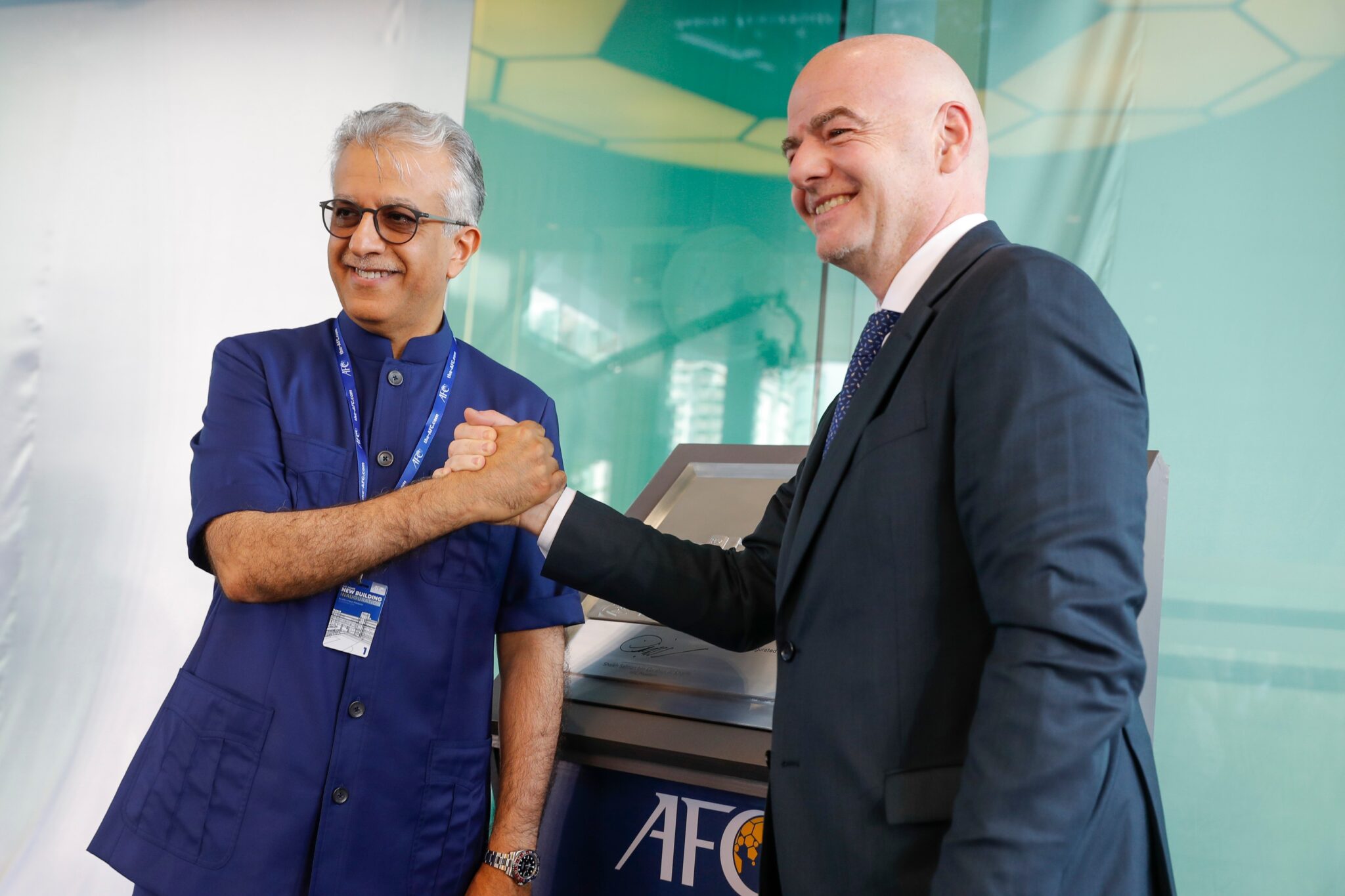
FIFA’s Infantino Abandons World Cup $20B Private Equity Plan After Global Backlash/ TezzBuzz/ WASHINGTON/ J. Mansour/ FIFA President Gianni Infantino abandoned his proposal to sell private investors a stake in a $20 billion company controlling World Cup commercial operations. The reversal followed boycott threats from UEFA members, opposition from Asian and North American soccer bodies and criticism from senior FIFA officials. The failed proposal could weaken Infantino’s position before the deadline for candidates to enter FIFA’s next presidential election.
Quick Look
- Infantino confirmed that the private equity proposal “will not proceed.”
- The plan called for a new FIFA commercial subsidiary valued at $20 billion.
- Private investors would have owned a 20% stake.
- The proposed anchor investor was a firm founded by Joshua Kushner.
- UEFA’s 55 member associations threatened to boycott FIFA competitions.
- CONCACAF and the Asian Football Confederation also opposed the plan.
- Senior FIFA adviser Carlos Cordeiro resigned in protest.
- FIFA Chief Operating Officer Kevin Lamour said staff had been deceived.
- The Women’s Under-20 World Cup begins Sept. 5 in Poland.
- FIFA’s presidential candidate deadline is Nov. 18.
- The presidential election will take place four months later in Rabat, Morocco.
- Infantino is eligible to seek one more four-year term.

Deep Look
Infantino withdraws controversial investment proposal
GENEVA — FIFA President Gianni Infantino has abandoned a proposal to sell private investors a stake in the commercial operations behind the World Cup following widespread resistance across international soccer.
Infantino announced the reversal early Saturday after governing bodies in Europe, North America and Asia opposed the plan.
The pressure intensified after one of Infantino’s senior advisers resigned and FIFA’s chief operating officer publicly accused the organization’s president of concealing the project from staff.
“Having listened carefully to all the views, it has become clear that the project has created divisions of a nature that, regardless of the level of support, are no longer in the interest of the objective set out in the first place,” Infantino said. “Our purpose has always been — and will always be — to unite and improve. As a result, this proposal will not proceed.”
Plan called for a $20 billion FIFA subsidiary
Infantino proposed transferring FIFA’s commercial businesses into a new company valued at approximately $20 billion.
The subsidiary would have managed commercial operations connected to the men’s and women’s World Cups and Club World Cups.
Private investors would have acquired a 20% stake in the company, giving them a financial interest in revenue generated by some of international soccer’s most valuable competitions.
FIFA identified the proposed “anchor investor” as a New York investment firm created by Joshua Kushner, the younger brother of Jared Kushner, who is U.S. President Donald Trump’s son-in-law.
The proposal generated immediate controversy following its announcement Tuesday.
UEFA threatened boycott of FIFA competitions
UEFA’s 55 national member associations voted Thursday to boycott the World Cup and all other FIFA competitions if the private investment proposal moved forward.
The unified European opposition created the possibility of major international tournaments taking place without many of soccer’s most successful and commercially valuable national teams.
“Some things are simply too important to sell,” UEFA said in a statement. “The FIFA World Cup belongs to football. It always will. And so long as Europe has a voice, it will never be for sale.”
The threatened boycott would have covered men’s, women’s and youth competitions organized by FIFA.
Asian and North American governing bodies oppose plan
Opposition extended beyond Europe as CONCACAF, which governs soccer in North America, Central America and the Caribbean, rejected the proposal.
The Asian Football Confederation also announced its opposition.
Resistance from three major continental governing bodies severely limited Infantino’s ability to secure international support for the commercial restructuring.
It also challenged FIFA’s efforts to present the proposal as a way to generate additional funding for its 211 national member associations.
Senior Infantino adviser resigns in protest
Carlos Cordeiro, a senior adviser to Infantino, resigned Friday because of the proposed transaction.
Cordeiro previously worked as a Goldman Sachs banker and served as president of the U.S. Soccer Federation. He also represented FIFA on the White House Task Force for the World Cup.
“I cannot stand by while FIFA considers selling a stake in the World Cup,” Cordeiro said in his resignation statement.
He encouraged other senior FIFA employees to publicly express their concerns.
Cordeiro announced his resignation only hours after FIFA responded to criticism by insisting: “Nobody is selling football.”
FIFA executive says staff were deceived
FIFA Chief Operating Officer Kevin Lamour intensified the internal criticism by saying employees had been deceived because Infantino was not open about the months-long preparation of the private investment proposal.
Lamour, a longtime colleague of Infantino at FIFA and UEFA, told The Associated Press that the plan must not move forward.
“It is the project of one person,” Lamour wrote. “Not only must this project not go ahead … but the time has now come for football political leaders to ask themselves the right questions and make the right decisions.”
Lamour did not resign but indicated that he was willing to risk his position by speaking publicly.
The intervention from one of FIFA’s most senior administrators showed that opposition had spread beyond national federations and into the organization’s leadership.
Upcoming tournament faced immediate disruption
The next scheduled FIFA competition is the Women’s Under-20 World Cup, which begins Sept. 5 in Poland.
UEFA members had said they would boycott the tournament if Infantino’s proposal received approval.
Because Poland is a UEFA member and the host nation, the threatened boycott created an immediate organizational problem for FIFA.
Withdrawing the proposal removes that specific cause of the threatened boycott, although the dispute may leave lasting tensions between Infantino, European federations and FIFA officials.
Failed proposal could weaken Infantino
The controversy could create political consequences for Infantino as FIFA prepares for its next presidential election.
He was reelected without opposition in 2019 and 2023 and is permitted to serve one more four-year term under FIFA’s rules.
Potential challengers must enter the presidential contest by Nov. 18. Voting is scheduled four months later in Rabat, Morocco, where FIFA maintains its African headquarters.
Before the private equity controversy, Infantino appeared likely to secure another term despite longstanding concerns about his leadership style and previous attempts to advance unpopular reforms.
The collapse of the investment proposal, combined with public criticism from Cordeiro and Lamour, could encourage opposition before the candidate deadline.
FIFA faces questions about internal governance
Although Infantino has withdrawn the proposal, FIFA may continue facing questions about how it was developed and why senior employees said they were excluded from the process.
Critics are also likely to seek more information about the selection of the proposed investor and the financial terms under which private equity firms would have received a permanent interest in World Cup revenue.
The dispute highlighted a broader conflict over whether FIFA’s most important competitions should remain entirely under the control of soccer’s governing institutions or be partially opened to outside investors.
For now, Infantino’s retreat ends the immediate threat of a European boycott — but leaves his authority and FIFA’s internal governance under increased scrutiny.
More on Sports