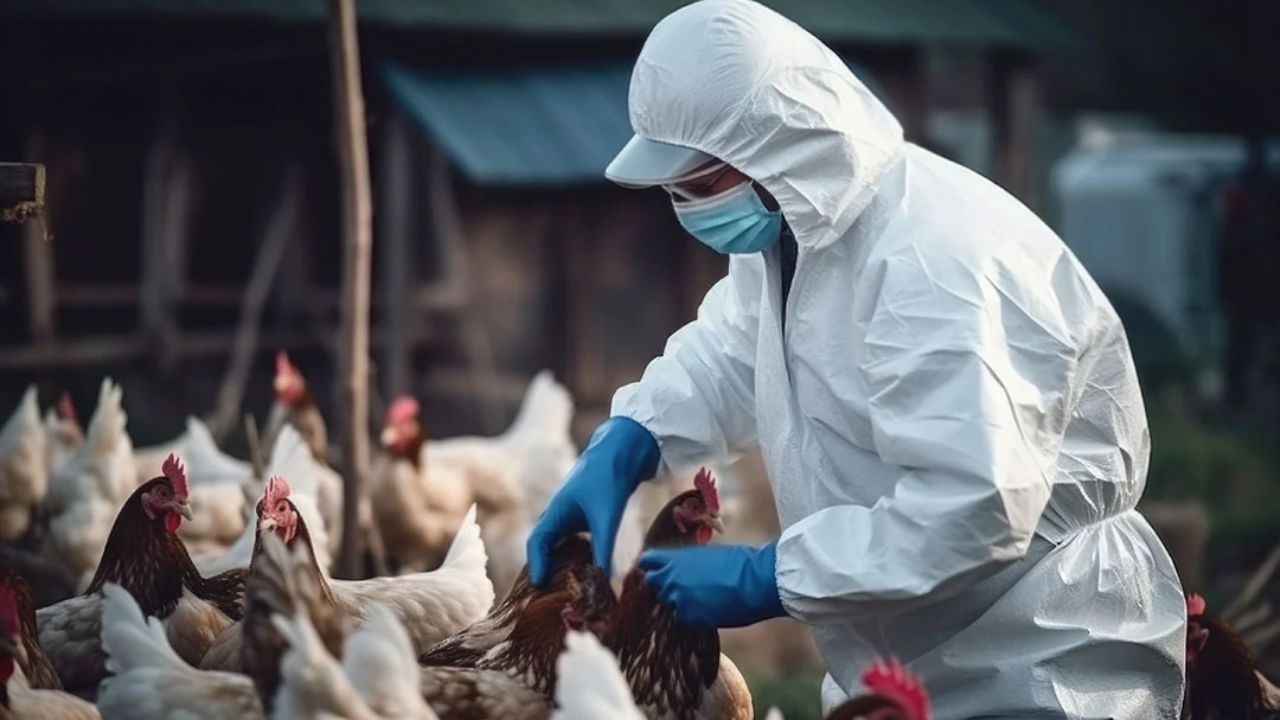
Bhopal: Amid the growing threat of bird flu and the significant economic losses faced by the poultry industry, India has achieved a major scientific breakthrough. For the first time in the country, an indigenous vaccine has been developed against the dangerous H5N1 bird flu virus. This vaccine will help protect chickens from avian influenza. Union Minister for Agriculture and Farmers’ Welfare, Shivraj Singh Chouhan, will dedicate it to the nation in Bhopal on 20 November.
The vaccine was developed by the National Institute of High Security Animal Diseases (NIHSAD), a facility under the Indian Council of Agricultural Research (ICAR) based in Bhopal. According to an official statement from the Ministry of Agriculture and Farmers’ Welfare, this is India's first indigenous vaccine for chickens against the highly pathogenic avian influenza (HPAI) H5N1 virus (clade 2.3.2.1A). It is being hailed as a significant achievement for the country's animal health security.
Disease kills 50,000 chickens in Tamil Nadu ahead of Diwali
Relief for poultry farmers from bird flu
HPAI, or avian influenza—commonly known as bird flu—is a serious infectious disease that affects chickens and other birds. The mortality rate among birds infected with the virus can reach up to 100 percent. When an outbreak occurs, large numbers of infected birds must be culled, and trade restrictions are often imposed.
This directly impacts the income of poultry farmers, their businesses, and the market prices of eggs and meat. In this context, the development of an indigenous vaccine comes as a welcome relief for the poultry sector.
Over 500 outbreaks recorded
Bird flu was first detected in India in 2006. Since then, more than 500 outbreaks—involving both H5N1 and H5N8 subtypes—have been recorded. According to data, the country suffered direct and indirect losses of approximately Rs 2,200 to Rs 3,000 crore due to bird flu in 2006. If the disease spreads uncontrollably, there is a risk that more than 20 percent of the country's poultry population could be affected and lost. This could impact India's GDP growth by up to 1.5 percent. An outbreak in Manipur resulted in a loss equivalent to 0.5 percent of that state’s GDP.
Govt mandates QR codes for vaccines, antimicrobials, cancer drugs to curb counterfeit medicines
A serious health concern for humans
Bird flu is not limited to animal health; it is also a cause for concern for humans. According to the World Health Organization (WHO), since 2003, 1,003 human cases of H5N1 infection have been reported across 25 countries—including India—resulting in 479 deaths.
The vaccine dedication ceremony, scheduled for November 20, is considered significant in terms of India’s indigenous veterinary research capabilities and the protection of the poultry sector.