
The agreement was signed in Hanoi on Tuesday during a visit to Vietnam by U.K. Minister of State for Trade Lord Sarwar and his delegation.
Tam Anh-VNVC is the first Vietnamese private healthcare enterprise selected by UKEF for a cooperation agreement on British government-backed financial guarantees. The deal builds on partnerships with major British pharmaceutical and medical equipment companies, worth nearly $1 billion between 2017 and 2026.
From 2024 to 2026, the healthcare group imported approximately $485.2 million worth of British goods and equipment, including $474 million in vaccines, pharmaceuticals, and medical consumables, and more than $11.1 million in medical equipment. Vaccines accounted for the largest share, at around $455.5 million, from suppliers such as GSK and AstraZeneca.
Under UKEF’s financing mechanisms, eligible Tam Anh-VNVC projects could receive guarantees or financing covering up to 85% of the contract value, which would provide additional funding for medical equipment, technology, pharmaceuticals, and next-generation vaccines.
|
British Ambassador to Vietnam Iain Frew (L) and Ngo Chi Dung (R), chairman of Tam Anh General Hospital Group and VNVC Vaccination System, at the signing ceremony. Photo courtesy of Tam Anh |
Lord Sarwar described Tam Anh as a prominent partner in U.K.-Vietnam cooperation across academia, life sciences, and healthcare.
He said the agreement would expand business collaboration, promote medical technology, and improve healthcare services and quality of life for Vietnamese people.
 |
|
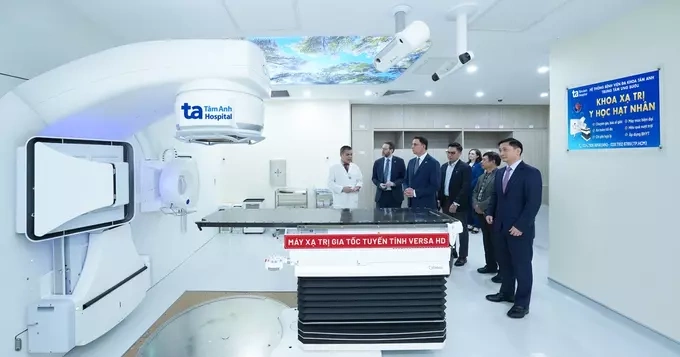
UKEF representatives view the VERSA HD linear accelerator radiotherapy system used to treat cancer patients at Tam Anh General Hospital. Photo courtesy of the hospital |
UKEF supports British exporters through loan guarantees, direct lending, and export credit insurance, while helping overseas buyers finance purchases of British goods and services.
In the 2024-2025 financial year, the agency provided approximately £14.5 billion ($19 billion) in loans, guarantees, and insurance, supporting 667 British businesses. In Vietnam, UKEF has announced financing capacity of at least £5 billion, according to Tam Anh-VNVC.
In October 2025, during Party General Secretary To Lam’s visit to the U.K., UKEF and Vietnam’s Ministry of Finance signed an MoU to expand cooperation on financing and export credit for the country’s long-term investment and development needs.
Ngo Chi Dung, chairman of Tam Anh General Hospital Group and VNVC Vaccination System, said UKEF had recognized the potential of the group’s existing and planned projects in healthcare infrastructure and advanced technology.
He said the partnership would diversify financing sources and improve access to international capital, particularly for large-scale projects requiring substantial long-term investment. It would also create opportunities for British companies to supply medical equipment and pharmaceuticals and transfer technology to Vietnam.
 |
|
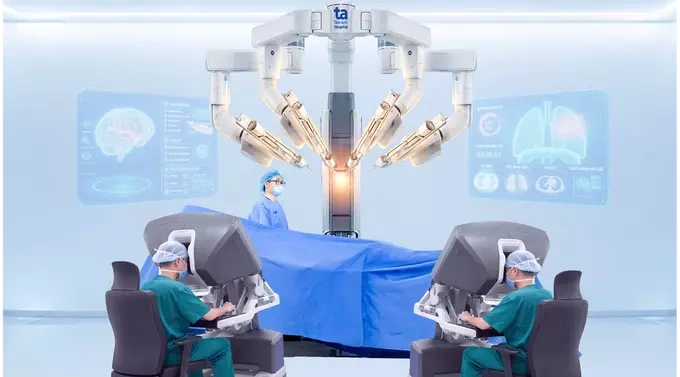
Two Da Vinci Xi robotic surgical systems perform procedures at Tam Anh General Hospital. Photo courtesy of the hospital |
The financing is expected to support plans to expand high-tech hospitals, develop specialized medical services, and grow the vaccination center network, as well as research, development, and domestic production of next-generation vaccines.
VNVC is investing nearly VND3 trillion ($116.35 million) in a vaccine and biological products manufacturing plant in Tay Ninh Province. Covering more than 26,000 square meters, the facility is designed to produce around 120 million doses annually and meet international standards, including EU-GMP, WHO-GMP, and U.S. Food and Drug Administration requirements.
 |
|
VNVC’s vaccine and biological products manufacturing plant in Tay Ninh Province. Photo courtesy of VNVC |
The agreement comes as Vietnam and the U.K. deepen ties under their Comprehensive Strategic Partnership, which prioritizes cooperation in research, workforce training, technology development, and the commercialization of research results.
Tam Anh-VNVC expects the partnership to accelerate the adoption of advanced diagnostic and treatment technologies and strengthen domestic vaccine research and manufacturing, improving access to international medical advances while gradually reducing reliance on imported healthcare technologies and products.