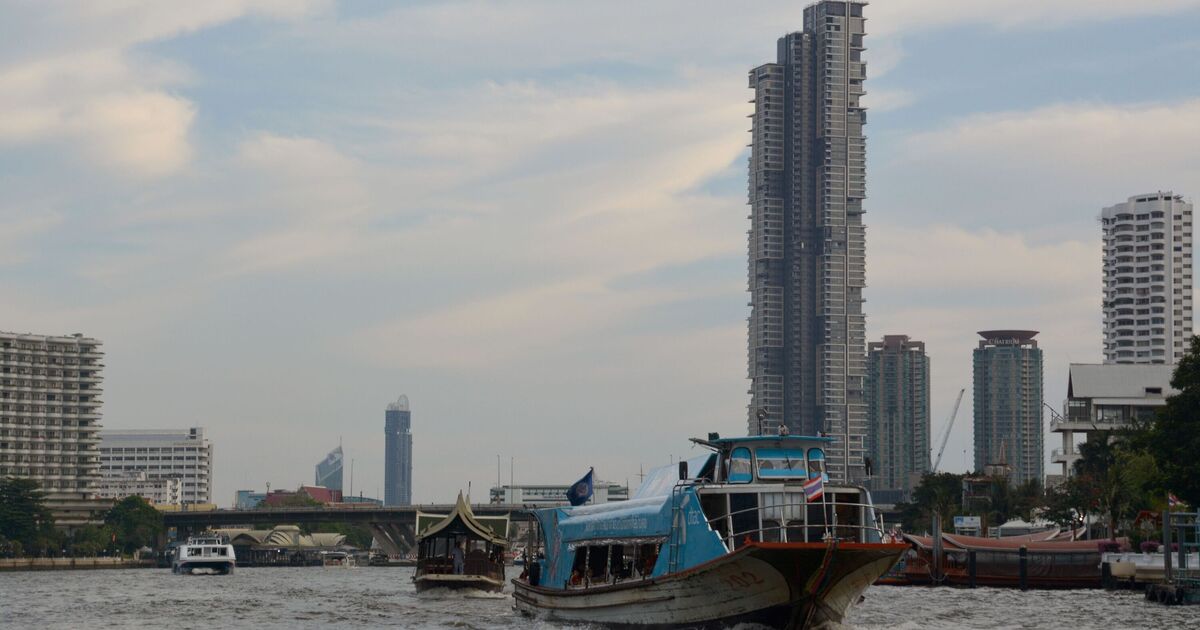
Bangkok is not a city normally associated with lowering your heart rate.
The roads throb with tuk-tuks and motorbikes. Woks spit and smoke on pavements. In Chinatown, lobsters and fish are cooked inches from passing traffic while makeshift stalls sell everything from jewellery and handbags to raincoats.
Then there are the smells – chilli, garlic, charcoal and incense – and the extraordinary flashes of gold as Buddhist temples appear between glass-and-steel skyscrapers.
It is noisy, colourful and gloriously overwhelming.
Then my car turns into the long, tree-lined drive of the Four Seasons Hotel Bangkok at Chao Phraya River – and suddenly everything stops.
Inside, soaring ceilings create an extraordinary sense of space. Giant polished black stones rise from water. Maidenhair ferns and flowering lilies grow among the dark pools, orchids spill from enormous arrangements and mature trees appear to grow from islands.
Water courtyards filled with lillies (Image: Archie Williams )

Four Seasons Hotel overlooks ‘River of Kings’ (Image: Barley Whitley)
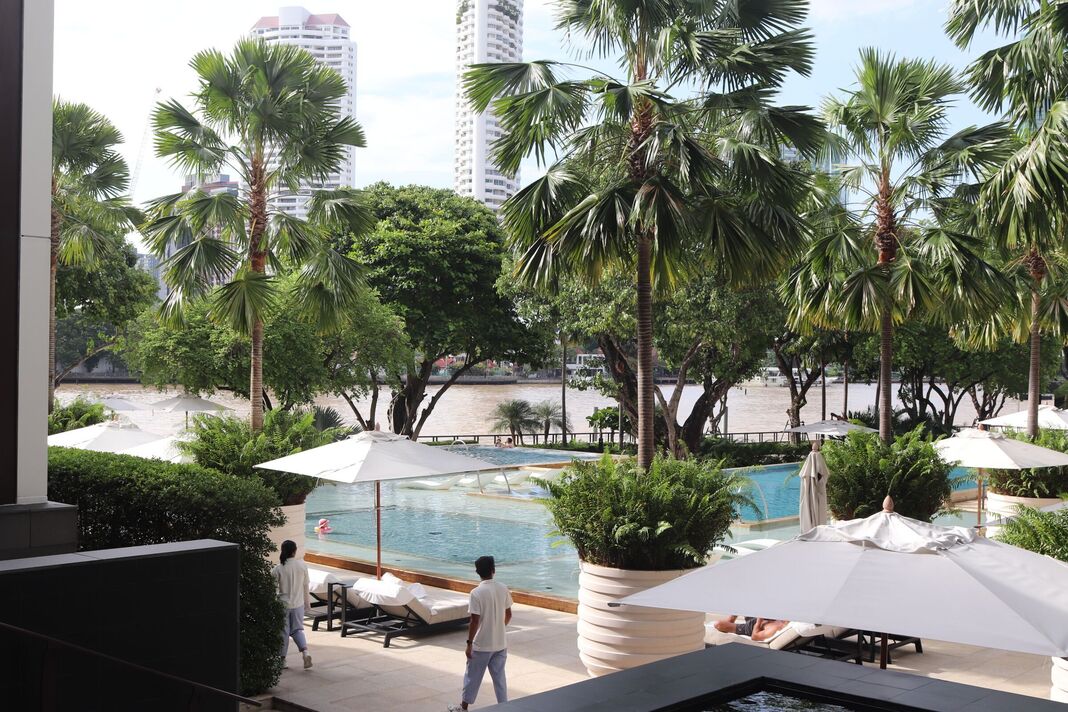
Riverside pool at Four Seasons Bangkok (Image: Archie Williams)
And beyond it all is the Chao Phraya – known as the River of Kings.
The contrast could hardly be greater.
Yet it perfectly captures what is happening in Bangkok.
This famously frenetic city is changing. A younger, creative Bangkok is emerging around its ancient one, embracing contemporary art, ambitious food and a booming fitness and wellness culture.
Crucially, it hasn’t replaced old Bangkok. The two sit side by side.
And British travellers appear unable to get enough of it.
More than a million Britons visited Thailand last year, while Bangkok itself attracted more than 30 million international visitors in 2025, making it the world’s most visited city.
Even British royalty has been dropping in.
In July this year, the Princess Royal and her husband, Sir Tim Laurence, attended a reception at the Four Seasons hosted by the British Ambassador to celebrate King Charles III’s official birthday.
And last year, The White Lotus star Patrick Schwarzenegger joined fellow cast members at the hotel for the lavish Bankok premier afterparty.

Patrick Schwarzenegger parties at Four Seasons Bangkok (Image: Getty)

Princess Anne visited The Four Seasons last July (Image: Getty)
One of the most interesting places to see Bangkok’s transformation is here, along the Chao Phraya river.
The Four Seasons opened in 2020 in Bangkok’s Creative District, an area of galleries, restaurants and creative businesses clustered around historic Charoen Krung Road.
Designed by Jean-Michel Gathy, the 299-room hotel took several years to build on a former riverside trading site.
It feels less like a city hotel than an urban resort.
Courtyards flow into one another, filled with water plants and flowers. The pools are shallow, but black tiles beneath make them appear almost ink-dark and far deeper than they really are. Giant polished black stones rise from the surface as the water seems to run towards the Chao Phraya beyond.
Two huge fig trees rise beside the lobby, while orchids and ferns soften the monumental architecture.
Even the walls take their inspiration from the movement of the river and giant copper plates above echo Bangkok sunsets.
It is spectacular without being stuffed with things. Furniture has room to breathe. Ceilings soar as high as 15 metres.
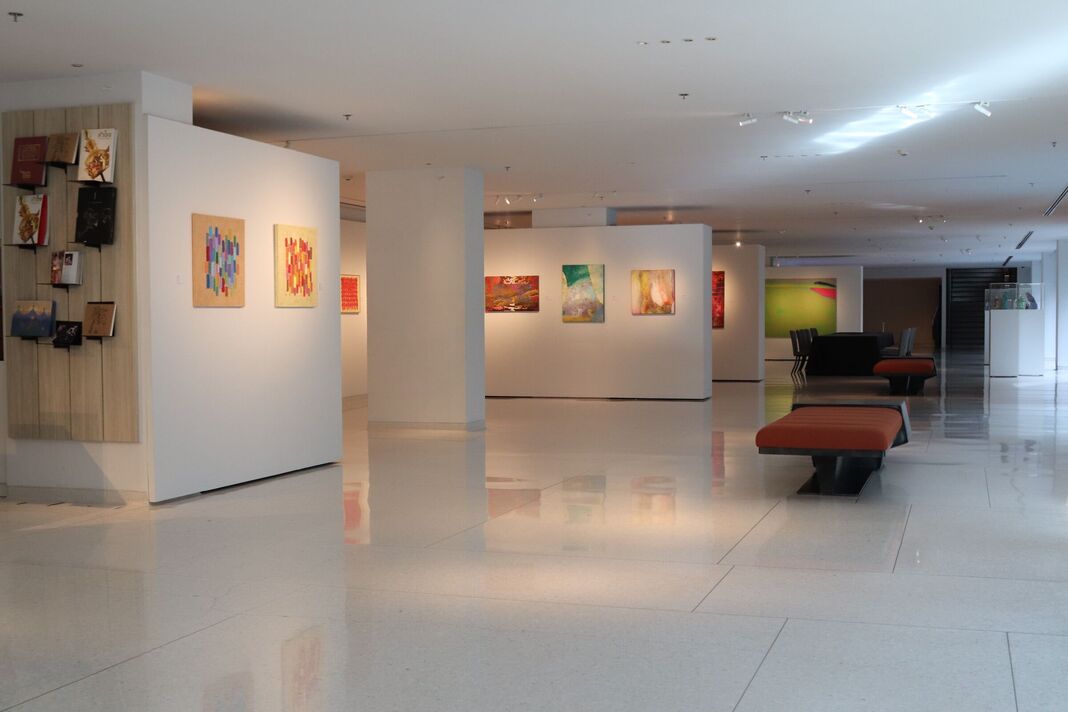
Four Seasons gallery (Image: Barley Whitley)
Thai culture runs throughout the hotel too.
Local artists were commissioned to create works including enormous sculpted elephants stretching towards the ceiling, while a contemporary gallery displays changing exhibitions by Thai artists.
Guests can go further, learning Thai calligraphy, tea blending and Thai dance, trying Muay Thai in a professional ring or making a traditional jasmine garland – painstakingly threading tiny flowers into an offering traditionally given as a mark of respect to Buddha, elders or your mother.
It is part of another change sweeping Bangkok: wellness has become cool.
In the city’s parks, thousands of people run, exercise and work out together. Fitness here increasingly feels social – a way to meet and connect as much as keep fit.
At the Four Seasons, that translates into a huge Urban Wellness Centre offering yoga, Thai treatments, steam rooms and vitality pools alongside more unusual experiences including sound healing and ice baths.

Lobby – Four Seasons (Image: supplied)
But Bangkok’s greatest tonic remains Bangkok itself.
And the river reveals a side of the city that is almost impossible to see from the road.
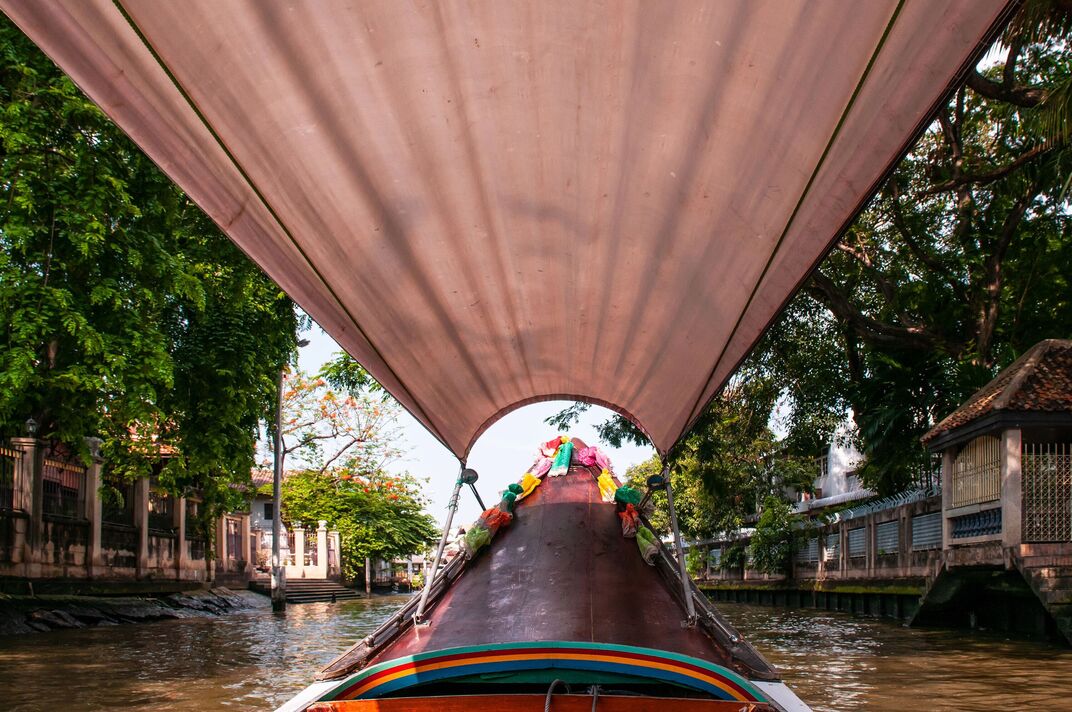
Climb aboard a traditional long-tail boat and you can disappear into Bangkok’s canals, where the skyscrapers gave way to another world.
Tiny wooden houses stand crammed together on stilts, some seemingly on the verge of tumbling into the water. Fishermen work from the banks, children swim and huge catfish move beneath the surface like grey shadows.
It’s like a whole city built on water.
Sitting behind it is an enormous golden Buddha – another reminder that in Bangkok, you can turn a corner and apparently travel backwards several centuries.

Water feature – Four Seasons, Bangkok (Image: supplied)
Yet just a short boat ride away Song Wat Road is emerging as one of the trendiest pockets of the city. Time Out named it one of the 40 coolest neighbourhoods in the world.
Once an important trading quarter, its old Chinese shophouses and traditional businesses now rub shoulders with independent coffee bars, galleries, restaurants and young creative businesses.
It is the new Bangkok in miniature: old and young, traditional and hip, all slightly mismatched and somehow working.
At one end of the road, even the workshops have become art. I watched welders turn discarded car and motorbike parts into enormous robot sculptures.
Back at the hotel, the complimentary shuttle boat carries guests along the river and connects with the city’s transport network, making the Chao Phraya one of the best ways to get around.
I headed for the famous flower market, where blooms seemed to stretch as far as the eye could see, before wandering past gilded temples and towards Chinatown.
Getting around on land is remarkably cheap too. A 20-minute Grab – Thailand’s answer to Uber – can cost little more than £4.

Spa room at Four Seasons (Image: Barley Whitley)
Back at the Four Seasons Bankok’s food scene coninues without the need to venture out. Brasserie Palmier is a French brasserie surrounded by tropical greenery and water, while Riva del Fiume serves handmade pasta and wood-fired Neapolitan pizza beside the river.
Behind a vast black entrance, Yu Ting Yuan serves high-end Cantonese food, while BKK Social Club has become a destination in its own right, bringing the glamour of different cities – this week Mexico – to Bangkok with cocktails, food and a cigar courtyard.
Then there is Cafe Madeleine.
This riverside patisserie is gloriously, unapologetically pink – from boxes of sweets to a pink bicycle with a basket overflowing with flowers.
For a moment I felt like Margot Robbie had wandered into Bangkok and brought the Barbie set with her.

Riverside pattiserie – Four Seasons, Bangkok (Image: Barley Whitley)

Pink themed riverside patisserie – Four Seasons (Image: Barley Whitley)
Even the hotel’s ballroom manages theatre. Crystal droplets cover the ceiling like diamond rain, while huge curtains pull back to reveal the river.
It would be easy for all this luxury to feel disconnected from Bangkok.
The river binds everything together.
From the hotel’s tranquil pools, you can be back among temples, flower sellers and smoking street-food stalls within minutes. Look one way and there is a centuries-old Buddhist shrine; look another and a skyscraper disappears into the clouds.
Perhaps that’s the secret of the new Bangkok.
It hasn’t sanitised the old city or swept it away.
Instead, ancient and modern, chaotic and calm, spiritual and spectacularly indulgent have somehow learned to live alongside each other.
Bangkok has always been thrilling.
Who knew it could be relaxing too?
Getty (Image: Getty)