CCommercial aviation has spent decades building a sophisticated system for reconstructing what happens during an accident or serious incident.
There are cockpit voice recorders. There are flight data recorders. Aircraft systems record hundreds of parameters, while air traffic control keeps its own records, and investigators can examine maintenance history, radar data and witness accounts.
Yet there is one thing that is usually missing: a visual record of what the pilots were actually doing. The incident aboard flydubai flight FZ1073 has once again highlighted that gap.
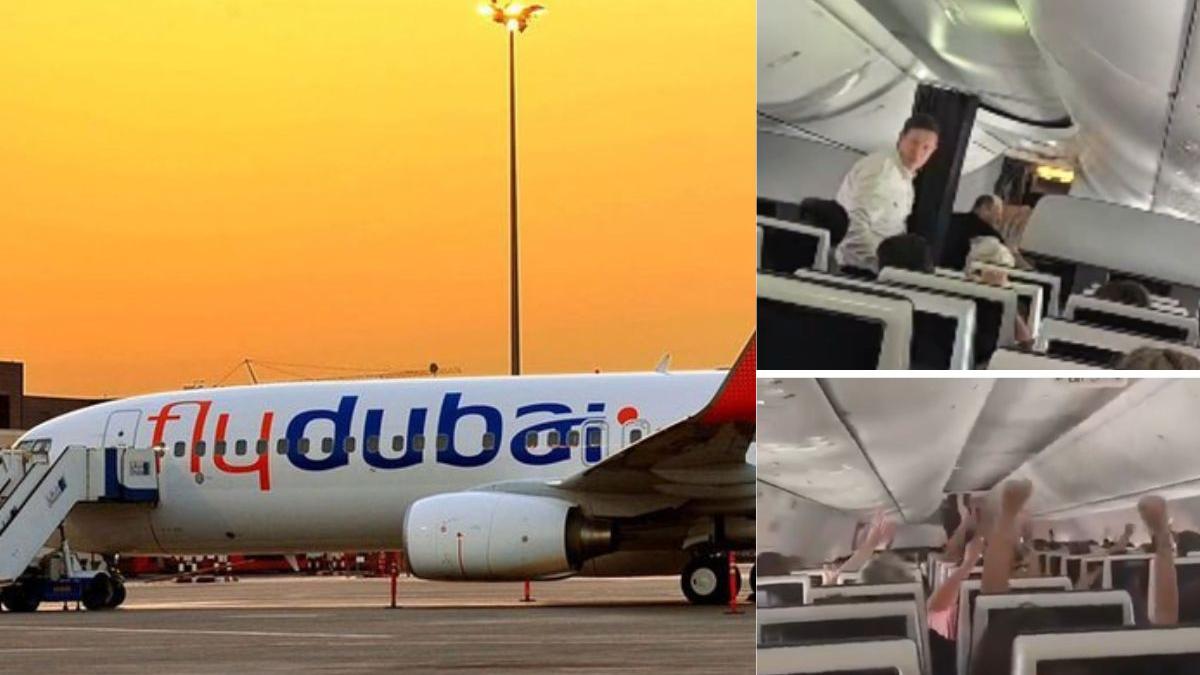
The Boeing 737 operating from Dubai to Tel Aviv experienced a violent cockpit incident on September 30. The aircraft then went through a rapid loss of altitude before eventually making an emergency landing at Tabuk in Saudi Arabia. Israeli officials have said one pilot attacked the other, while the exact sequence and motive remain under investigation. flydubai has urged people not to speculate while authorities establish the facts.
Also read From ‘What happened?’ to cheers: Inside videos capture FlyDubai FZ1073 ordeal
For investigators, the case raises a straightforward question: what if there had been a camera recording the cockpit?
What the flight recorders tell investigators
Modern aircraft are already equipped with powerful recording systems. The cockpit voice recorder captures the sounds and conversations inside the flight deck. The flight data recorder captures aircraft performance and system information, including parameters such as altitude, speed and control inputs.
Together, these devices can provide an extraordinary reconstruction of an aircraft’s final minutes. The FAA describes the cockpit voice recorder as a system intended to record the cockpit’s aural environment and communications between flight crew members, helping investigators understand accidents and incidents.
Also read Who is Smit Machhar? Indian pilot at center of Flydubai flight scare
But audio has a limitation. It can tell investigators what was said and heard. Data can tell them what the aircraft was doing.
Neither necessarily tells them exactly what a person was doing at a particular moment. That difference can become critical during a cockpit confrontation.
Missing picture
Imagine investigators listening to two pilots arguing. The voice recorder may capture the words. The flight data recorder may show the aircraft suddenly changing altitude.
But investigators may still have to determine who moved towards which control, who operated a particular switch, who was injured first, who attempted to regain control and how other people entered the flight deck. Witnesses can provide some of those answers.
But witnesses can also be frightened, injured or focused on surviving rather than remembering every detail. A cockpit image recorder could potentially provide another independent source of evidence. That is why the idea has repeatedly returned to the aviation-safety debate.
Not a new idea
The technology is not new. ICAO’s flight-recorder framework recognizes airborne image recorders as one category of flight recording. Importantly, international provisions adopted for image recording have focused on the flight crew-machine interface, including information displayed to the crew and the operation of switches and selectors, rather than requiring a full visual recording of the pilots. That distinction is important.
A camera recording aircraft displays and controls is very different from a camera continuously recording the people sitting in the cockpit. The latter immediately raises questions about privacy, employment rights, data protection and how such recordings could be used. And those questions have been one reason the debate has remained complicated.
Camera could matter in FZ1073
The flydubai incident is an unusual case because the central question is not simply what the aircraft’s systems did. It is about human actions inside the cockpit.
According to Reuters, passengers described a violent struggle and a rapid descent of more than 14,000 feet in about 30 seconds. The report said the captain was injured and passengers and crew intervened before the aircraft was eventually brought under control. The precise sequence will have to be established by investigators.
A cockpit camera would not automatically answer every question. But it could potentially show the physical sequence of events directly. That could help investigators distinguish between different accounts and reconstruct the timeline with greater precision. It could also help investigators understand how the aircraft was recovered after the confrontation.
More cameras do not mean more safety
This is where the debate becomes more complicated. A camera inside the cockpit would create another sensitive stream of information about pilots.
Pilots already work in an environment where their conversations, aircraft inputs and operational decisions can be recorded and later examined after serious incidents. Adding continuous video would create an even more detailed record of their behavior.
Pilot organizations and privacy advocates have therefore raised concerns about how cockpit images could be used, who would have access to them and whether recordings could eventually be used for purposes beyond accident investigation. The question is not simply whether cameras can record.
The bigger question is who controls the recording and under what rules?
Safety evidence or surveillance?
This is perhaps the most important part of the debate. A cockpit camera designed purely as an accident-investigation tool would need strong safeguards.
The recording would ideally remain protected and be accessed only under clearly defined circumstances, such as a serious accident or incident. There would also need to be rules governing storage, access, copying, publication and destruction.
The aviation industry has already faced similar questions with cockpit voice recordings.
In the United States, for example, recent legislation requiring longer-duration cockpit voice recording has also included protections concerning the use and disclosure of that data. The FAA’s current guidance recognizes both required and voluntary cockpit voice recorder installations. The experience shows that recording technology and data-protection rules have to develop together.
Technology is ready
Another reason the debate continues is that the technical problem is no longer particularly difficult. Aviation already has crash-protected recording systems capable of surviving extreme accident conditions.
The challenge is less about whether a camera can be installed and more about determining what exactly it should record. Should it record the entire cockpit, focus on instruments and displays, record the pilots, and should it record continuously or only during certain phases of flight?
Should the system have its own independent power source, and should the data be protected after an accident?
These are regulatory and policy questions as much as engineering questions.
The FAA’s investigative technology recommendations have previously included crash-protected cockpit image recording systems for aircraft that already require cockpit voice and flight data recorders.
If cockpit image recording becomes more widely adopted, it would create another aircraft system requiring certification, installation, inspection, maintenance and eventual replacement.
Airlines and MRO organizations would have to consider camera positioning, wiring, power supplies, data storage units, crash protection and system health monitoring.
Installation could also become more complicated on existing aircraft because any retrofit would need to consider aircraft configuration, certification requirements, wiring and integration with existing systems.
What should aviation record?
The flydubai incident brings the industry back to a fundamental question. How much information is enough to understand an aviation accident?
For decades, the answer has been increasingly sophisticated flight data and cockpit audio. But aircraft are becoming more automated, cockpits are becoming more digital, and the human-machine relationship is becoming more complex.
As a result, investigators increasingly need to understand not only what the aircraft did but also what information was available to the crew and how the crew interacted with the aircraft.
ICAO has already recognized the value of image information. An ICAO investigation report noted that image recording could provide investigators with a faster and more detailed understanding of information presented on flight-deck displays when existing flight and voice recorders are insufficient. That is an important distinction.
The future of flight recording may not necessarily be about putting a camera on the pilots. It may be about creating a better visual record of the cockpit environment itself.
What FZ1073 could change
It is too early to say whether the flydubai incident will lead directly to new regulations. The investigation has only just begun, and investigators first need to establish exactly what happened.
But the incident has once again exposed the limits of relying only on audio and aircraft data when the central issue involves human actions inside the cockpit.
If investigators eventually find that a visual record would have materially improved their understanding of the event, the argument for wider cockpit image recording will become stronger. At the same time, any move towards mandatory video would have to address legitimate concerns about privacy, data protection and the potential misuse of recordings.
The challenge, therefore, is not simply to put cameras in aircraft. It is to design a system where safety information is available when investigators genuinely need it, while protecting pilots from unnecessary surveillance when nothing has gone wrong..
Cockpit voice to cockpit vision
Aviation safety has always evolved by learning from difficult events. The black box itself is an example of that philosophy. Every major incident can reveal previously unavailable information, and that information can eventually influence aircraft design, pilot training, maintenance procedures and regulation. FZ1073 may become another such case.
The aircraft was ultimately brought safely to the ground. The investigation will now have to reconstruct the critical moments that led to the emergency and determine exactly what happened inside the cockpit. A camera would not have prevented the incident.
But it might have given investigators something they don’t currently have: a visual record of the human actions at the center of the emergency. That is why the old debate over cockpit cameras is unlikely to disappear.
As aircraft become more technologically advanced, aviation may increasingly have to answer a simple question:
When something goes wrong in the cockpit, is hearing and recording enough or should investigators also be able to see?