

48
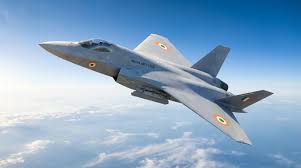
Recent overhead imagery appearing to show India’s Advanced Medium Combat Aircraft (AMCA) full-scale engineering model has sparked discussion across Chinese military aviation and open-source intelligence (OSINT) communities, highlighting how foreign analysts are increasingly using commercial imagery and publicly available data to monitor sensitive defence programmes. The imagery, which circulated online in recent days, was discussed by several Chinese military aviation commentators and OSINT-focused accounts. Analysts examined visible features of the aircraft-shaped article and debated what the imagery might reveal about the programme’s development status. The episode offers a glimpse into the growing role of international OSINT communities in tracking military developments that were once largely shielded from public scrutiny. Advances in commercial satellite imaging, geospatial analysis and online collaboration have enabled researchers, analysts and military enthusiasts across different countries to monitor defence programmes with increasing sophistication. Among the observations highlighted in online discussions were aspects of the aircraft’s external configuration, including features commonly associated with low-observable or stealth-oriented design. Commentators also examined a distinct orange-coloured section visible on the aircraft-shaped article, although the imagery alone does not provide sufficient information to determine its purpose or significance.
The Advanced Medium Combat Aircraft is a planned Indian single-seat, twin-engine, all-weather fifth-generation stealth, multi-role combat aircraft being developed for the Indian Air Force and the Indian Navy. It is being developed by the Aeronautical Development Agency and the Defence Research and Development Organisation. The government has already approved prototype development for the programme, while the Ministry of Defence has initiated the process of engaging private-sector defence consortia for prototype fabrication, marking a significant step towards the aircraft’s development phase. The aircraft article shown in the imagery appears similar to the full-scale engineering model unveiled during Aero India 2025. Some online commentators also suggested that the model was photographed at a location different from its public display site. The interest is notable because military aviation communities increasingly track advanced fighter aircraft programmes around the world using open-source methods. Analysts frequently combine satellite imagery, publicly available photographs, procurement information, technical papers and official disclosures to build assessments of ongoing programmes, often months or years before formal announcements. The online discussions reflect growing international interest in India’s next-generation combat aircraft effort, particularly among military aviation observers in countries that closely monitor developments in advanced aerospace technologies. While the imagery has generated considerable interest among foreign military aviation observers, the assessments being shared remain independent analysis rather than verified information. The episode also underscores a broader shift in the intelligence landscape. Commercial satellite imagery, once available primarily to governments and specialised organisations, is increasingly accessible to researchers and analysts worldwide, enabling foreign observers to monitor strategic infrastructure, military deployments and defence-industrial activity with a level of detail that was difficult to achieve only a decade ago.

Comments are closed.