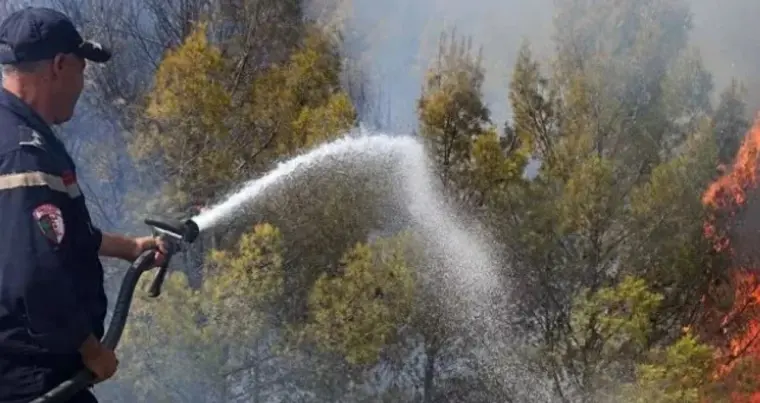
At least 12 people have died and 54 have been injured in a massive forest fire in northern parts of Algeria. Bejaya, Jijel and Tiji Ouzou are affected. The condition of six injured is critical, while many families were shifted to safe places.
Algiers: A massive forest fire spreading across the northern parts of Algeria has caused massive devastation. According to officials, at least 12 people have died in the fires in various provinces, while 54 others have sustained burn injuries. The condition of six of the injured is said to be serious and they are being treated in the Intensive Care Unit (ICU). Due to the fire, families from many areas have been evacuated to safe places. Algeria's Interior Minister Said Said confirmed the death toll late Wednesday. According to him, five people died in Jijel province, four in Bejaia and three in Tiji Ouzou. This fire has spread at a time when many countries of North Africa are struggling with a severe heat wave.
154 fire incidents across the country in one day
According to Algeria's civil protection agency, 154 fires were recorded across the country on Wednesday. Of these, 36 incidents were reported in Bejaya province alone. In the initial report, officials had said that till the evening the fire extinguishing operation was going on at dozens of places in the country.
18 fires were brought under control in Bejaya, while firefighters were working continuously at several other places. Fires were also reported in 12 municipalities of Jijel province. In view of the fire situation, rescue and evacuation operations were conducted in many areas.
Houses were evacuated in Bejaya and Jijel
The areas most affected by the fire include Bejaya and Jijel. According to local authorities and the Civil Protection Agency, people were evacuated from many houses due to the danger of fire and smoke.
Pictures broadcast by local media showed thick smoke and flames. Footage from the Jijel area showed some people taking shelter in a post office to escape the smoke. From this it can be estimated how serious the situation had become in some areas.
Home Minister reached Bejaya and took stock of the situation
Seeing the seriousness of the fire, Home Minister Saeed Syed reached Bejaya along with Health Minister Mohammad Siddiq Ait Maseuden. According to officials, both of them took stock of the efforts being made at the local level to extinguish the fire and rescue people.
The government's priority is to control the fire in the affected areas and evacuate people to safe places. Along with relief and rescue operations, hospitals have also been kept ready to treat burnt people.
Six injured admitted to ICU
According to the Home Minister, at least 54 people have suffered burn injuries. Six of these people are in critical condition and have been kept in ICU. Several others were given medical aid after suffering burns and exposure to smoke.
During a fire, there is not only the danger of flames, but the smoke can also cause breathing problems and other health problems. One of the main reasons behind evacuating people from affected areas is to ensure safety from both fire and smoke.
Extreme heat wave in North Africa
The fires in Algeria come at a time when North Africa is hit by extreme heat. Due to rising temperatures in Algeria and neighboring Tunisia, the risk of fire spreading in forests and dry vegetation has increased.
According to the World Meteorological Organization, North Africa is among the subregions of Africa where the rate of temperature rise has been the fastest. A WMO regional climate assessment projects temperatures in the Arabian region to rise by an average of about 0.43 degrees Celsius per decade between 1991 and 2024, while North Africa has shown a faster warming trend in recent decades.
However, it would not be appropriate to attribute any single fire incident solely to climate change. Temperature, drought, wind, vegetation moisture and local conditions can all play a role in the occurrence and rapid spread of a fire.
Forest fires are not a new problem in Algeria
Forest fires are a frequent occurrence in Algeria during summer. Hot and dry weather in northern areas along the Mediterranean coast creates favorable conditions for fire spread.
The country has also faced large-scale forest fires in recent years. Algerian authorities reported more than 1,400 forest fires in July 2026, and thousands more since May. Burning of large areas of vegetation was also reported during that period.
There was a big tragedy in Bejaya three years ago also.
Bejaya is the same area where a massive forest fire caused massive destruction about three years ago. During that time, large parts of forest and agricultural land were engulfed in fire and about 30 people died.
In this background, the current fire has increased the concern of the local people and the administration. The challenge for the authorities is to keep the fire away from densely populated areas and forests and to evacuate people from danger areas in time.
Increasing pressure due to intense heat and lack of water
Heat and water shortages are not limited to wildfires. Extreme weather is also becoming a major challenge for animal husbandry communities in Algeria.
A study published in 2026 analyzed the impact of climatic conditions on camel husbandry in the El Oued region of Algeria. The researchers found that there was a seasonal increase in camel deaths during the summer heatwave and that conditions such as extreme temperatures, low rainfall and water availability increased the pressure faced by pastoralists.
The study does not directly determine the cause of the current wildfires, but it does show that extreme heat and dry conditions are creating additional risks for both humans and animals in the region.
Six people died in July also
The current fires in Algeria have already resulted in fatalities this year. In July, at least six people were reported dead due to forest fire. At that time officials had said that a large number of fire incidents were recorded in the country and firefighters in many provinces were busy controlling them.
Frequent fires have increased the challenge for the local administration in fire prevention, forest monitoring and strengthening emergency response capacity.
Firefighters face a tough challenge in extinguishing the fire.
Controlling forest fires is a different challenge than controlling urban fires. Hilly terrain, dry vegetation and strong hot winds can cause fires to change direction rapidly. Access of fire engines to the affected areas is also difficult at times.
In areas like Bejaya and Jijel, work has to be done simultaneously on many fronts. Some fires have been brought under control, but operations are reported to be ongoing at many places. Authorities have given priority to evacuating people in sensitive areas.
Smoke and evacuation are the biggest challenges for local people
Apart from the areas directly affected by the fire, the smoke can also affect the people nearby. Dense smoke can reduce visibility and cause respiratory problems. For this reason, the local administration took action to evacuate people to safe areas at many places.
Pictures from Jijel showed people taking shelter in public buildings and in some areas local citizens suddenly had to leave their homes.
Even after controlling the fire, the danger is not completely eliminated
In a wildfire, even after the main flames in an area are extinguished, smoldering fires in the interior may rekindle. Therefore, firefighters have to maintain vigil in the affected areas.
The situation is also being monitored in the areas where officials have reported that the fire has been brought under control. Fire brigade and civil defense teams are continuously working in the areas of active fire.
Concern over climate change and increasing fire incidents
Factors increasing the risk of wildfire in Algeria include rising temperatures, drought, and drying of vegetation. WMO projections show a rapid warming trend in North Africa. According to experts, hot and dry conditions could create a more favorable environment for the spread of fire.
However, the local cause of every forest fire may be different. Human negligence, electrical failure or other local factors may also play a role in an incident. The final reasons for the current incidents will be confirmed only after the respective investigations.
The government faces the challenge of relief and preparation for the future.
At present, the priority of the Algerian administration is to control the active fire, keep the affected people safe and ensure treatment of the injured. After this, assessing the damage caused by the fire and the process of rehabilitation in the affected areas will be a challenge.
Given the frequent occurrence of forest fires, it also becomes important to strengthen early warning systems, forest monitoring, fire fighting resources and disaster preparedness at the local level.
This fire in northern Algeria has once again shown how quickly wildfires can turn into a humanitarian crisis amid extreme heat and dry conditions. Currently, 12 deaths and 54 injured have been confirmed, while rescue teams are trying to completely control the fire in the affected areas.