
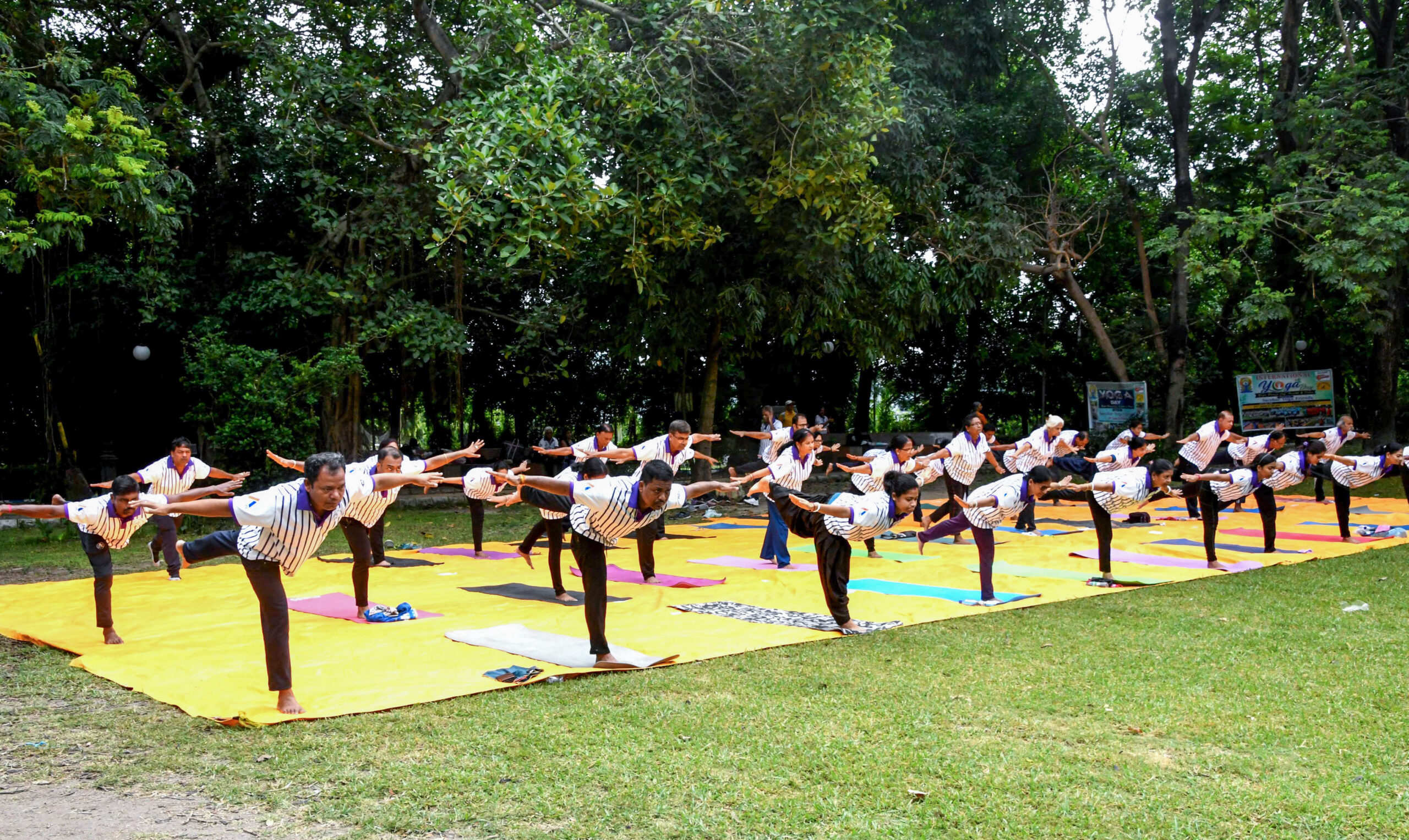

Prime Minister Narendra Modi on Sunday led the national celebration of International Yoga Day from Kolkata, West Bengal. This year, the theme is “healthy ageing.” PM Modi spoke about yoga’s role in helping people maintain energy, health, and growth throughout life. Addressing the gathering, Modi said yoga should become an integral part of daily living and argued that ageing should not limit an individual’s abilities or aspirations. During his address, Modi described yoga as a complete approach to well-being that goes beyond physical fitness and contributes to emotional and mental health.
“Yoga can help human life to aspire for constant growth,” the Prime Minister said, adding that the goal should be “to be more energetic at 50 than we were at 30.”
‘Yoga is more than physical exercise’
According to the Prime Minister, yoga improves overall quality of life by strengthening physical health, promoting emotional balance, and supporting mental well-being.
“Yoga is not just physical exercise. It is not restricted to any age group. It is an expression of the human spirit,” he said.
Explaining its broader benefits, Modi added, “Yoga can help us tune our bodies to be flexible. It keeps our energy level high. It also helps us maintain a calm, stress-free life and helps to keep diseases away. Moreover, with regular practice, Yoga teaches us to remain a lifelong learner of our own bodies and minds.”
At the event, Modi also led participants in taking a pledge to integrate yoga into everyday life and encourage future generations to embrace the practice.
“Let us take a pledge, we will not limit yoga to just one day. We will make yoga a part of our lives, part of our families, and we will make it a part of our coming generations,” he said.
How yoga travelled from India to the world
Yoga’s global journey has deep historical roots. According to reports, Swami Vivekananda is widely regarded as the figure who introduced yoga to the West. The monk from Calcutta travelled to the Parliament of Religions in Chicago in 1893, where he spoke about India and Hinduism before beginning an influential lecture tour across the United States.
His book Raja Yoga, written in Manhattan in 1896, significantly shaped Western understanding of yoga. In the decades that followed, more teachers and disciples connected to Indian spiritual traditions travelled across Europe and America. The global interest expanded further during the 1960s, when travellers following the hippie trail visited Indian ashrams. International attention intensified after images emerged of The Beatles visiting Maharishi Mahesh Yogi in Rishikesh in 1968, helping popularise Indian spiritual traditions and yoga worldwide.
Yoga eventually became one of India’s earliest and most influential soft power exports, long before the term itself became widely used.
From India’s tradition to a global movement
Today, yoga has developed into a worldwide phenomenon. In the United States alone, around 36 million people practise yoga regularly and spend more than $16 billion annually on classes and related accessories. Germany has approximately 1.5 crore practitioners, while Saudi Arabia has integrated yoga into its national education system.
From East Asia to Eastern Europe, yoga continues to attract followers globally, with Indian centres such as Rishikesh and Mysuru drawing visitors and yoga enthusiasts from across the world.
International Yoga Day now observed across 192 countries
International Yoga Day was formally recognised after India’s proposal at the United Nations in 2014, which led to June 21 being declared as the International Day of Yoga. This year, millions of people are participating across 192 countries, with Indian diplomatic missions organising events from New York to Beijing.
Speaking in Kolkata, Modi said yoga had evolved into the world’s largest community celebration and continues to connect people across borders and cultures.
“June 21, which marks the longest day on Earth, has now become the largest community celebration day because of yoga. Yoga brings people together. I congratulate the people of the world on this occasion,” he said.
Also Read: International Yoga Day 2026: Yoga Sangam Portal Hits 6 Lakh Registrations Ahead Of Nationwide Celebrations
Zubair Amin is a Senior Journalist at NewsX with over seven years of experience in reporting and editorial work. He has written for leading national and international publications, including Foreign Policy Magazine, Al Jazeera, The Economic Times, The Indian Express, The Wire, Article 14, Mongabay, News9, among others. His primary focus is on international affairs, with a strong interest in US politics and policy. He also writes on West Asia, Indian polity, and constitutional issues. Zubair tweets at zubaiyr.amin
The post From India To 192 Countries: How Yoga Became The World’s Biggest Wellness Movement appeared first on NewsX.

Comments are closed.