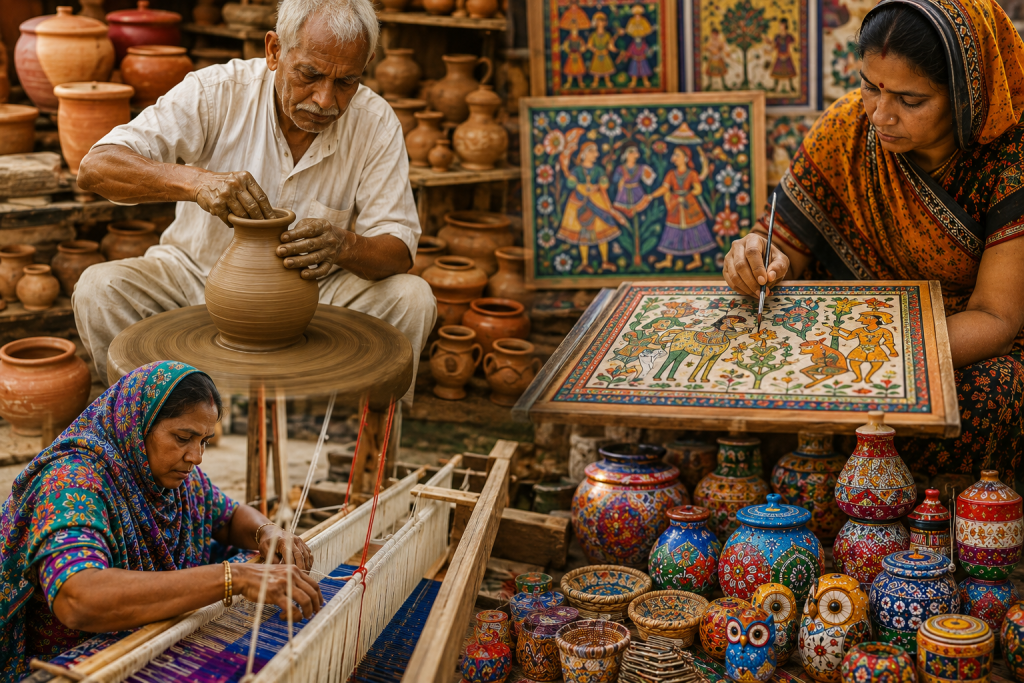
New Delhi. Traditional crafts, once confined to village homes and local fairs, are now adapting to new market demands. Whether it’s potters, woodcarvers, or women hand-embellishing textiles—many folk artists are transforming their age-old art into new products and bringing them to consumers.
Turning Wheel, Changing Products
Potters’ wheels are no longer just producing traditional pitchers and pots. Small pots, decorative lamps, cups, plates, vases, and other home décor items are also being produced. Demand for these products increases during festivals.
This change is necessary for artists. Due to limited demand for traditional items, many families turned to other occupations. However, changes in design and access to new markets have given some artisans the opportunity to return to their former profession.
Modern Themes in Folk Painting
Folk painting is also experiencing a shift. Artists are now incorporating contemporary themes alongside traditional motifs and colors. Nature, the environment, women’s empowerment, rural life, and changing social relations are being depicted in folk styles.
This is providing young artists with a new audience for their art. Traditional art remains iconic, while the paintings also communicate with modern audiences.
Skills and Business in the Hands of Women
In rural areas, many folk art-related activities are becoming a source of income for women. Women are actively involved in embroidery, weaving, terracotta, folk painting, basketry, and traditional decorative items.
Products that were previously created for family use or the local market are now being marketed to other cities through exhibitions and online platforms. This is increasing both art and women’s economic participation.
Competing with Machines Is Not Easy
The biggest challenge facing folk artists is cheap machine-made products. The availability of similar designs at low prices in the market makes it difficult for handmade items to reach customers.
Producing handmade items requires a lot of time and effort. In such a situation, it is essential to provide fair prices to artists. Experts believe that if consumers understand the hard work and cultural significance behind the products, a better market for handmade goods can be created.
Avenues for Employment for the New Generation
Instead of viewing folk art solely as a heritage, it is important to link it with employment. Tools like design training, improved packaging, market information, and digital sales can help increase artists’ income.
This field can also become a new opportunity for youth. They can learn traditional techniques and utilize modern skills like photography, design, marketing, and online sales.
Heritage will survive only if artists survive
Discussions about preserving folk art often remain limited to its technique and tradition. But the real question lies with the artists who keep this heritage alive with their own hands.
If artists are provided with respectable income, a market, and opportunities for the new generation, folk art can remain a part of everyday life instead of becoming a museum item.
Whether it’s a clay pot or colorful cloth—the true power of folk art lies in the hands of its artists. If these hands receive market and respect, the tradition will not only survive but also create a new identity in the new era.