
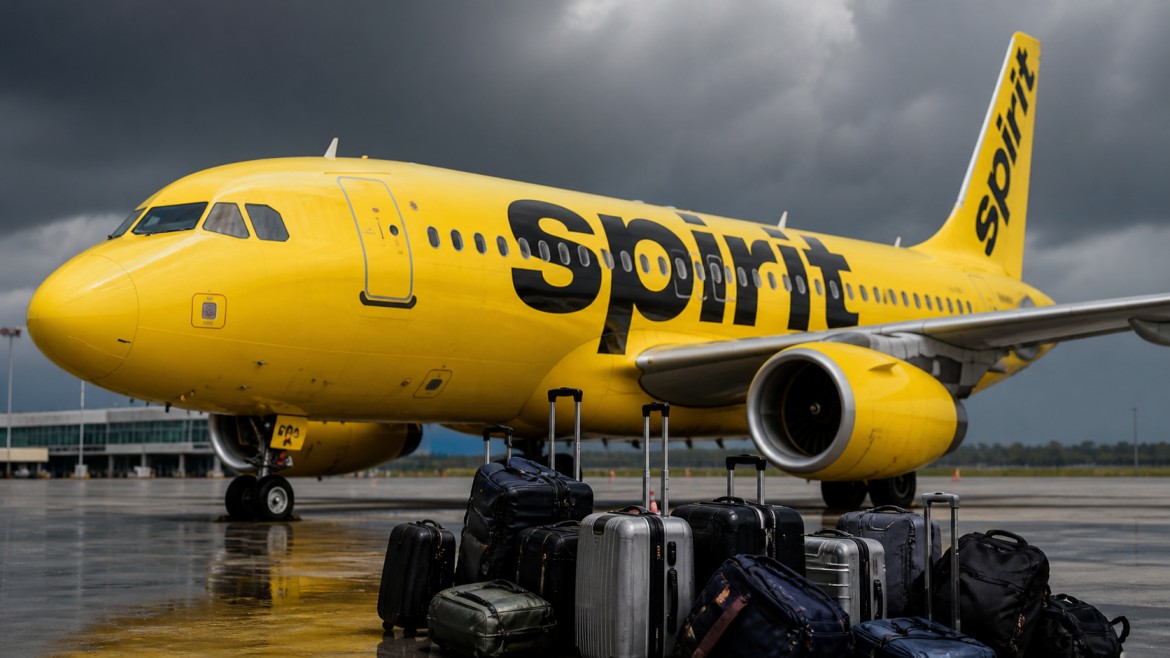

There are airline failures, and then there are moments when a carrier simply vanishes mid-schedule. The shutdown of Spirit Airlines falls squarely into the latter. Flights cancelled overnight, customer service lines silent, and passengers left staring at departure boards that no longer applied, the airline’s exit from the skies was abrupt enough to feel unreal for those caught in it.
The announcement came early Saturday, posted quietly on the company’s website but quickly echoing across airports and social media. Spirit said it had begun an “orderly wind-down” after failing to secure a $500 million bailout from the administration of Donald Trump. The wording suggested process and planning, but the reality on the ground told a different story. By the time many passengers woke up, their flights had already been cancelled.
Some travellers only learned what had happened after arriving at the airport. In Philadelphia, one passenger told local media he reached the terminal before dawn, luggage in hand, unaware that the airline had ceased flying hours earlier. Others described late-night app notifications that felt at first like glitches or scams. By morning, the scale of the disruption was clear.
Spirit instructed customers not to come to the airport. It said refunds would be issued automatically for tickets purchased with cards, while cases involving vouchers or loyalty points would be handled through bankruptcy proceedings. It also made clear what it would not cover: replacement flights, hotel stays or other expenses tied to the sudden cancellations.
For an airline that built its reputation on low fares, the end came with a different kind of cost, one borne by passengers scrambling to find alternatives. Other carriers, including Delta Air Lines, United Airlines and American Airlinesmoved quickly to offer discounted “rescue fares.” Even so, many travellers reported paying more than they had originally planned, often at short notice and with limited options.
Inside the company, the shutdown has left thousands of employees in limbo. The International Association of Machinists and Aerospace Workerswhich represents many of Spirit’s workers, described the situation as devastating. In its statement, the union pointed to management decisions rather than frontline staff as the cause of the collapse, and called for severance and benefits to be honoured.
Spirit’s chief executive, Dave Davis, framed the shutdown as the result of financial strain that had become impossible to manage. The airline had already been through bankruptcy proceedings and was attempting to restructure. A deal with bondholders earlier this year had raised hopes of survival. But a sharp rise in jet fuel prices, he said, removed any remaining room to manoeuvre.
That explanation has not gone unchallenged. Sean Duffy pushed back, saying the airline’s problems predated recent geopolitical tensions. Speaking after the shutdown, he pointed to earlier bankruptcies and questioned the viability of the company’s low-cost model. In his view, rising fuel costs were not the root cause but a final blow to an already fragile business.
Fuel is one of the largest expenses for any carrier, sometimes accounting for up to 40 percent of costs. When prices rise sharply, the effect is immediate. Yet airlines with stronger balance sheets or more flexible pricing structures are often better able to absorb those shocks.
Spirit’s model left little margin for error. It relied heavily on keeping base fares low and generating revenue through add-ons. That approach can work when costs are stable and demand is steady. When either shifts, the pressure builds quickly. By the time fuel prices surged following the recent conflict involving Iran, Spirit was already under strain.
Fuel prices, fragile models and a ripple effect across industries
The timing of the shutdown has drawn attention to the wider stress facing airlines. Jet fuel prices have climbed sharply in recent weeks, tied to tensions in the Middle East. The knock-on effect has been visible across the industry, with some carriers cutting routes and others raising fares.
Analysts say Spirit’s collapse highlights how exposed budget airlines can be during periods of cost volatility. Unlike larger carriers, they often have fewer buffers and less room to adjust pricing without losing customers. Even before the latest spike in fuel costs, there were questions about whether Spirit could sustain its recovery after multiple bankruptcy filings.
The fallout is not limited to aviation. The shutdown has also raised concerns in India’s technology services industry, where airlines are important clients. Companies such as Coforgewhich have ties to the travel industry, may see indirect effects from reduced business activity. While Coforge has said the direct financial impact is minimal, the loss of a client relationship is not easily replaced.
Other Indian firms, including Tata Consultancy Services, Infosys and Wiproalso work with airlines, though the share of revenue varies. Analysts note that if financial stress spreads across carriers, spending on technology projects could slow, affecting service providers.
Airlines rely on IT systems for bookings, operations and customer service. When airlines cut costs, those projects can be delayed or reduced.
Back in the United States, the immediate focus remains on passengers and workers. Spirit says most refunds have been processed, though some customers report delays. Crew members have been returned to their home bases, marking a quiet end to flights that once connected dozens of cities.
There is also a political dimension. The failed bailout proposal has drawn scrutiny, particularly given the scale of government involvement that had been under discussion. At one point, the plan would have given the government a large ownership stake in the airline. That idea faced resistance from lenders and policymakers, and ultimately did not move forward.
The result is a shutdown that feels both sudden and long in the making. Spirit had been struggling for years, navigating mergers that never materialised and restructuring efforts that did not hold. The latest crisis exposed how little room was left.

Comments are closed.