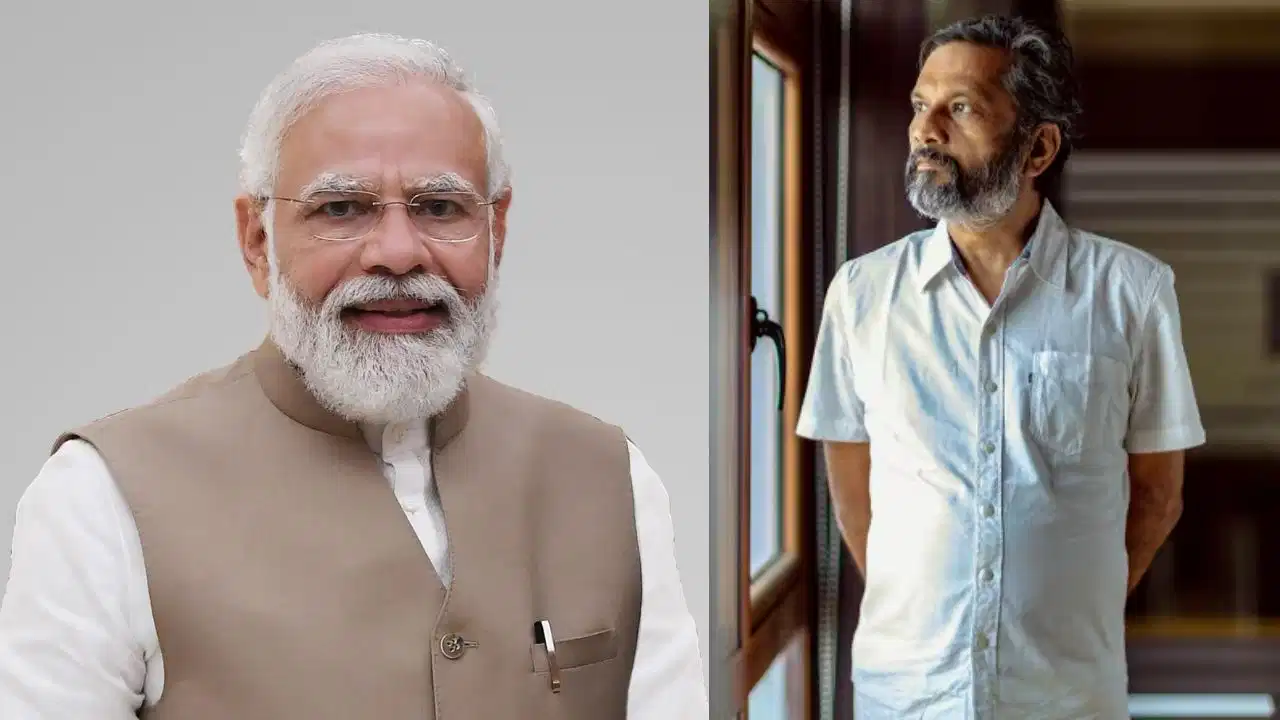
Tezzbuzz Desk: India's economy is currently growing at a fast pace. The country's GDP growth rate has been recorded at 7.8 percent. Despite this, C's appeal to avoid foreign travel, weddings abroad and buying non-essential gold has raised many questions. People raised questions on social media that when the country's economy is growing so rapidly, why is the government insisting on reducing foreign expenditure. Answering this question, Zoho founder Sridhar Vembu has explained the Prime Minister's appeal by linking it to the need to save foreign exchange and make India self-reliant.
According to Sridhar Vembu, India's economy may be growing rapidly, but the country is still heavily dependent on imports for energy and technology. As the size of the economy increases, so does the need for energy and technological resources. To meet these needs, India has to buy many things from abroad, for which foreign exchange is spent. In such a situation, keeping the foreign exchange reserves strong becomes important from the point of view of economic development. Vembu expressed his views while replying to a user's X post. The user had asked that if India's economy is growing at the rate of 7.8 percent then why is the Prime Minister appealing to people not to travel abroad, not to marry abroad and not to buy gold. In response to this, Vembu gave the example of the economies of East Asia. Referring to Japan, Taiwan, South Korea and later China, he said that these countries also faced the need to save foreign exchange during a period of rapid economic growth.
According to Vembu, it is necessary for India to increase exports to balance the dependence on imports. The country's exports are increasing, but many export industries themselves are dependent on advanced technology, which has to be imported from abroad. These include technologies like precision machines, special materials, CPU, GPU and advanced software. This means that along with increasing exports, India will also have to gradually reduce its dependence on technology-related imports. Sridhar Vembu believes that achieving self-reliance in advanced technology is not an easy or quick goal to achieve. This may take decades. Giving examples of Japan, Taiwan, South Korea and China, he said that it took a long time for these countries to reach technological and economic parity with Western countries. India has made a good start in this direction, but it needs continued investment and development of technological capacity to move forward.
Vembu compared the current situation in India to that of a rapidly growing company. According to him, if a company is expanding rapidly then it has to save its capital for further investment. Similarly, India will also have to use foreign currency wisely in this period of economic development. Expenditures like foreign travel, destination weddings abroad and non-essential gold purchases can put pressure on foreign exchange. According to Vembu, when India becomes more self-reliant in advanced technology and also develops its own technology in the field of renewable energy, then the need to save foreign exchange may reduce. At present, he believes that the purpose of the Prime Minister's appeal is not to stop the economic development, but to protect the country's foreign exchange and resources along with rapid development.