


Working from home became much more common in 2020 when it was largely necessary. Though many companies have since issued return-to-office mandates and tightened policies that allowed location flexibility, as of 2023, 22 million U.S. employees worked remotely.
Being able to work from the comfort of your own home, or anywhere else, for that matter, has its appeal, but it’s not the right choice for everyone. Over the last few years, some Gen Z employees who work from home have opened up about downsides like loneliness and isolation, and now there’s data to prove that they have a point.
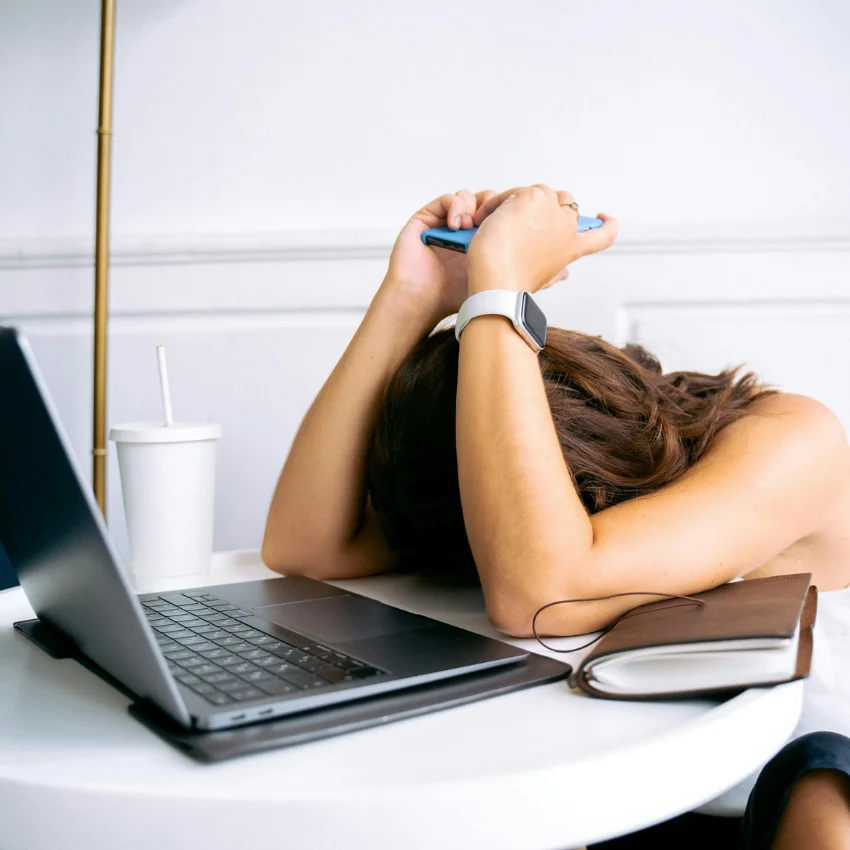
Some Gen Z workers have admitted they feel a kind of ‘work-from-home depression.’
Young remote workers have taken to social media to share they’re stuck in a rut because of their remote jobs, like a U.K.-based content creator named Grace, who opened up about her feelings on “work-from-home depression” on TikTok.
“I can’t be the only one going through this work-from-home depression right now, whereby, especially since it’s going to rain for the next five months, I might literally not leave the house,” Grace said. “I’ve literally gone from bed, straight to [my] laptop.”
Grace explained that her “good days” include a walk to the gym to switch up her environment, but even that doesn’t help much. She would still end up vegging on her couch, watching TV and doomscrolling at the same time, until it was time for bed. She’s been moved to tears when complaining about the monotony to her boyfriend, but she also doesn’t really know what to do about it.
“I don’t wanna do this anymore, but equally, I start looking for a new job or whatever and realize that I don’t wanna go into the office every day either and have to deal with a commute and talking to people and having to put on makeup,” she continued. “[I’m] struggling to find a solution.”
Grace acknowledged that it’s gotten to the point where she spends all her time inside and when she has the chance to go out and socialize, she just doesn’t want to.
Remote work sounds like a dream, but it does come with consequences for your mental health.
Employees who work from home have reported benefits like saving time and money on no longer having to commute and being more productive because they can more easily focus on their work. But that doesn’t mean there aren’t also disadvantages.
www.kaboompics.com | Pexels
In a study published in Personnel Economics, researchers specifically examined how remote work affects people’s mental health. They found people who worked from home did spend more time alone, and even experienced “mental distress,” sometimes at a level that required them to seek professional treatment.
This is troubling since most people are feeling more lonely in general these days, both at work and in everyday life. Feeling cut off from other people increases your risk of developing physical and mental health issues, so it’s not something to be taken lightly. There’s much more to feeling lonely than just feeling a bit sad.
There are ways to break away from the monotony of the routine when working from home.
Work-from-home employees who feel stuck in a rut don’t have to stay there. The experts at the U.K.’s National Health Service said that “the line between work and personal time can get blurred” easily when you’re working in your living space. Things like establishing a routine and spending time away from screens can help a lot, as can making an effort to keep in touch with loved ones.
An ADHD coach named Beth also offered some advice in a TikTok video. “The one thing that genuinely helped me go from working-from-home depressive to actually enjoying it is getting that work-life balance,” she said. “If you wake up and go straight to work, you are gonna dread it every single day.”
 Anna Tarazevich | Pexels
Beth recommended trying to do something for yourself every day before sitting down to work and being careful about how you use technology outside of work as well.
As someone who also struggles with trying to find a healthy work-life balance while working remotely, I’ve found that the thing that works for me is trying to get out of my apartment when I can. I also combat loneliness by surrounding myself with people who bring me joy. The way we balance work and life affects our productivity and mental health, so we have to make an effort to not live just to work.
Nia Tipton is a writer with a bachelor’s degree in creative writing and journalism who covers news and lifestyle topics that focus on psychology, relationships, and the human experience.

Comments are closed.