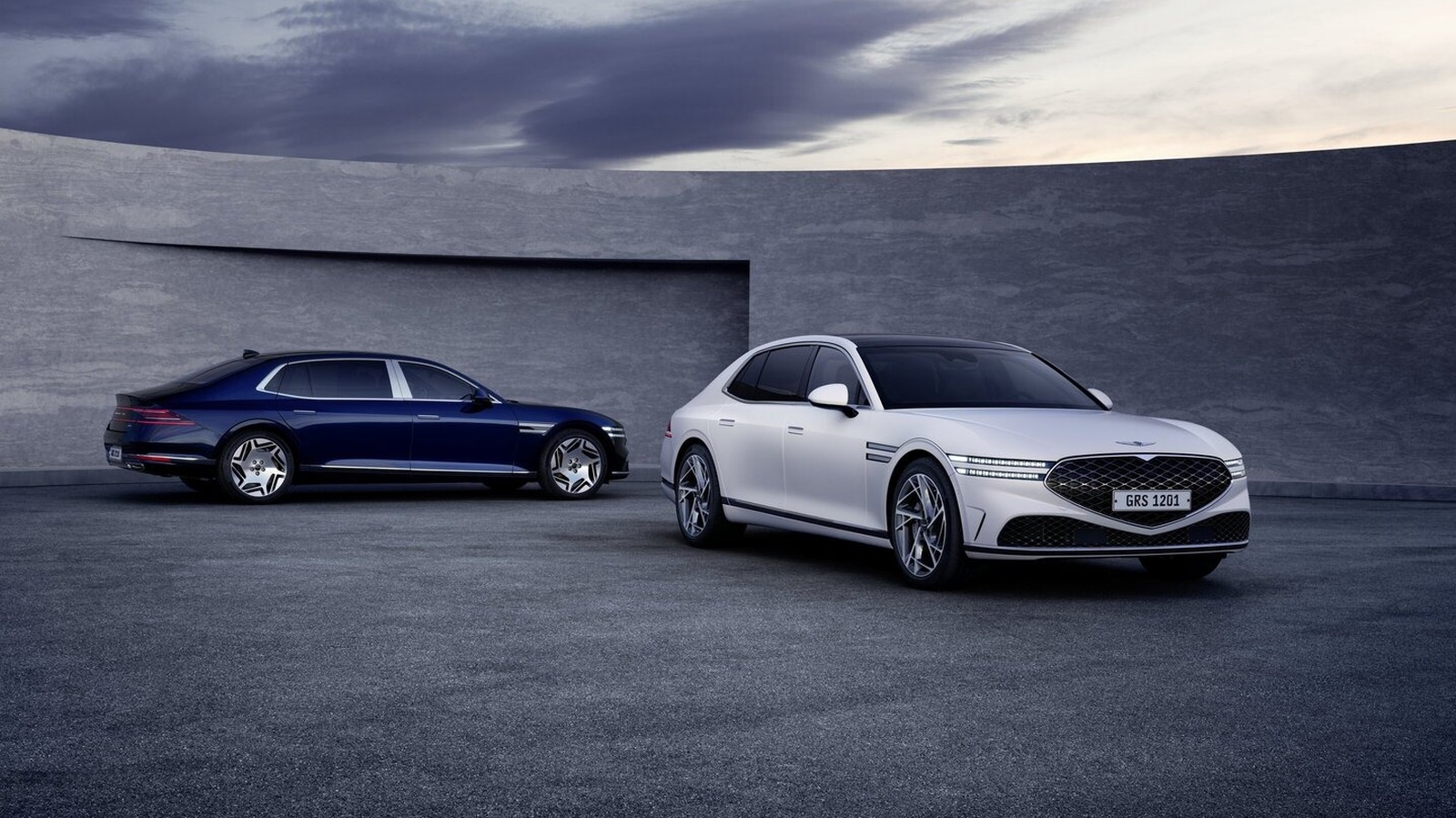
The Genesis G90 is one of the best large luxury sedans on the market, going toe-to-toe with the likes of the Mercedes-Benz S-Class, BMW 7 Series, and Audi A8. In our review of the 2026 Genesis G90, we loved its ride and comfort, design, and overall refinement. But before you splash your hard-earned cash on the Genesis G90, you should also consider its resale value, as depreciation plays a big role in any vehicle’s ownership cost.
According to iSeeCars data, the Genesis G90 loses 52.4% of its original value over five years, leaving you with just 47.6% residual value. Other sources offer slightly different numbers, although the general theme remains. For instance, CarEdge’s data puts the Genesis G90’s resale value at 52% after the same period.
Data from Kelly Blue Book (KBB) is more detailed, as it offers estimated resale values for different model years. According to KBB, the average Fair Purchase Price of a 2021 Genesis G90 across its two trims is $31,750, down from an average MSRP of $75,870. That represents an average resale value of 41.8% after five years, meaning it will have depreciated by 58.2%. That’s a bit higher than iSeeCars and CarEdge’s numbers, but it paints a broadly similar picture.
The Genesis G90 depreciation vs. other luxury sedans
The Genesis G90’s depreciation doesn’t tell the whole story. We should also compare its numbers to the large luxury car market in general, as well as its direct competitors. According to iSeeCars, the large luxury car category has a slightly higher five-year depreciation of 54% compared to the G90’s 52.4%. The site’s seven- and 10-year depreciation figures also indicate that the G90 has better resale value than the average large luxury sedan.
Let’s turn our attention to direct rivals, starting with the Mercedes-Benz S-Class. ISeeCars data estimates the S-Class depreciates by 55.3% after five years, slightly worse than the G90. Conversely, CarEdge, estimates that the model loses 47% after five years, slightly better than the G90. Finally, KBB's Fair Purchase Price data for the 2021 Mercedes-Benz S-Class shows it has lost 55.8% of its value, which is again better than the 2021 G90.
The Hyundai has the edge over the Audi A8, however. ISeeCars estimates that the Audi A8 L loses 57.7% of its value after five years compared to the G90’s 52.4%. Data from KBB on the 2021 Audi A8 supports this, indicating the A8 has depreciated more than the G90, losing 63.7% of its value if going by the current Fair Purchase Price. CarEdge’s depreciation figure is also slightly higher than the G90, at 48.9% versus 48%.
Should you buy the Genesis G90?
Depreciation is normal, and KBB estimates that new vehicles lose up to 60% of their value within five years. But now that we have an idea of how well the Genesis G90 holds its value, the ultimate question is: should you buy it? Well, it’s a good car and certainly not a bad choice for resale value, outperforming the Audi A8 and coming reasonably close to the Mercedes-Benz S-Class. It’s also slightly better than the average large luxury car, according to iSeeCars.
Sure, it doesn’t rank as the best overall in the luxury car segment on resale value, but it’s also not one of the worst-depreciating cars either, which is a plus. However, if you need a luxury car that will really hold its value well several years down the line, you’ll have to look elsewhere. Namely, consider a Lexus, which tops the luxury car category in resale value, beating the likes of BMW and Bentley.
Of course, all of these depreciation figures are estimates. The actual resale value of a particular car depends on several factors, such as the vehicle’s condition, year of manufacture, and your location.