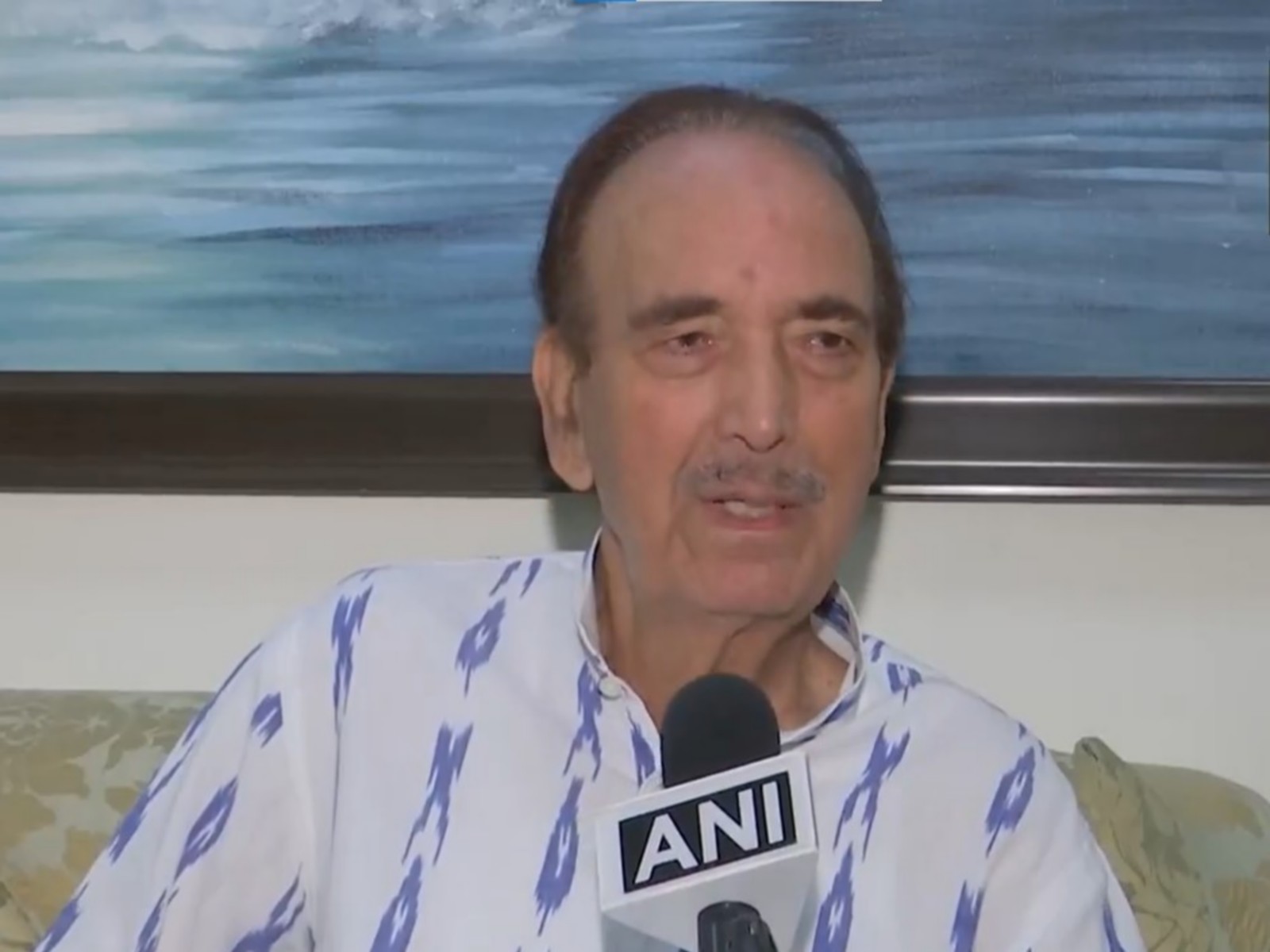
Ghulam Nabi Azad, leader of the Democratic Progressive Azad Party (DPAP), publicly disagreed with National Conference chief Farooq Abdullah’s statement that Pakistan has maintained the Kashmir issue and that there is no hope from Delhi.
Azad asserted that successive Indian governments have significantly contributed to Jammu and Kashmir’s development, while attributing responsibility for decades of terrorism and instability in the region to Pakistan.
Addressing reporters, Azad said, “I respect Farooq Sahab, but this statement is absolutely wrong,” emphasizing that Pakistan has been the source of violence and unrest in Jammu and Kashmir since 1947. He further alleged that Pakistan has persistently attempted to spread terrorism and seize parts of the region.
Referring to Pakistan-occupied Kashmir (PoK), Azad claimed the people there desire freedom from Pakistan and wish to join India, stating, “What’s the situation in PoK today? How many people have been killed there? They want freedom, they want to come back, they want to live with India.”
Rejecting the suggestion that Pakistan has helped keep Jammu and Kashmir safe, Azad blamed it for the deaths of young individuals, the suffering of women who lost their husbands, and the displacement of both Kashmiri Pandits and Muslim families due to militancy. “Jammu and Kashmir was devastated, ruined, thousands… If young men were killed, it’s because of Pakistan. If thousands of girls and women were widowed, it’s because of Pakistan,” he stated.
Azad defended the role of successive central governments in Jammu and Kashmir’s development, citing infrastructure projects including roads, tunnels, four-lane highways and railway connectivity to Kashmir. He mentioned the administrations of Jawaharlal Nehru, Indira Gandhi, Rajiv Gandhi, Atal Bihari Vajpayee, Manmohan Singh, and the current government led by Prime Minister Narendra Modi, noting that each had prioritized the region’s progress. “Whatever development has taken place in Jammu and Kashmir is only because of the Government of India,” he stated.
He also argued that political differences with the ruling party should not be equated with hostility towards the country or its citizens. “We’ve had a political fight with the BJP and the government for many years, and it continues. I am not in the BJP; I am neutral. But it’s a political fight,” Azad said.
Azad maintained that political disputes are a normal aspect of democracy and rejected the notion that Delhi intends to harm Jammu and Kashmir. “I completely disagree with the idea that India or Delhi will finish us off,” he said.
When questioned about the political debate sparked by Abdullah’s remarks, Azad chose not to intervene in the conflict between the BJP and the National Conference, stating, “I don’t want to get into that right now; I have my own views. Let BJP and NC fight it out among themselves.”