

Mahendra Tiwari
International Press Freedom Day is celebrated every year on 3 May and this day highlights the basic spirit of democracy in which citizens have the right to freely receive information and express their views. Proclaimed by the United Nations General Assembly in 1993, the day is inspired by the Windhoek Declaration of 1991, which established the need for independent and pluralistic media globally.
Today, when we look at the global scenario of 2026, the state of press freedom appears extremely worrying and scary. The data of the Global Index confirms that in more than half of the 180 countries of the world, the situation of the press is either very difficult or has reached the extremely serious category. It is heartbreaking to know that less than 1 percent of the world’s population today lives in areas where the press can be considered truly free and safe. The history of the last 25 years has witnessed that the pressure on democratic values has continuously increased and the scope for work of journalists has narrowed.
Journalism has today become a profession where the price of speaking the truth has to be paid with one’s life. Figures for the year 2025 show that 129 journalists and media personnel were brutally murdered across the world, which is the largest and most disturbing figure ever recorded. This number is not just a data, but the silence of the voices that were hitting out at the inconsistencies of the society. Since 2000, approximately 1795 journalists have sacrificed their lives at the altar of their duty, which clearly underlines the increasing risks of this profession.
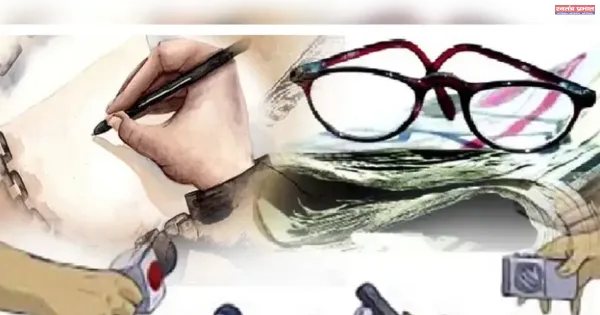
Along with violence, legal harassment has also emerged as a major obstacle in the way of freedom of expression. According to the data of 2026, about 330 journalists are lodged in jails around the world, out of which 61 percent journalists have been accused of serious charges like being anti-national or endangering the security of the country. The irony is that the laws that were created to protect the nation are often being used to silence those who dare to expose the shortcomings of those in power.
This tendency to view journalism as a crime is fatal for any civilized society. Even more worrying is the injustice that pervades crimes against journalists. According to a global report, in about 86 percent of cases of murder of journalists, the criminals are never punished. This failure of justice not only boosts the morale of the criminals but also instills fear in the minds of other journalists working in the field. When the guardians of truth begin to feel that there is no guarantee of their safety and that their killers can roam freely, they are forced to choose the path of self-censorship, which ultimately heralds the death of democracy.
Physical attack is not the only threat to the freedom of the press, but its forms have changed in today’s times. In many countries, defamation and anti-terrorism laws are being misused as a planned weapon. Along with this, attempts are made to break the backbone of media institutions through economic pressures. Favoritism in the distribution of advertising and financial resources rewards institutions that conform to those in power, while economically crippling those that take a critical stance.
In this changing world, while the digital age has given wings to the dissemination of information, it has also created new and complex challenges for journalists. The web of disinformation and misinformation spreads so rapidly through social media that the distinction between fact and lie begins to fade away. Along with this, online trolling, cyber attacks and illegal digital surveillance have made the personal and professional lives of journalists insecure. The kind of insults and threats that women journalists especially have to face on online mediums is extremely condemnable.
Another important aspect is environmental reporting, which has become one of the most risky areas today. At least 749 journalists covering news related to the environment and natural resource exploitation have been attacked in the last 15 years. There has been a 42 percent increase in such attacks between 2019 and 2023, which shows what a heavy price journalists have to pay when they pen down on land mafias, illegal mining and corporate corruption.
Reports from organizations like UNESCO and The Guardian confirm this horrifying reality. This fact makes us think whether we are really ready to listen to the truth that is related to our survival and protection of nature. The issue of press freedom is not limited to just media houses or journalists, but it directly affects the lives of common citizens.
An independent media exposes the layers of corruption, reviews government policies impartially and ensures that the public gets true and accurate information so that they can make their own decisions as an informed citizen. In contrast, when the media are taken under government or corporate control, the only information that reaches the public is information that reinforces a particular agenda. This creates a situation of confusion and distrust in the society.
Data from platforms like The Washington Post and Statista indicate that the impact of declining press freedom is not limited to specific countries, but has taken the form of a global epidemic. A decline in the index of press freedom has also been seen in many big democratic countries of the world including India. This decline is an indication that tolerance for dissenting voices within democratic institutions is decreasing. Freedom of the press is actually the mirror of democracy in which the society sees its reality.
If this mirror is dusted or obscured, society will never be able to correct its weaknesses. International Press Freedom Day provides us an opportunity to pay tribute to those courageous journalists who kept the torch of truth burning by sacrificing their lives. The day is also a reminder to governments to redefine their constitutional and moral commitments to press freedom. It is necessary that policies are made that ensure the safety of journalists and that the justice system is made so strong that no one who commits crimes against journalists remains beyond the reach of the law.
In conclusion, it can be said that protecting the freedom of the press is not the responsibility of any one group, but it is the collective responsibility of the entire society. We have to understand that if we do not stand against the forces suppressing the voices of journalists today, our own voices will also be taken away in the future. It is essential for the vitality of democracy that the press can do its work without any fear or inducement. As long as even a single journalist in the world is sent to jail or murdered for speaking the truth, our democracy will remain incomplete. The meaning of this day is to keep the torch of press freedom burning, so that the coming generations can breathe in a society where no one has a monopoly on information and those who dare to speak the truth are respected, not punished.
Comments are closed.