
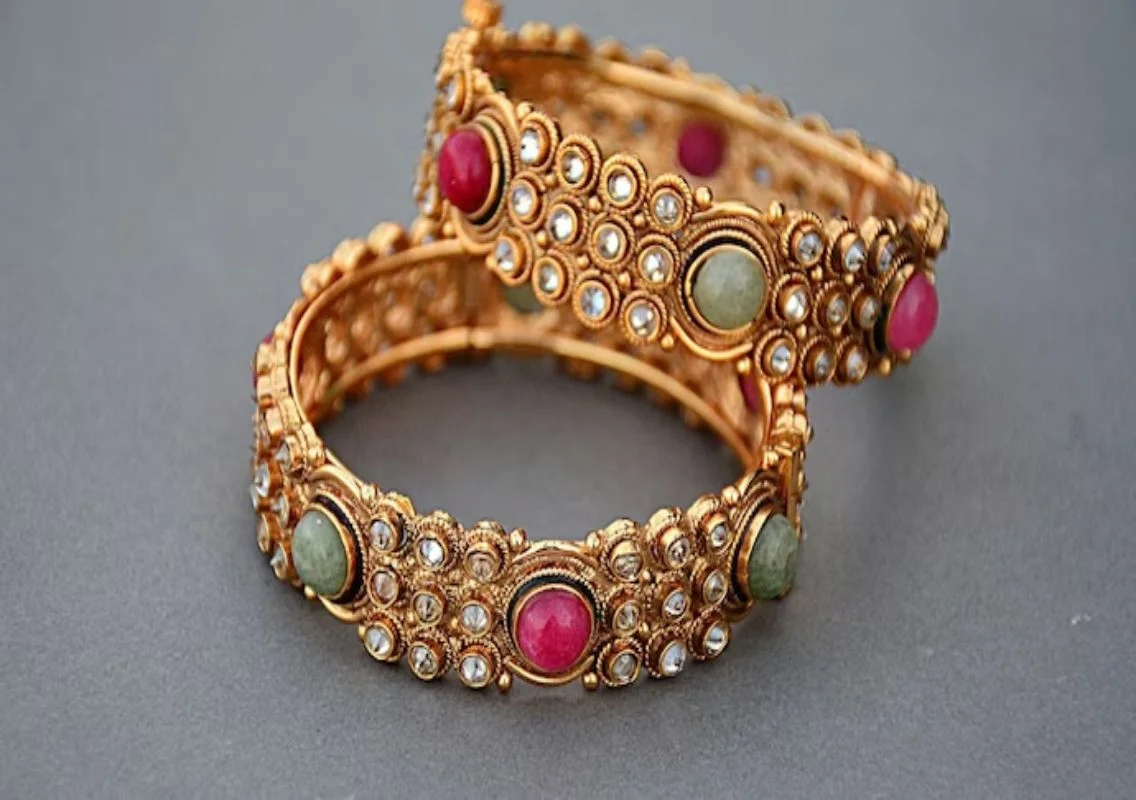
Gold Exchange Rules: Attention those exchanging old gold! A little carelessness and income tax notice will come straight to your home

Are you also thinking of replacing the old gold jewelery kept in your cupboard with new and latest design jewellery? If yes, then this news is very important for you. In fact, Prime Minister Narendra Modi has recently appealed to people to avoid buying new gold for a year to safeguard the country’s foreign exchange reserves. After this appeal of PM, many people are planning to exchange old jewelery instead of buying new gold. But wait, this exchange of jewelery is not just a simple transaction. In the eyes of income tax, it is considered as transfer of capital asset, on which you may have to pay heavy tax.
When you go to a goldsmith and get the price of old jewelery adjusted with the price of new jewellery, then as per tax rules it is considered as ‘sale’ of old gold. That is, the difference between the rupees for which you bought that old gold and its current price at the time of exchange will be considered as your profit (Capital Gain). Now the government will collect tax from you on this profit. However, this tax depends on how long you had the gold.
Know how much and how tax will be levied on old gold?
According to income tax rules, if you had kept gold jewelery for more than 24 months (2 years), then the profit made on selling or exchanging it will be considered as Long Term Capital Gain (LTCG). You will have to pay tax directly at the rate of 12.5% on this long term profit. On the contrary, if you exchange your gold jewelery within 24 months of purchasing it, the profit earned on it will be treated as Short Term Capital Gain (STCG). In this situation, there is no fixed tax rate, rather this profit will be added to your total income and tax will be deducted as per your existing income tax slab.
Do not hide this thing even by mistake while filing ITR
It is very important to show every small and big information related to the sale or exchange of gold jewelery in your Income Tax Return (ITR). You have to fill the complete information about this profit in ‘Schedule CG’ of ITR, so that any kind of investigation or legal notice from the Income Tax Department can be avoided in future. According to tax experts, it is mandatory for jewelers who have bookkeeping or audit to inform the government about cash transactions of more than Rs 2 lakh. This information given by the jewelers automatically starts appearing in your Annual Information System (AIS). Therefore, whatever information you are giving in your ITR, it should completely match your AIS data, otherwise problems may increase.
What is the mathematics of tax on ancestral jewelery received from grandmothers?
If you have received gold jewelery as inheritance or will, the tax rules change slightly. If this ancestral jewelery was purchased before April 1, 2001, then the Fair Market Value (FMV) as on April 1, 2001 can be considered as the original purchase price for calculating tax. But, if the jewelery was purchased after 2001 and you do not have any confirmed bill or document, then you will have to get a report from a government recognized registered valuer. This report serves as a solid evidence during the investigation of the Income Tax Department. Apart from this, one important thing is that the period for which the jewelery was kept by your parents or previous owner will also be added to decide whether your profits are long term or short term.
Jewelers also take big cuts at the time of exchange
When you go to the shop to exchange old jewellery, not only the government tax but also the price of your gold at the goldsmith gets reduced a bit. Some gold is always lost in the process of melting, cleaning and refinishing old jewelry. To compensate for this loss, jewelers deduct 5% to 8% wastage charge from the total weight of your gold. Additionally, non-gold elements like stones, precious pearls, enamel or iron springs in your old jewelery are removed and only the weight of pure gold is considered. Not only this, sometimes jewelers can also make some additional cuts in the price of gold considering the market fluctuations and risks.

Comments are closed.